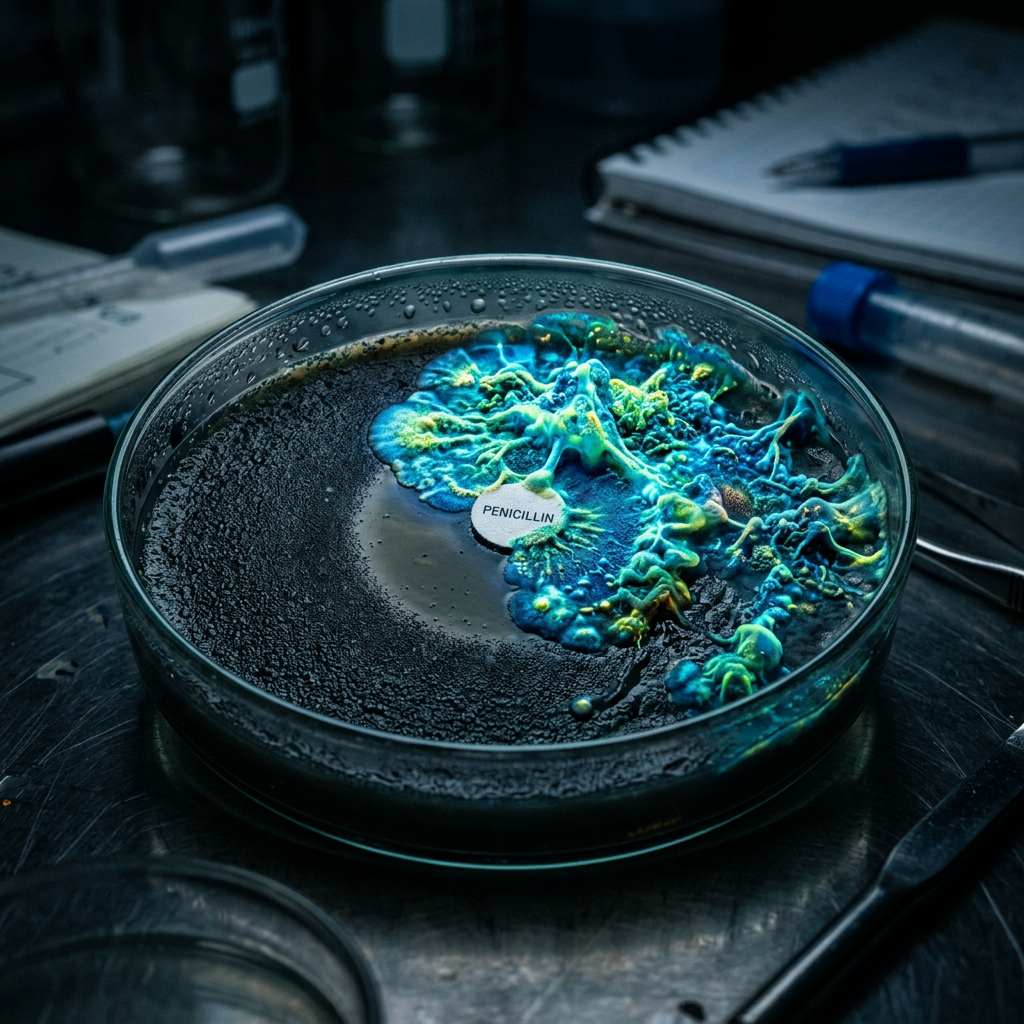
Antibiotic Resistance: The Slow Pandemic Doctors Fear More Than COVID
Antibiotic resistance is a 'slow pandemic' projected to kill 39 million by 2050. Learn why doctors fear this threat more than the COVID-19 crisis.
Antibiotic resistance is a 'slow pandemic' projected to kill 39 million by 2050. Learn why doctors fear this threat more than the COVID-19 crisis.
Trending Now
Antibiotic Resistance: The Slow Pandemic Doctors Fear More Than COVID
Key Takeaways
- Antibiotic resistance (AMR) caused 1.27 million direct deaths in 2019 alone — surpassing both HIV/AIDS and malaria.
- Six drug-resistant pathogens, including MRSA and E. coli, were responsible for nearly 929,000 of those deaths.
- The COVID-19 pandemic accelerated bacterial resistance, with hospital-acquired resistant infections rising 20% during peak pandemic years.
- Without urgent global intervention, AMR could cost the world economy $100 trillion by 2050 and push 28 million people into poverty.
- Emerging solutions — including phage therapy, AI-driven drug discovery, and One Health frameworks — offer measurable hope.
1. The Silent Pandemic: Why Antibiotic Resistance Is a Global Emergency
When the COVID-19 pandemic swept across the world in 2020, it consumed virtually every headline, every policy meeting, and every research dollar in global medicine. Yet in the background, a slower, less visible, and potentially more catastrophic threat was quietly gaining ground. Antibiotic resistance — the ability of bacteria to survive and multiply despite antibiotic treatment — is now considered by many infectious disease specialists to be the defining health crisis of the 21st century.
Unlike a viral pandemic that arrives with dramatic urgency, the AMR crisis builds gradually, eroding the effectiveness of medicines that modern healthcare has relied upon for nearly a century. Every time a bacterial infection fails to respond to treatment, every time a patient requires a second or third line of antibiotics, the stakes of this slow pandemic become tangible.
The World Health Organization has classified antimicrobial resistance as one of the top ten global public health threats facing humanity. It is not a distant, theoretical concern. It is already reshaping how doctors treat infections, how surgeons approach routine procedures, and how governments allocate healthcare budgets worldwide.
This article examines the science, economics, and human cost of antibiotic resistance — and the race to prevent a post-antibiotic era that would render modern medicine virtually unrecognizable.
2. Decoding the Data: 39 Million Deaths Projected by 2050
The numbers behind antibiotic resistance are staggering, and they are growing worse.
In 2019, drug-resistant bacteria were directly responsible for 1.27 million deaths globally — more than HIV/AIDS or malaria in the same year. — The Lancet GRAM Study
When deaths associated with AMR — cases where resistance complicated an already serious condition — are included, that figure climbs to an estimated 4.95 million deaths in a single year. The Lancet GRAM 2024 Report projects that, without transformative intervention, AMR could be responsible for approximately 39 million cumulative deaths by 2050.
To contextualize these projections:
| Cause of Death (2019) | Annual Deaths | AMR Comparison |
|---|---|---|
| HIV/AIDS | ~690,000 | AMR kills nearly 2x more |
| Malaria | ~627,000 | AMR kills over 2x more |
| Direct AMR Deaths | 1,270,000 | Baseline |
| AMR-Associated Deaths | 4,950,000 | Inclusive total |
| Projected AMR Deaths (2050/year) | ~8–10 million | If no action taken |
Sub-Saharan Africa and South Asia bear a disproportionate burden of these deaths, largely due to limited access to second- and third-line antibiotics, weaker infection control infrastructure, and higher baseline rates of infectious disease. However, no region is insulated. High-income countries, despite superior healthcare systems, are equally vulnerable due to the global nature of bacterial spread and the shared pipeline for new antibiotic development.
3. The COVID-19 Catalyst: How a Virus Accelerated Bacterial Resistance
The relationship between COVID-19 and antibiotic resistance is a troubling case study in unintended medical consequences. During the height of the pandemic, physicians worldwide prescribed antibiotics prophylactically — as preventive measures against secondary bacterial infections — even in patients with confirmed viral illness where antibiotics provided no direct therapeutic benefit.
This widespread antibiotic misuse, driven by the chaos of overwhelmed healthcare systems and incomplete clinical guidance, had measurable consequences.
Hospital-onset resistant infections in the United States increased by a combined 20% during peak COVID-19 pandemic periods. — CDC Antimicrobial Resistance Data
The pandemic also disrupted routine AMR surveillance programs, delayed the rollout of antimicrobial stewardship initiatives, and diverted research funding away from antibiotic development. In low- and middle-income countries, antibiotic use during the pandemic spiked dramatically, often without prescription requirements or regulatory oversight.
The result: bacterial populations that were already under selective pressure from decades of overuse were exposed to even higher volumes of antibiotics, accelerating the natural evolutionary process through which drug-resistant bacteria emerge and proliferate.
The COVID-19 crisis did not create the AMR problem. It amplified it — and the consequences of that amplification are only beginning to materialize in infection data worldwide.
4. The End of Routine Surgery? Why Modern Medicine Relies on Antibiotics
There is a common misconception that antibiotic resistance primarily threatens people who are already severely ill. In reality, the implications extend to virtually every corner of modern medicine.
Consider the following procedures and treatments that are only considered safe because of effective antibiotics:
- Hip and knee replacements — Post-surgical infections are managed with targeted antibiotic courses. Without effective antibiotics, these common procedures carry prohibitive infection risk.
- Chemotherapy — Cancer patients undergoing chemotherapy are profoundly immunocompromised. Antibiotics protect them from opportunistic bacterial infections during treatment.
- Organ transplantation — Immunosuppression required to prevent organ rejection leaves patients vulnerable to bacterial infections that must be aggressively treated.
- Cesarean sections and routine childbirth — Prophylactic antibiotics are standard practice in surgical deliveries worldwide.
- Neonatal care — Premature infants routinely receive antibiotics to prevent sepsis, a leading cause of newborn mortality.
A post-antibiotic era — in which common infections and minor injuries can kill — is a very real possibility for the 21st century. — World Health Organization
This is not hyperbole. It is the considered assessment of the world's foremost public health authority. The erosion of antibiotic effectiveness does not merely threaten people with resistant infections — it threatens the entire architecture of modern clinical medicine.
5. Superbugs 101: How Bacteria Evolve to Defeat Our Best Drugs
Understanding why antibiotic resistance is so difficult to combat requires a basic understanding of bacterial evolution — and it is a story of extraordinary biological ingenuity.
Bacteria reproduce at extraordinary speed. A single bacterium can divide into two every 20 minutes under optimal conditions, meaning that within 24 hours, a single organism can theoretically generate billions of descendants. With each replication, there is opportunity for random genetic mutation. Some of these mutations, by chance, confer resistance to antibiotics.
When antibiotics are introduced — particularly when used at insufficient doses or for incomplete courses — susceptible bacteria are killed, but resistant variants survive and reproduce. This is natural selection operating in real time, accelerating under the selective pressure of antibiotic exposure.
Bacteria have evolved four primary resistance mechanisms:
| Resistance Mechanism | Description | Example Pathogen |
|---|---|---|
| Enzymatic degradation | Bacteria produce enzymes that destroy antibiotic molecules | ESBL-producing E. coli |
| Efflux pumps | Bacteria actively pump antibiotics out of their cells | Pseudomonas aeruginosa |
| Target modification | Bacteria alter the cellular target the antibiotic attacks | MRSA (alters penicillin-binding proteins) |
| Reduced permeability | Bacteria reduce membrane porosity to limit antibiotic entry | Klebsiella pneumoniae |
Perhaps most alarmingly, bacteria can share resistance genes horizontally — transferring genetic material directly between unrelated bacterial species through a process called horizontal gene transfer. This means resistance developed in one bacterial species can rapidly spread to entirely different pathogens, dramatically accelerating the pace of resistance evolution.
MRSA (Methicillin-resistant Staphylococcus aureus) is among the most recognized superbugs — a bacterium that has evolved resistance to the entire class of penicillin-related antibiotics. Once confined primarily to healthcare settings, community-acquired MRSA strains now circulate widely in the general population.
6. The $100 Trillion Threat: Examining the Global Economic Impact
The human cost of antibiotic resistance is matched by its economic devastation. The financial toll of AMR operates across multiple dimensions: direct healthcare costs, lost productivity, increased hospitalization duration, and the systemic drag on economic development in low-income countries.
Without action, AMR could cost the global economy $100 trillion by 2050 and push 28 million people into extreme poverty. — Review on Antimicrobial Resistance
The World Bank has estimated that AMR could generate annual global GDP losses ranging from $1 trillion to $3.4 trillion by 2030 — a range that reflects the profound uncertainty surrounding resistance trajectories, but whose lower bound already represents an economic disruption comparable to the 2008 global financial crisis.
| Economic Impact Scenario | Projected Annual GDP Loss | Affected Population |
|---|---|---|
| Low AMR impact (2030) | $1 trillion | Primarily LMICs |
| High AMR impact (2030) | $3.4 trillion | Global |
| Cumulative loss by 2050 | $100 trillion | Global |
| Poverty impact by 2050 | — | 28 million pushed into poverty |
These economic projections are not merely speculative. Resistant infections already extend average hospital stays, require more expensive medications, demand higher-skilled clinical care, and generate significant disability-adjusted life years (DALYs) that reduce workforce productivity. In agricultural economies, resistant infections in livestock reduce output and increase food insecurity — creating cascading economic effects that disproportionately impact vulnerable populations.
7. The Discovery Void: Why Big Pharma Stopped Making New Antibiotics
One of the most critical — and least discussed — dimensions of the AMR crisis is the near-complete collapse of the antibiotic development pipeline. The last truly novel class of antibiotics to reach clinical use was discovered in the 1980s. Since then, despite the growing urgency of resistance, pharmaceutical investment in new antibiotic development has contracted dramatically.
The reasons are fundamentally economic. Antibiotic development presents an unattractive business model for pharmaceutical companies:
- Short treatment courses mean limited revenue compared to drugs taken chronically for conditions like diabetes or hypertension.
- Stewardship requirements mean that new antibiotics — if approved — will be deliberately restricted to preserve their effectiveness, limiting market volume.
- High development costs with lengthy regulatory timelines make investment returns uncertain.
- Patent expiration rapidly converts successful antibiotics into low-margin generics.
Several biotechnology companies that attempted to develop new antibiotics in the 2010s — including Achaogen and Melinta Therapeutics — filed for bankruptcy despite bringing approved drugs to market, underscoring the broken economics of antibiotic development.
The consequence of this discovery void is stark: the pipeline of new antibiotics in late-stage clinical development remains critically thin, even as resistant bacteria continue to evolve. Public health agencies and health economists have increasingly called for novel funding models — including government-funded "push" incentives for development and guaranteed market commitments — to restore investment in this area.
8. New Horizons: How AI and Synthetic Biology Are Fighting Back
Despite the gravity of the AMR crisis, the scientific community is not without innovative responses. A convergence of artificial intelligence, synthetic biology, and alternative therapeutic strategies is opening new fronts in the battle against drug-resistant bacteria.
Phage Therapy represents one of the most promising frontiers. Bacteriophages — viruses that naturally infect and destroy specific bacteria — were studied extensively before the antibiotic era and are now experiencing a rigorous scientific revival. Unlike broad-spectrum antibiotics, phages can be engineered to target specific bacterial strains with precision, minimizing disruption to the beneficial microbiome. Clinical trials and compassionate use cases have demonstrated measurable success in treating infections caused by MRSA and other resistant organisms that had exhausted conventional treatment options.
Artificial intelligence is fundamentally changing the speed and cost of antibiotic discovery. In 2020, researchers at MIT used a machine learning model called Halicin to identify a novel antibiotic compound that demonstrated activity against a wide range of drug-resistant bacteria — a discovery that traditional screening methods might have taken decades to achieve. By training AI models on vast databases of molecular structures and biological activity, researchers can now identify candidate compounds in weeks rather than years.
Synthetic biology is enabling the design of entirely new classes of antimicrobial compounds, including engineered peptides and CRISPR-based antimicrobials that can precisely disable resistance genes within bacterial populations.
These technologies will not solve the AMR crisis alone. But combined with improved stewardship, regulatory reform, and economic incentives for development, they represent a credible pathway toward preserving the antibiotic era.
9. One Health: Connecting Human, Animal, and Environmental Resistance
A fundamental principle increasingly recognized in AMR science is that human health, animal health, and environmental health are inextricably connected. The One Health framework reflects this understanding — acknowledging that antibiotic resistance does not respect the boundaries between species or ecosystems.
Approximately 70% of all antibiotics used globally are administered to food-producing animals — not to treat disease, but to promote growth and prevent infection in intensive farming conditions. Resistant bacteria that develop in livestock can transfer to humans through food consumption, direct contact, or environmental pathways including water runoff from farms into rivers and municipal water systems.
Environmental resistance is an increasingly recognized concern. Pharmaceutical manufacturing effluent, agricultural runoff, and improper disposal of unused antibiotics introduce antibiotic compounds and resistant bacteria into natural ecosystems, creating environmental reservoirs of resistance genes that persist and evolve independently of clinical settings.
Addressing hospital-acquired infections and clinical misuse, while ignoring agricultural and environmental drivers of resistance, is an incomplete strategy. Effective AMR policy must integrate regulatory oversight across agriculture, environmental management, and healthcare simultaneously — the core premise of the One Health approach.
10. What You Can Do: A Practical Guide to Using Antibiotics Safely
While systemic solutions require government action, pharmaceutical investment, and international coordination, individual behavior meaningfully contributes to the AMR trajectory. The following evidence-based practices can reduce the spread of drug-resistant bacteria at the individual level:
- Complete the full course of any prescribed antibiotic regimen, even if symptoms improve before the course is finished. Stopping early can leave resistant bacteria alive and allow them to proliferate.
- Never self-prescribe antibiotics. In many countries, antibiotics are available over the counter — a practice that WHO strongly discourages. Antibiotic misuse without proper diagnosis is a primary driver of resistance.
- Do not request antibiotics for viral infections — including colds, flu, and most sore throats. Antibiotics have no efficacy against viruses, and using them unnecessarily accelerates resistance.
- Practice rigorous hand hygiene to reduce the transmission of resistant bacteria in both healthcare and community settings.
- Store and dispose of antibiotics properly. Unused antibiotics should be returned to pharmacy take-back programs rather than flushed or discarded, which can introduce compounds into water systems.
- Support food choices that reflect responsible antibiotic use in agriculture — choosing products from producers certified for responsible antibiotic stewardship where available.
Individual action, while insufficient on its own, forms the behavioral foundation upon which larger systemic solutions must be built.
11. Conclusion: Building a Resilient Future Against the Slow Pandemic
Antibiotic resistance is not a future threat. It is a present reality, measured in millions of deaths, trillions of dollars in projected economic loss, and the incremental erosion of medical interventions that the modern world has come to regard as routine.
The data is unambiguous. The Lancet GRAM, the WHO, the World Bank, and the CDC speak with rare scientific consensus: without coordinated, urgent, and adequately resourced global action, antibiotic resistance will reshape the contours of human civilization in the decades ahead — not through the sudden rupture of a viral pandemic, but through the slow, relentless attrition of our most essential medicines.
The pathway forward requires simultaneous action on multiple fronts: fixing the broken economics of antibiotic development, enforcing responsible stewardship in both clinical and agricultural settings, accelerating investment in phage therapy, AI-driven drug discovery, and next-generation antimicrobials, and embedding the One Health framework into global policy architecture.
COVID-19 demonstrated that the world can mobilize remarkable resources and scientific ingenuity when confronted with an acute pandemic. The deeper challenge posed by antibiotic resistance is mobilizing that same urgency for a crisis that moves slowly — but whose ultimate consequences may prove far greater than any single infectious disease event in human history.
The post-antibiotic era is not inevitable. But preventing it requires action that begins now.
Sources
- World Health Organization — Antimicrobial Resistance Fact Sheet
- The Lancet GRAM Study — Global Burden of Bacterial AMR (2019)
- The Lancet GRAM 2024 Report
- CDC Antimicrobial Resistance Data Reports
- World Bank — Antimicrobial Resistance Global Economic Impact
- Review on Antimicrobial Resistance — Tackling a Crisis for the Health and Wealth of Nations
Published on Voxora — Premium Publishing for Voices That Matter.
Advertisement
Frequently Asked Questions
What exactly is antibiotic resistance and why is it compared to a pandemic?
Antibiotic resistance occurs when bacteria evolve to defeat the drugs designed to kill them. It is called a "slow pandemic" because it is a global health crisis that is steadily worsening; unlike COVID-19's rapid spread, it builds over decades, currently contributing to nearly 5 million deaths annually associated with resistant infections.
How many people are currently affected by antibiotic-resistant infections?
According to research published in The Lancet, antimicrobial resistance (AMR) was directly responsible for 1.27 million deaths globally in 2019. In the United States alone, the CDC reports more than 2.8 million antibiotic-resistant infections occur each year, resulting in more than 35,000 deaths.
Does my body become resistant to antibiotics if I take them too often?
No, it is not your body that becomes resistant, but the bacteria living within or on you. When bacteria are exposed to antibiotics, the weaker strains die, but those with resistant traits survive and multiply, creating "superbugs" that modern medicine cannot easily treat regardless of the patient's previous drug use.
What will happen if we do not solve the antibiotic resistance crisis by 2050?
Projections suggest that by 2050, antibiotic-resistant infections could cause 10 million deaths every year, surpassing cancer as a leading cause of death. This would make routine medical procedures, such as C-sections, joint replacements, and chemotherapy, significantly more dangerous due to the high risk of untreatable infections.
How can I help prevent the rise of antibiotic-resistant superbugs?
You can help by only using antibiotics when prescribed by a healthcare professional, never demanding them for viral infections like the cold or flu which antibiotics cannot cure, and always finishing the full course of your prescription to ensure all targeted bacteria are completely eradicated.
Sponsored
You Might Also Like



Advertisement
Comments (0)
Sign in to join the conversation
No comments yet. Be the first to share your thoughts!