AIIMS Guwahati: A Complete Guide to Healthcare and Education
AIIMS Guwahati is transforming healthcare in North East India, offering world-class treatment, affordable education, and cutting-edge research.

AIIMS Guwahati is transforming healthcare in North East India, offering world-class treatment, affordable education, and cutting-edge research.
Trending Now
Key Takeaways
- AIIMS Guwahati, established under the PMSSY scheme, is the first AIIMS in India's North East region, located in Changsari, Assam.
- The institute offers 125 MBBS seats and 75 BSc Nursing seats annually, with NEET 2025 General category closing rank around 3177.
- Over 2.25 lakh patients were treated in the OPD in just the first year of operation.
- The hospital's planned bed capacity is 750 beds, with 367 IPD beds currently functional.
- AIIMS Guwahati is rapidly evolving into a premier tertiary healthcare destination for all of North East India and neighboring South East Asian nations.
Introduction: AIIMS Guwahati and the New Era of Healthcare in North East India
For decades, patients from Assam and the broader North East region of India faced a grim reality: when serious illness struck, their only options were expensive private hospitals, long journeys to metros like Delhi or Kolkata, or inadequate care at overwhelmed district facilities. That reality began to change meaningfully with the establishment of AIIMS Guwahati — a landmark institution that represents not just a hospital, but a turning point in the region's healthcare and medical education landscape.
Located in Changsari, on the outskirts of Guwahati in Assam, AIIMS Guwahati is the first All India Institute of Medical Sciences to be established in the North East. Since its operational commencement, the institute has treated hundreds of thousands of patients, trained aspiring doctors and nurses, and initiated groundbreaking research addressing region-specific health challenges. This comprehensive guide explores every dimension of AIIMS Guwahati — from its origins and infrastructure to its academic programs, specialized departments, and long-term vision as a Changsari medical hub serving millions across South East Asia.
The Genesis of AIIMS Guwahati: Bridging the Regional Gap
AIIMS Guwahati was established under the Pradhan Mantri Swasthya Suraksha Yojana (PMSSY) — a flagship central government scheme launched in 2003 with the dual objective of correcting regional imbalances in the availability of affordable and reliable tertiary healthcare services, and augmenting the country's medical education infrastructure. The PMSSY scheme has been instrumental in setting up new AIIMS institutions across underserved states, and the North East was a priority region given its historically limited access to advanced medical care.
The demand for such an institution was well-established. The eight states of India's North East — Assam, Arunachal Pradesh, Meghalaya, Manipur, Mizoram, Nagaland, Tripura, and Sikkim — collectively house tens of millions of citizens, yet historically lacked a single institution offering AIIMS-level care and education. Patients with complex cardiac conditions, rare cancers, neurological disorders, or pediatric emergencies were routinely air-lifted or transported by road for hundreds or thousands of kilometers to access specialist care.
The establishment of AIIMS Guwahati was thus both a policy imperative and a humanitarian necessity. Strategically positioned in Changsari, the campus benefits from proximity to Guwahati's urban infrastructure while remaining accessible to patients from remote districts and neighboring states. According to The Sentinel Assam, the institution has already begun to meaningfully bridge the healthcare gap in the Northeast region, offering services that previously required inter-state travel.
State-of-the-Art Infrastructure: Exploring the 189-Acre Campus
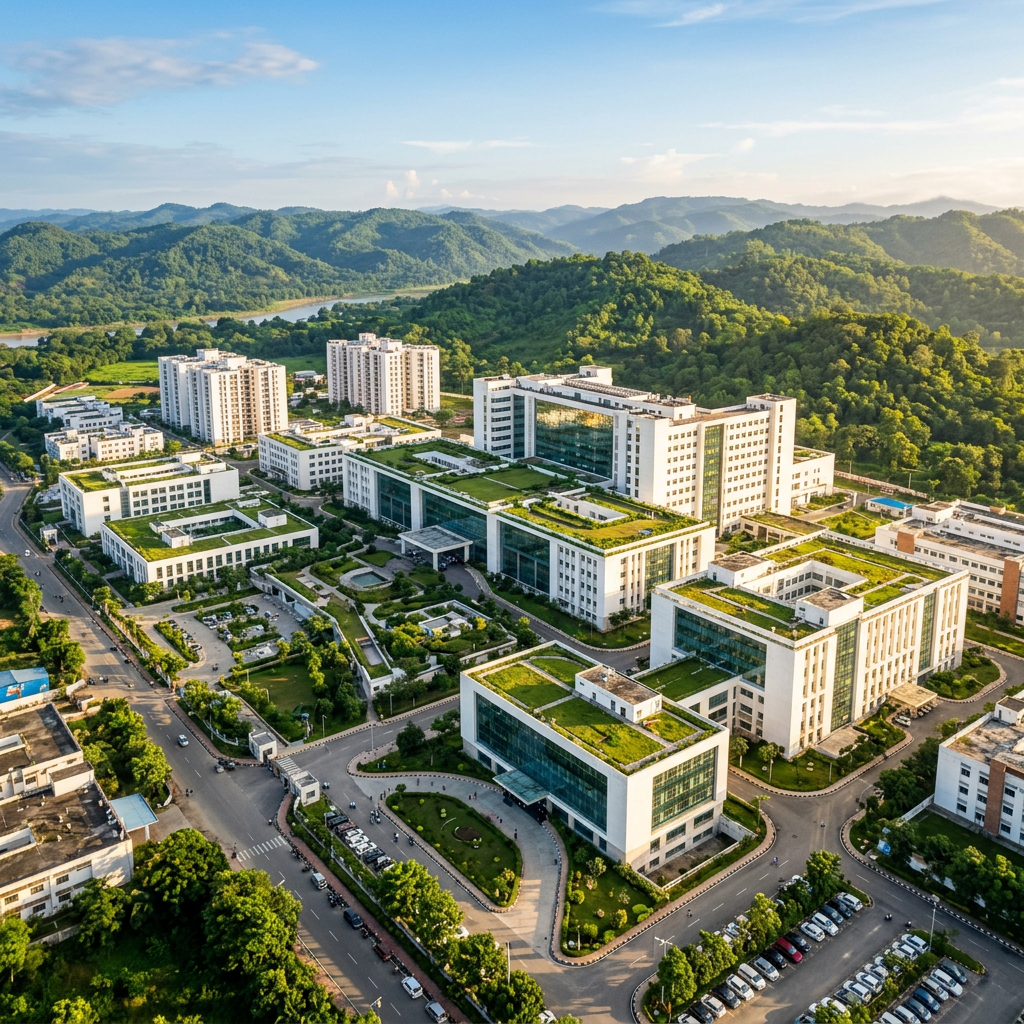
The AIIMS Guwahati campus spans an impressive 189 acres in Changsari, Kamrup district. Designed to accommodate a fully integrated medical university — combining a teaching hospital, research laboratories, academic blocks, hostels, and residential quarters — the campus reflects a long-term vision for comprehensive medical excellence.
Key infrastructure highlights include:
- Academic Block: Housing lecture theaters, simulation labs, anatomy dissection halls, and digital learning centers.
- Hospital Block: The central patient-care facility currently operating 367 functional IPD beds, with a planned expansion to a full 750-bed capacity.
- Research and Diagnostics Wing: Equipped with modern imaging technology including MRI, CT scanners, and advanced pathology laboratories.
- Residential Facilities: Separate hostels for undergraduate students, postgraduate residents, nursing staff, and faculty quarters within the campus.
- Emergency and Trauma Center: A round-the-clock emergency unit capable of handling trauma, cardiac emergencies, and critical care admissions.
💬 "The planned total bed capacity of the hospital is 750, with 367 IPD beds currently functional." — The Sentinel Assam
The phased expansion plan means that the institution will continue scaling its operational capacity over the coming years, progressively accommodating a greater volume of inpatients requiring long-term specialized care.
Medical Education: Training the Next Generation of Specialists
One of AIIMS Guwahati's most consequential contributions to the region is its role as a premier medical education institution. Historically, talented students from North East India had to relocate entirely to pursue MBBS or postgraduate medical degrees at top-tier institutions. AIIMS Guwahati is changing this dynamic by offering world-class education within the region itself.
The academic programs currently offered include:
| Program | Seats | Duration |
|---|---|---|
| MBBS | 125 per year | 5.5 years |
| BSc Nursing | 75 per year | 4 years |
| MD/MS (Postgraduate) | Varies by specialty | 3 years |
| PhD Programs | Limited intake | 3–5 years |
The MBBS curriculum at AIIMS Guwahati follows the National Medical Commission (NMC) competency-based medical education framework, supplemented by AIIMS-specific research exposure and clinical training. Students benefit from early patient interaction, simulation-based learning, and mentorship from faculty who are specialists in their respective fields.
Postgraduate and doctoral programs are gradually expanding as the institution matures, with an increasing focus on research-driven specializations relevant to the North East — including tropical medicine, vector-borne diseases, and oncology care for cancers prevalent in the region.
MBBS and Nursing Admissions: Seats, Fees, and Eligibility
For students and parents seeking admission to AIIMS Guwahati, understanding the eligibility criteria, seat matrix, and fee structure is essential.
Eligibility Criteria
- MBBS: Candidates must qualify NEET-UG and be selected through the AIIMS centralized counseling process (now integrated with MCC NEET counseling). The minimum age requirement is 17 years at the time of admission.
- BSc Nursing: Candidates must have completed 10+2 with Physics, Chemistry, and Biology, and qualify the relevant entrance examination.
NEET Cutoff: AIIMS Guwahati
The NEET cutoff for AIIMS Guwahati is among the most competitive in the country, though it is comparatively more accessible than older AIIMS campuses like AIIMS New Delhi or AIIMS Jodhpur.
💬 "The NEET 2025 General category closing rank for MBBS at AIIMS Guwahati was approximately 3177." — CollegeDunia
| Category | NEET 2025 Approx. Closing Rank |
|---|---|
| General | ~3177 |
| OBC | ~7500 |
| SC | ~18,000 |
| ST | ~28,000 |
| EWS | ~4500 |
Note: Cutoff ranks are indicative and subject to change annually based on competition and seat availability.
Fee Structure
As a centrally funded government institution, AIIMS Guwahati maintains a highly subsidized fee structure. MBBS tuition fees are nominal compared to private medical colleges, making it an exceptional opportunity for meritorious students regardless of economic background.
Advanced Patient Care: OPD and IPD Services Breakdown
The clinical performance of AIIMS Guwahati in its early years of operation has been nothing short of remarkable — a testament to both the pent-up demand for quality healthcare in the region and the institution's rapid scale-up of services.
💬 "Over 2.25 lakh patients were treated in the OPD within the first year of operation." — The Times of India
💬 "The average daily OPD footfall has grown from 717 to nearly 2,000 patients." — Medical Buyer
AIIMS Guwahati OPD Timings
The AIIMS Guwahati OPD timings are structured to maximize patient access:
| Service | Days | Timings |
|---|---|---|
| General OPD | Monday to Friday | 8:00 AM – 1:00 PM |
| Emergency Services | All days | 24 × 7 |
| IPD Admissions | All days | As per clinical need |
| Diagnostic Services | Monday to Saturday | 8:00 AM – 4:00 PM |
Note: OPD timings may vary by department and are subject to periodic revision. Patients are advised to verify current schedules on the AIIMS Guwahati Official Website.
The rapid growth in daily OPD footfall — from approximately 717 patients per day to nearly 2,000 patients per day — reflects both expanding public trust and the institution's continuous efforts to add new specialties and increase operational efficiency.
Specialized Departments: From Cardiology to Oncology Care
AIIMS Guwahati's clinical strength lies in its growing portfolio of specialized departments that collectively offer a level of tertiary healthcare in Assam previously unavailable at any government facility in the region.
Key departments and specialties include:
- Cardiology and Cardiothoracic Surgery: Offering diagnostic services, interventional cardiology, and open-heart surgical procedures — critical given the rising prevalence of cardiovascular disease in the region.
- Oncology: The oncology department addresses the significant burden of cancer in Assam and the North East. Oncology treatments in Assam through AIIMS Guwahati include chemotherapy, radiation therapy, and surgical oncology, providing life-saving care that previously required patients to travel to metros.
- Neurology and Neurosurgery: Addressing stroke, epilepsy, brain tumors, and spinal cord conditions with advanced imaging and surgical capabilities.
- Gastroenterology: Including endoscopic procedures for gastrointestinal conditions prevalent in the region due to dietary and environmental factors.
- Orthopedics: Offering joint replacement surgeries, trauma care, and spine surgeries.
- Pediatrics and Neonatology: Providing specialized care for children and newborns, including a Neonatal Intensive Care Unit (NICU).
- Psychiatry and Mental Health: Addressing the growing mental health burden across North East India, including substance use disorders common in the region.
- Ophthalmology, ENT, and Dermatology: Comprehensive outpatient and surgical care across allied specialties.
The breadth of these departments means that patients no longer need to travel outside the state for most specialist consultations and treatments — a transformative shift for both urban and rural populations across Assam.
Research Initiatives: Addressing Region-Specific Health Issues
Beyond clinical care and education, AIIMS Guwahati is establishing itself as a research institution with a focus on health challenges uniquely pertinent to the North East. The region presents a distinct epidemiological profile — including high rates of certain cancers (particularly gastrointestinal and head-and-neck cancers linked to dietary habits and tobacco use), vector-borne diseases like Japanese Encephalitis and Kala-azar, flood-related health emergencies, and nutritional deficiencies in tribal populations.
Research priorities at AIIMS Guwahati include:
- Cancer epidemiology in North East India — documenting and analyzing the unusually high incidence of specific cancer types in the region.
- Tropical and infectious disease research — studying endemic diseases and developing locally applicable intervention models.
- Maternal and child health — addressing high maternal mortality rates in remote districts of Assam and neighboring states.
- Traditional and indigenous medicine integration — exploring the synergy between evidence-based medicine and the rich traditional healing practices of the region's tribal communities.
Faculty members are actively encouraged to pursue extramural funding from bodies such as the Indian Council of Medical Research (ICMR), Department of Biotechnology (DBT), and Science and Engineering Research Board (SERB) to expand the institution's research output and contribute to national health policy.
Affordability and Accessibility: Impact on the Local Community
Perhaps the most socially significant dimension of AIIMS Guwahati is its commitment to affordable, accessible tertiary healthcare. The financial burden of medical care has long been a devastating reality for families in Assam, particularly those in rural areas. A single hospitalization at a private super-specialty hospital in a metro city could wipe out years of household savings, or simply remain out of reach entirely.
As a government medical college in North East India funded by the central government, AIIMS Guwahati offers:
- Heavily subsidized consultation fees in the OPD.
- Government-rate diagnostics — including imaging, pathology, and laboratory tests at a fraction of private market rates.
- Empanelment under central and state government health schemes including Ayushman Bharat PM-JAY, enabling eligible beneficiaries to access inpatient care with financial protection.
- Free treatment for below-poverty-line patients in designated categories.
This affordability model, combined with geographical proximity to the region's population, has resulted in a dramatic increase in healthcare-seeking behavior. Patients who previously delayed diagnosis due to cost or distance are now accessing care earlier — with direct implications for improved health outcomes across Assam and the broader North East.
The Road Ahead: Becoming a Medical Hub for South East Asia
The long-term vision for AIIMS Guwahati extends well beyond serving domestic patients. Given Guwahati's strategic position as the Gateway to North East India and its proximity to neighboring countries including Bhutan, Bangladesh, and Myanmar, there is substantial potential for the institution to evolve into a regional medical hub for South East Asia.
The Changsari medical hub vision encompasses:
- Expansion to 750 functional hospital beds upon completion of all construction phases.
- Addition of new postgraduate and super-specialty programs in disciplines such as liver transplantation, reconstructive surgery, and advanced oncology.
- Telemedicine and digital health outreach to remote districts and neighboring countries, extending AIIMS expertise beyond its physical campus.
- International collaborations with leading medical institutions in Asia and globally for research, faculty exchange, and technology transfer.
- Medical tourism facilitation for patients from Bhutan, Bangladesh, and Myanmar who historically traveled to Bangkok or Singapore for advanced care, and who may find Guwahati a more accessible and cost-effective alternative.
As infrastructure scales and reputation consolidates, AIIMS Guwahati is positioned to become not merely the leading healthcare institution in Assam, but one of the most significant government medical colleges in North East India — and eventually, a benchmark institution for the entire South and South East Asian region.
How to Access AIIMS Guwahati: Location and Connectivity
Address: All India Institute of Medical Sciences (AIIMS) Guwahati, Changsari, Kamrup, Assam – 781101
Connectivity
- By Road: AIIMS Guwahati is located approximately 20 kilometers from Guwahati city center along National Highway 27. Regular bus services and auto-rickshaws operate from central Guwahati to Changsari. The campus is also accessible via Ola and Uber cab services.
- By Rail: The nearest railway station is Guwahati Railway Station, one of the major rail hubs of North East India, connected to all major cities. From the station, road transport to the campus takes approximately 45–60 minutes depending on traffic.
- By Air: Lokpriya Gopinath Bordoloi International Airport, Guwahati, is approximately 25 kilometers from the campus, well-connected to Delhi, Mumbai, Kolkata, Bangalore, and other metros, as well as regional destinations in the North East.
For appointments, academic inquiries, and updated OPD schedules, visit the AIIMS Guwahati Official Website.
Conclusion: AIIMS Guwahati and the Future of Health and Hope in Assam
AIIMS Guwahati represents far more than a single hospital or medical college. It is a symbol of the Indian government's commitment to equitable healthcare and educational opportunity — a recognition that the people of North East India deserve access to the same quality of medical care and academic excellence as any other region in the country.
From treating over 2.25 lakh OPD patients in its first year to training the next generation of doctors, nurses, and researchers, AIIMS Guwahati is already delivering on its transformative promise. As infrastructure expands, specialties deepen, and research outputs grow, the institution is on a credible trajectory toward becoming the definitive medical center for the entire North East and a recognized name in South East Asian healthcare.
For patients, the message is one of hope: world-class care is now available closer to home. For students, it is one of opportunity: a path to elite medical education without leaving the region. For policymakers, it is evidence that strategic investment in institutions like AIIMS Guwahati, supported by schemes like the PMSSY scheme, can reshape the health destiny of entire populations.
The future of healthcare in Assam — and indeed across the North East — is being written at Changsari. And it is a future that merits both attention and optimism.
Sources
- The Times of India – AIIMS Treated 2.25 Lakh OPD Patients in Past Year
- AIIMS Guwahati Official Website – Overview of the Institute
- Medical Buyer – How AIIMS Guwahati is Revolutionizing Healthcare in Northeast
- The Sentinel Assam – AIIMS Guwahati to Bridge Healthcare Gap in Northeast Region
- CollegeDunia – AIIMS Guwahati NEET Cutoff
Advertisement
Frequently Asked Questions
Where is AIIMS Guwahati located and when did it start operations?
AIIMS Guwahati is located in Changsari, Kamrup district, Assam. The foundation stone was laid in May 2017, and the institute was officially inaugurated by Prime Minister Narendra Modi on April 14, 2023, though academic sessions for MBBS began in 2020.
How many MBBS seats are available at AIIMS Guwahati and what is the admission process?
AIIMS Guwahati currently offers 100 seats for its MBBS program annually. Admission is strictly based on the All India Rank in the National Eligibility cum Entrance Test (NEET-UG) followed by counseling through the Medical Counselling Committee (MCC).
What are the hospital facilities and bed capacity at AIIMS Guwahati?
The institute features a state-of-the-art 750-bed hospital, including 30+ specialty and super-specialty departments. It provides advanced diagnostic services and includes a dedicated 30-bed AYUSH block for traditional medicine.
What was the total budget and physical area for the AIIMS Guwahati project?
The AIIMS Guwahati campus was developed at an estimated cost of 1,123 crore rupees. The entire facility is spread across a massive 189-acre campus equipped with a medical college, nursing college, and residential complexes.
Does AIIMS Guwahati offer nursing courses for students?
Yes, AIIMS Guwahati offers a B.Sc. (Hons.) Nursing program with an intake of 60 students per year. Admission to this program is conducted through a separate entrance examination held by AIIMS New Delhi.
Sponsored
You Might Also Like


Advertisement
Comments (0)
Sign in to join the conversation
No comments yet. Be the first to share your thoughts!