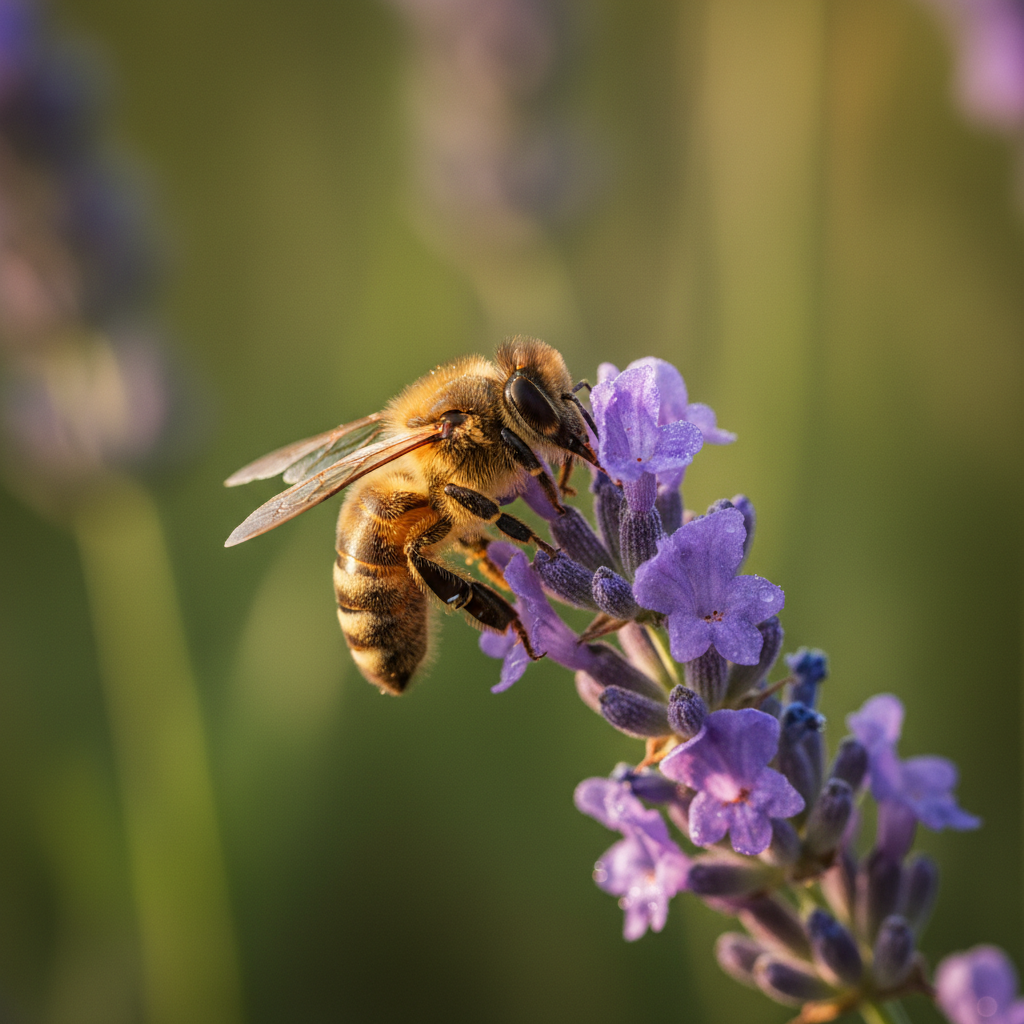
The Secret Life of Honey Bees: Nature's Golden Architects | honey bee importance
Discover the hidden world of honey bees, their vital role in our food system, and the urgent efforts required to protect nature's golden architects.

Discover the hidden world of honey bees, their vital role in our food system, and the urgent efforts required to protect nature's golden architects.
Trending Now
The Secret Life of Honey Bees: Nature's Golden Architects
Key Takeaways
- Honey bees are responsible for pollinating roughly one-third of the food humans eat every day
- A single honey bee colony can house up to 80,000 individual bees, each with a specific role
- The honey bee importance to the US economy is valued at an estimated $15 billion annually
- Colony collapse disorder wiped out nearly 48% of managed US colonies between 2022 and 2023
- Simple actions like planting pollinator gardens and supporting local beekeepers can help reverse the decline
- Modern technology — from AI sensors to GPS tracking — is revolutionizing how we protect hive health
Introduction: The Unsung Heroes of the Natural World
Imagine waking up one morning to a world without apples, almonds, blueberries, or coffee. No avocados on your toast. No wildflower honey swirled into your tea. No sunflowers nodding along country roads in August. It sounds like a dystopian fable — but for scientists, ecologists, and farmers around the world, this scenario is not fiction. It is a quietly unfolding warning.
At the center of this story is a creature no bigger than a paperclip, dressed in amber and black, humming a frequency that has shaped the natural world for more than 100 million years: the honey bee.
The honey bee importance to human civilization is almost impossible to overstate. These small, industrious insects are not just producers of one of nature's most treasured foods — they are the invisible backbone of global agriculture, the architects of ecosystems, and the silent partners behind much of the food on your plate. Yet most of us walk past them without a second glance, dismissing the buzz as background noise rather than recognizing it as the sound of a civilization within a civilization.
This is the story of the honey bee — from the cradle of a wax cell to the dance floor of a darkened hive, from the almond orchards of California to the rooftop gardens of New York City. It is a story of extraordinary intelligence, remarkable sacrifice, and urgent fragility.
The Complex Social Structure of a Honey Bee Colony
Step close to a beehive on a warm summer afternoon, and you are peering into one of the most sophisticated societies ever evolved on Earth.
A healthy colony of Apis mellifera — the European honey bee and the most widely studied species in the world — can contain anywhere from 20,000 to 80,000 individual bees. But unlike a crowd, this is not chaos. Every bee has a job. Every bee knows its place. And every bee is working, at all times, toward a single unified purpose: the survival of the colony.
At the heart of it all sits the queen bee — the colony's only reproductive female. She does not rule by decree or command. Instead, she governs through chemistry, releasing pheromones that regulate the behavior, mood, and reproductive cycles of every bee around her. A single queen can lay up to 2,000 eggs per day during peak season, an astonishing biological feat that makes her the literal mother of her entire kingdom.
Then there are the worker bees — all female, all tireless, and all living lives of breathtaking brevity and purpose. During summer months, a worker bee lives for only 6 to 8 weeks, and she spends every one of those days contributing to the collective. Young workers nurse larvae. Middle-aged workers build and maintain the hexagonal wax comb. Older, more experienced workers graduate to foraging — flying up to 5 miles from the hive in search of nectar, pollen, water, and propolis.
Finally, there are the drones — the colony's only males. Their singular biological purpose is to mate with a queen from another colony. Once that mission is complete — or when resources grow scarce in autumn — the worker bees unceremoniously evict them from the hive. Nature, it turns out, is not sentimental.
| Bee Role | Gender | Population in Hive | Lifespan | Primary Function |
|---|---|---|---|---|
| Queen Bee | Female | 1 | 2–5 years | Egg-laying, colony regulation |
| Worker Bee | Female | 20,000–80,000 | 6–8 weeks (summer) | Foraging, nursing, building |
| Drone | Male | 500–3,000 | ~8 weeks | Mating with queens |
The Life Cycle: From Egg to Forager
Every honey bee begins as a tiny white egg, barely visible to the human eye, standing upright in the base of a wax cell. The queen deposits it with surgical precision — she can even choose whether to fertilize it, determining the sex of her offspring before it is born.
From that egg, an extraordinary transformation unfolds over the course of about 21 days for a worker bee. She passes through larval stages, fed first on royal jelly — a protein-rich secretion produced by nurse bees — and then on a mixture of honey and pollen. She pupates inside a capped cell, her body reorganizing itself in the dark. And then, one day, she chews her way out into the hive, fully formed and ready to work.
What happens next depends entirely on her age. The bee caste system is not assigned by birth — it is structured by time. In her first weeks, a worker bee nurses, builds, and guards the hive entrance. Only in her final chapter does she become a forager, venturing into the sunlit world to gather the resources that keep the colony alive. She will fly the equivalent of more than once around the Earth in her short lifetime, visiting thousands of flowers every single day.
The Waggle Dance: How Bees Communicate Location
Here is where the story of the honey bee crosses from remarkable into the realm of the extraordinary.
When a forager bee discovers a rich patch of flowers, she returns to the hive and does something that no other insect on Earth does with such precision: she dances.
The waggle dance, first decoded by Austrian ethologist Karl von Frisch in the 1940s — a discovery that earned him the Nobel Prize — is a figure-eight movement performed on the vertical surface of the honeycomb. The duration of the central "waggle run" communicates the distance to the food source. The angle of the dance relative to vertical corresponds to the angle of the food source relative to the sun. The vigor of the dance signals the quality of the find.
In the pitch-black interior of the hive, surrounded by tens of thousands of buzzing companions, a bee encodes the GPS coordinates of a flower patch in her body's movement. Her sisters decode it, memorize it, and fly directly to the source — sometimes miles away — guided by nothing but memory and the memory of a dance.
It is, without question, one of the most astonishing forms of communication in the animal kingdom.
The Alchemy of Honey: How Nectar Becomes Gold
The honey we drizzle over warm bread or stir into tea is, in essence, a miracle of collective chemistry — and it begins not in a jar, but in a flower.
A forager bee collects nectar — a sugary liquid produced by flowering plants as a reward for pollinators — in a specialized organ called the honey stomach, or crop. Back at the hive, she passes the nectar mouth-to-mouth to younger worker bees in a process called trophallaxis. During each handoff, enzymes are added that begin breaking down complex sugars into simpler ones. The bees then spread the partially processed nectar across open cells, fanning it vigorously with their wings to evaporate excess water. When the moisture content drops below 18%, the cell is capped with wax.
What remains is honey — stable, antimicrobial, and shelf-stable for thousands of years. Archaeologists have reportedly found 3,000-year-old honey in Egyptian tombs that was still edible.
Global honey production was estimated at approximately 1.77 million metric tons in 2021. — Statista
To produce just one pound of honey, worker bees must collectively visit approximately 2 million flowers and fly a combined distance of over 55,000 miles. Every jar of honey represents not just sweetness, but an almost incomprehensible investment of life and labor.
Pollination: The $15 Billion Service to Humanity
Now we arrive at the dimension of honey bee importance that feeds the world.
While honey is the product most associated with bees, pollination is their most consequential gift to humanity. As bees move from flower to flower collecting nectar, pollen from the male parts of one flower hitchhikes on their fuzzy bodies and is deposited on the female parts of another — fertilizing the plant and enabling it to produce fruit or seed.
The crops that depend on this service read like a grocery list of everything we treasure: almonds, apples, blueberries, cherries, avocados, cucumbers, melons, strawberries. In the United States alone, honey bees are responsible for pollinating more than 90 commercially grown crops.
Honey bees contribute an estimated $15 billion annually to the US economy through pollination services. — USDA
The scale of that number deserves a moment of stillness. Fifteen billion dollars — not from selling honey, not from any product — but simply from bees doing what evolution designed them to do: fly from flower to flower in search of food.
| Crop | Pollination Dependency | Annual US Value (Approx.) |
|---|---|---|
| Almonds | 100% dependent on bees | $6+ billion |
| Blueberries | 90% dependent on bees | $720 million |
| Apples | 90% dependent on bees | $4 billion |
| Avocados | High dependency | $2+ billion |
| Cherries | 90% dependent on bees | $700 million |
Remove the bee from this equation, and agriculture does not simply struggle — it collapses.
Threats to the Hive: Pesticides, Pathogens, and Climate Change
For all their resilience, honey bees are navigating an increasingly hostile world.
The threats they face are numerous, interconnected, and largely human-made. Neonicotinoid pesticides — a class of systemic insecticides widely used in agriculture — have been shown to impair bees' navigation systems, reduce their reproductive success, and weaken their immune responses. Even at sub-lethal doses, exposure to these chemicals leaves bees disoriented and less capable of communicating, foraging, or returning to the hive.
Varroa destructor, a parasitic mite that feeds on the fat bodies of developing bees, is perhaps the most devastating biological threat facing colonies today. Originally from Asia, it has spread to nearly every corner of the globe. Left untreated, a Varroa infestation will destroy a colony within one to two years.
Then there is the shifting of seasons — the unpredictable flowering times caused by climate change, which can desynchronize the emergence of bees from their winter dormancy with the blooming of the very flowers they depend on. When bees wake and flowers are not yet open, or when flowers fade before bees have finished foraging, the consequences ripple through entire ecosystems.
The Mystery of Colony Collapse Disorder (CCD)
Beginning around 2006, beekeepers across the United States began reporting a phenomenon that seemed to defy explanation. Worker bees were abandoning their hives en masse — leaving behind the queen, honey stores, and developing brood — and simply vanishing. No bodies were found. No clear cause was identified. The hives were ghost towns.
This phenomenon was named Colony Collapse Disorder (CCD), and in the years since its first appearance, it has haunted the agricultural world like a riddle without a clean answer. Researchers have proposed multiple contributing factors: pesticide exposure, Varroa mites, fungal infections, poor nutrition, habitat loss, and even the stress of being transported across the country for commercial pollination. The most widely accepted conclusion today is that CCD is not a single disease but a syndrome — a perfect storm of compounding stressors that overwhelms a colony's ability to cope.
The numbers tell a story of quiet devastation.
Beekeepers across the United States lost an estimated 48% of their managed honey bee colonies between April 2022 and April 2023. — Bee Informed Partnership
Nearly half. In a single year.
That statistic is not just an agricultural data point — it is an ecological alarm bell that demands attention.
Urban Beekeeping: A Growing Movement for Biodiversity
In the face of this crisis, something unexpected has happened in cities around the world: people have started keeping bees on their rooftops, in their backyards, and on the terraces of skyscrapers.
Urban beekeeping has emerged as one of the most heartening conservation movements of the 21st century. From Paris — where the roofs of Notre Dame and the Paris Opera House host thriving hives — to New York, London, and Tokyo, city dwellers are recognizing that the concrete jungle can, with intention, become a refuge for pollinators.
Urban environments often offer surprising advantages for bee colonies. City temperatures tend to be slightly warmer, extending the foraging season. Urban gardens, parks, and diverse plantings offer a patchwork of flowering plants that, unlike monoculture farmland, bloom across many weeks and months. And urban bees are often less exposed to agricultural pesticides than their rural counterparts.
The Honey Bee Conservancy has been at the forefront of this movement, working to establish hives in urban food deserts, educate communities, and train new beekeepers from underserved backgrounds — demonstrating that beekeeping for beginners is not only possible but transformative.
How Modern Technology is Helping Beekeepers
The ancient art of beekeeping is being reimagined through the lens of the 21st century, and the results are extraordinary.
Smart hive monitors — equipped with temperature, humidity, sound, and weight sensors — now allow beekeepers to track colony health in real time without disturbing the hive. Changes in hive weight signal nectar flows or swarms. Unusual sound frequencies can indicate the presence of a queen or the early warning signs of disease. Machine learning algorithms are being trained to detect Varroa mite infestations and CCD signatures before they become catastrophic.
GPS tracking attached to individual bees is allowing scientists to map foraging patterns with unprecedented precision, identifying which landscapes are most critical to bee health and which pesticide exposures pose the greatest risks. In some research programs, tiny harmonic radar transponders are glued to the thoraxes of bees, allowing their entire flight paths to be recorded and analyzed.
Meanwhile, acoustic monitoring is teaching computers to distinguish a healthy hive's hum from the sound of stress — opening the door to early intervention systems that could one day be deployed across commercial apiaries worldwide.
| Technology | Function | Benefit to Bees |
|---|---|---|
| Smart Hive Sensors | Monitor temperature, weight, sound | Early detection of disease, swarms |
| AI-Powered Imaging | Detect Varroa mites in cells | Faster treatment, reduced colony loss |
| GPS/Radar Tracking | Map foraging flight paths | Identifies critical habitats |
| Acoustic Monitoring | Analyze hive sound signatures | Detects stress and queen status remotely |
Actionable Steps: Creating a Bee-Friendly Environment
The beauty of this story is that it does not belong only to scientists, beekeepers, or farmers. Every person with a windowsill, a backyard, or a balcony can play a role in writing its next chapter.
Here are meaningful, science-backed actions you can take today:
- 🌸 Plant a pollinator garden: Choose native flowering plants that bloom at different times of year — lavender, clover, echinacea, sunflowers, and borage are excellent choices. Even a small container garden makes a difference.
- 🚫 Reduce or eliminate pesticide use: Opt for organic pest control methods. If pesticides are necessary, apply them in the evening when bees are less active.
- 💧 Provide a water source: A shallow dish with pebbles and fresh water gives foraging bees a safe place to drink.
- 🍯 Buy local honey: Supporting local beekeepers sustains the hives in your region and keeps beekeeping economically viable.
- 📚 Explore beekeeping for beginners: Many cities offer introductory beekeeping courses. Even one new beekeeper can steward tens of thousands of bees.
- 🏙️ Advocate for bee-friendly policies: Support local legislation that restricts harmful pesticides and protects pollinator habitats in public spaces.
Conclusion: A Future Shared with Honey Bees
The story of the honey bee is, in many ways, the story of life itself — interconnected, fragile, breathtakingly complex, and dependent on countless invisible relationships to sustain it.
The honey bee importance stretches far beyond the golden jar on your kitchen shelf. These insects are keystone creatures in the truest sense — remove them from the arch, and the structure falls. They feed us, clothe us (through the pollination of cotton plants), and sustain the wild ecosystems that give the planet its beauty and its breath.
But they are in trouble. And they are asking nothing from us except the most basic consideration: a world with flowers to visit, water to drink, and air free enough from poison to navigate safely home.
The good news is that bees are remarkably resilient when given the chance. Populations can recover. Habitats can be restored. Colonies can be saved with knowledge, care, and collective will. Across the globe, a growing community of beekeepers, scientists, urban gardeners, and ordinary citizens is proving that it is not too late to rewrite the ending.
The hive is still humming. The question is whether we are listening.
Sources
- USDA Pollinators – US Department of Agriculture
- Bee Informed Partnership – Loss and Management Survey
- The Honey Bee Conservancy
- Statista – Global Honey Production
Published on Voxora | Written for the curious, the conscious, and the changemakers.
Advertisement
Frequently Asked Questions
How long does a honey bee live?
A worker honey bee typically lives for about 6 weeks during the busy summer foraging season, while a queen bee can live up to 5 years.
How much honey does a single bee produce in its lifetime?
An individual worker honey bee produces approximately 1/12th of a teaspoon of honey during its entire life.
How many bees live in a typical honey bee colony?
A healthy honey bee hive during the peak of summer usually contains between 20,000 and 60,000 bees, including one queen and a few hundred drones.
Why are honey bees considered so important for the environment?
Honey bees are vital pollinators responsible for about one-third of the food humans consume, contributing over $15 billion annually to the US economy through crop pollination.
How fast can a honey bee fly when traveling between flowers?
A honey bee can fly at speeds of approximately 15 to 20 miles per hour, flapping its wings about 200 times per second.
Sponsored
You Might Also Like


Advertisement
Comments (0)
Sign in to join the conversation
No comments yet. Be the first to share your thoughts!