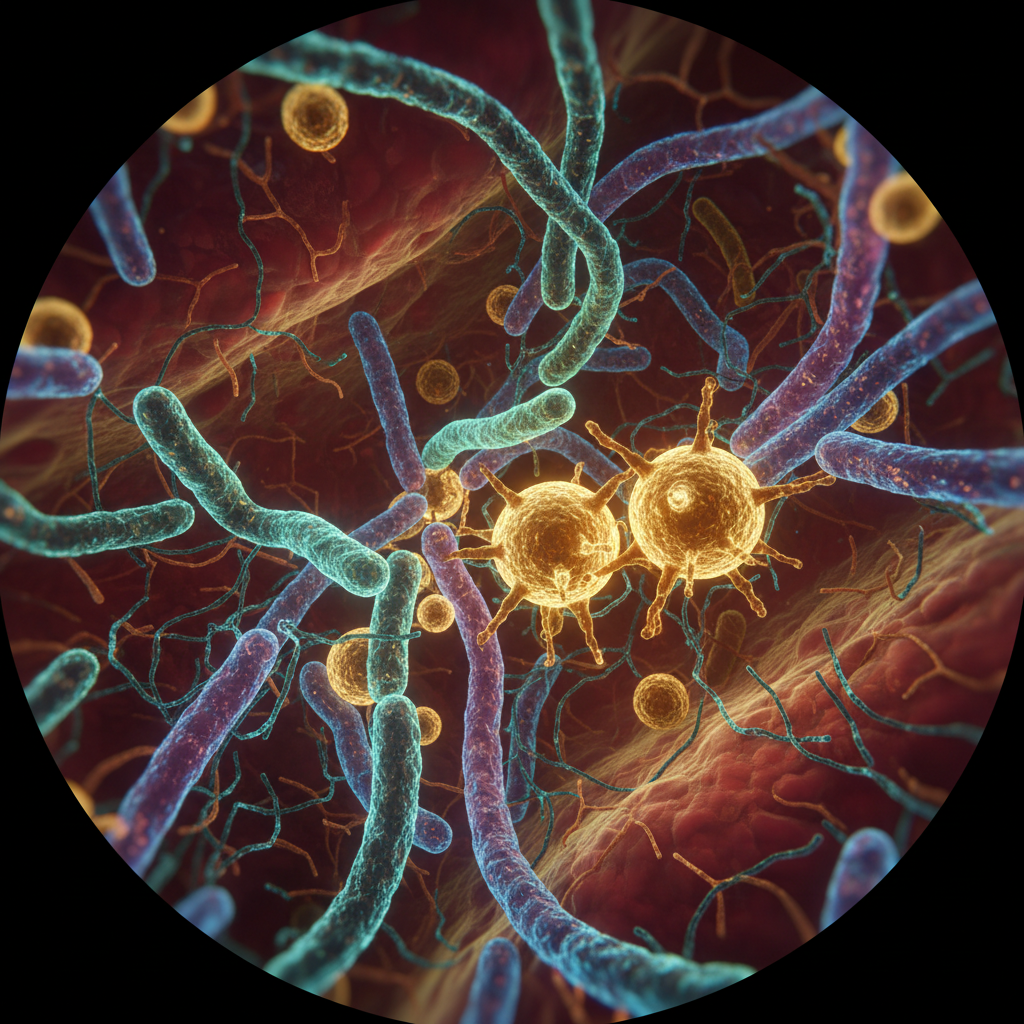
Gut Microbiome: The Hidden Key to a Supercharged Immune System | gut microbiome immunity
Unlock the secrets of the gut-immune axis and learn how 70% of your immune system depends on a healthy microbiome for peak defense and vitality.
Unlock the secrets of the gut-immune axis and learn how 70% of your immune system depends on a healthy microbiome for peak defense and vitality.
Trending Now
Gut Microbiome: The Hidden Key to a Supercharged Immune System
Key Takeaways
- 70–80% of all immune cells in the human body reside in the gastrointestinal tract, making gut health inseparable from immune function.
- The gut microbiome encodes over 5 million genes — up to 500 times the size of the human genome — giving it extraordinary influence over human physiology.
- Short-chain fatty acids (SCFAs), produced by beneficial gut bacteria, are critical regulators of inflammation and immune cell development.
- Dysbiosis — an imbalance in gut microbial communities — is linked to autoimmune disorders, chronic inflammation, allergies, and metabolic disease.
- Strategic use of prebiotics and probiotics, alongside lifestyle interventions, can meaningfully restore and sustain microbiome diversity.
- Emerging research points to postbiotics and precision microbiome therapies as the next frontier in immune optimization.
The Gut-Immune Connection: Your Body's First Line of Defense
Most people think of the immune system as something that lives in the blood, the lymph nodes, or the bone marrow. Few realize that the most critical immune battleground in the human body is tucked inside the gastrointestinal tract. The relationship between gut microbiome immunity is not a peripheral finding in modern biology — it is one of the most rigorously studied and consequential discoveries of 21st-century medicine.
The gut is home to trillions of microorganisms — bacteria, viruses, fungi, and archaea — collectively known as the gut microbiome. This invisible ecosystem operates as a biological command center, orchestrating immune responses, modulating inflammation, regulating hormones, and even influencing brain function. Understanding this connection is no longer optional for anyone serious about optimizing their health.
Despite rising public interest, a knowledge gap persists. According to the Biocodex Microbiota Institute, 53% of Americans report taking probiotics as of 2025, yet only 27% claim to understand the term "gut microbiome" precisely. This disconnect — between behavior and understanding — is precisely what this article aims to bridge.
Whether you are a fitness enthusiast seeking peak performance, an individual managing chronic inflammation, or simply someone committed to long-term wellness, the science of gut microbiome immunity offers transformative insights. Let us explore what the research actually says.
Why 70% of Your Immune System Resides in Your Gut
The statistic is striking enough to reframe everything you thought you knew about immunity.
"70–80% of all immune cells in the human body are found in the gastrointestinal tract." — MDPI Nutrients
This concentration of immune activity is not accidental. The gut is the largest interface between the human body and the external environment. Every day, the gastrointestinal tract processes food, water, pathogens, toxins, and foreign antigens — making it the most logistically demanding site of immune surveillance in the body.
Embedded within the gut lining is a sophisticated network known as the gut-associated lymphoid tissue (GALT). This system includes Peyer's patches, mesenteric lymph nodes, and lamina propria lymphocytes, all working in concert to distinguish between harmful pathogens and beneficial microbes — a process called immune tolerance.
The gut microbiome plays a direct role in calibrating this immune network. Beneficial bacteria communicate with immune cells through molecular signals, training the immune system to respond proportionally — attacking genuine threats while tolerating harmless food antigens and commensal microbes. Without these microbial teachers, immune responses become erratic, excessive, or insufficiently targeted.
Furthermore, as the Frontiers in Microbiology reports, the gut microbiome contains over 5 million genes — 150 to 500 times the size of the human genome. This staggering genetic complexity gives the microbiome capabilities far exceeding what the human body could independently generate, including the production of immune-modulating metabolites, anti-inflammatory compounds, and antimicrobial proteins.
How Gut Microbes 'Train' Your Immune Cells for Battle
One of the most remarkable functions of the gut microbiome is its role in immune education — the process by which immune cells learn to identify threats, build memory, and calibrate their responses.
T-cell regulation is a prime example. Regulatory T-cells (Tregs) are a specialized subset of white blood cells responsible for maintaining immune homeostasis — preventing the immune system from attacking the body's own tissues. Research published in Nature Reviews Immunology confirms that certain gut bacteria, including species from the Clostridia class and Bacteroides fragilis, are essential for inducing Treg development in the colon.
When microbiota diversity is high, this training process is robust and precise. The immune system learns what to tolerate and what to attack. When microbial diversity collapses, Treg function is compromised, contributing to autoimmune conditions such as rheumatoid arthritis, multiple sclerosis, and inflammatory bowel disease.
The microbiome also stimulates the production of secretory immunoglobulin A (sIgA) — the dominant antibody in mucosal immunity. sIgA coats the intestinal lining, neutralizing pathogens before they breach the epithelial barrier. Diverse, healthy microbiomes produce more robust sIgA responses, effectively functioning as a standing immune army at the gut's frontier.
| Immune Cell / Molecule | Role in Gut Immunity | Microbial Influence |
|---|---|---|
| Regulatory T-Cells (Tregs) | Suppress excessive immune responses | Induced by Clostridia spp., B. fragilis |
| Secretory IgA (sIgA) | Neutralizes pathogens at mucosal surfaces | Stimulated by diverse commensal bacteria |
| Natural Killer (NK) Cells | Destroy virally infected and cancerous cells | Activated by microbial metabolites |
| Dendritic Cells | Present antigens; bridge innate and adaptive immunity | Shaped by microbial pattern recognition |
| Macrophages | Phagocytose pathogens; modulate inflammation | Polarized by SCFA signaling |
Short-Chain Fatty Acids (SCFAs): The Invisible Immune Regulators
Among the many mechanisms through which the gut microbiome regulates immunity, short-chain fatty acids (SCFAs) stand out as some of the most powerful and well-documented.
SCFAs — primarily butyrate, propionate, and acetate — are produced when beneficial gut bacteria ferment dietary fiber in the colon. These metabolites are not merely waste products of microbial digestion; they are active signaling molecules with profound effects on immune function throughout the body.
Butyrate, in particular, serves as the primary energy source for colonocytes (the cells lining the colon), playing a central role in maintaining intestinal barrier integrity. It also inhibits the activity of pro-inflammatory signaling pathways, including NF-κB, thereby reducing systemic inflammation. Research cited in Nature Reviews Immunology identifies butyrate as a key epigenetic regulator — capable of modifying gene expression in immune cells without altering DNA itself.
SCFAs, especially butyrate, have been shown to suppress pro-inflammatory cytokine production, promote Treg differentiation, and strengthen the epithelial barrier — making them indispensable to balanced immune regulation.
Propionate influences the liver and supports anti-inflammatory macrophage polarization, while acetate plays a role in peripheral immune cell function and appetite regulation. Together, these three SCFAs connect dietary choices, microbial activity, and immune outcomes in a continuous feedback loop.
This is why fiber consumption is not simply a matter of digestive comfort — it is an act of immune investment. High-fiber diets fuel SCFA-producing bacteria such as Faecalibacterium prausnitzii, Roseburia intestinalis, and Akkermansia muciniphila, all of which are associated with reduced inflammation markers and improved immune resilience.
The Impact of Dysbiosis: When Microbial Imbalance Leads to Illness
Dysbiosis — a state of microbial imbalance characterized by reduced diversity, loss of beneficial species, or overgrowth of harmful bacteria — is increasingly recognized as an underlying driver of a wide range of chronic diseases.
The causes of dysbiosis are numerous and often interconnected:
- Antibiotic overuse, which indiscriminately eliminates both pathogenic and beneficial bacteria
- Ultra-processed food consumption, which lacks the fiber necessary to sustain diverse microbial communities
- Chronic psychological stress, which alters gut motility and microbial composition via the gut-brain axis
- Sedentary behavior and sleep deprivation, both of which negatively impact microbiota diversity
The consequences of dysbiosis extend far beyond the gut. Gut Microbiota for Health reports that 2025 research continues to link dysbiosis to conditions spanning metabolic syndrome, type 2 diabetes, cardiovascular disease, depression, and cancer — a scope that underscores the microbiome's systemic reach.
| Condition | Associated Microbial Disruption | Key Research Finding |
|---|---|---|
| Inflammatory Bowel Disease (IBD) | Reduced Faecalibacterium prausnitzii; elevated Proteobacteria | Microbial imbalance drives chronic mucosal inflammation |
| Type 2 Diabetes | Reduced butyrate-producing bacteria | Impaired glucose metabolism linked to dysbiosis |
| Obesity | Altered Firmicutes/Bacteroidetes ratio | Dysbiotic microbiome extracts more energy from food |
| Allergies & Asthma | Reduced early-life microbial diversity | Insufficient immune tolerance development |
| Depression & Anxiety | Disrupted gut-brain axis signaling | Altered serotonin production and vagal nerve activity |
| Autoimmune Disorders | Compromised Treg induction | Loss of self-tolerance mechanisms |
The immune implications are particularly severe. Dysbiosis impairs sIgA production, reduces SCFA output, disrupts T-cell regulation, and accelerates systemic inflammation — a chronic, low-grade inflammatory state that serves as the biological foundation of virtually all modern chronic diseases.
Leaky Gut and Immunity: Strengthening the Intestinal Barrier
The intestinal barrier is one of the most structurally elegant and functionally critical systems in the human body. A single layer of epithelial cells, connected by tight junction proteins, separates the contents of the gut from the bloodstream and systemic circulation. When this barrier is compromised — a condition colloquially known as "leaky gut" or, clinically, intestinal permeability — immune consequences are severe.
A permeable gut allows bacterial fragments, endotoxins (particularly lipopolysaccharides, or LPS), and undigested food particles to translocate into the bloodstream. The immune system, encountering these foreign molecules outside their intended compartment, mounts an inflammatory response. When barrier dysfunction becomes chronic, so does the inflammation — fueling systemic inflammation and increasing susceptibility to autoimmune, metabolic, and neurological conditions.
Maintaining gut barrier integrity depends substantially on the microbiome. Key contributions include:
- SCFA production (particularly butyrate) nourishes epithelial cells and upregulates tight junction proteins
- Akkermansia muciniphila reinforces the mucus layer that protects the epithelium
- Microbial metabolites regulate the expression of claudin and occludin — structural proteins essential to tight junction function
Dietary and lifestyle strategies that support a healthy intestinal barrier include reducing ultra-processed food intake, increasing consumption of fermented and fiber-rich foods, managing chronic stress, and incorporating prebiotics and probiotics with documented mucosal support.
Nutrition for Immunity: The Power of Prebiotics and Probiotics
Nutrition is the most accessible and powerful lever available for shaping gut microbiome immunity. Two categories of nutritional tools have accumulated the strongest evidence base: prebiotics and probiotics.
Prebiotics are non-digestible dietary fibers that selectively feed beneficial gut bacteria. Common sources include:
- Inulin and fructooligosaccharides (FOS) — found in garlic, onions, leeks, asparagus, and chicory root
- Beta-glucans — abundant in oats and barley
- Resistant starch — present in cooled cooked potatoes, legumes, and green bananas
By nourishing SCFA-producing bacteria, prebiotics indirectly strengthen the intestinal barrier, reduce inflammatory markers, and enhance immune cell function.
Probiotics are live microorganisms that, when administered in adequate amounts, confer a health benefit on the host. Well-researched strains include:
| Probiotic Strain | Key Immune Benefit | Evidence Quality |
|---|---|---|
| Lactobacillus rhamnosus GG | Reduces respiratory infection duration; supports gut barrier | High (multiple RCTs) |
| Bifidobacterium longum | Modulates inflammatory cytokines; reduces systemic inflammation | Moderate-High |
| Lactobacillus reuteri | Induces Treg differentiation; anti-inflammatory activity | Moderate |
| Saccharomyces boulardii | Prevents antibiotic-associated dysbiosis | High |
| Akkermansia muciniphila | Strengthens mucus layer; improves metabolic and immune markers | Emerging (early clinical data) |
It is important to note that not all probiotic supplements are equivalent. Strain specificity, dosage, and survivability through the gastrointestinal tract all determine clinical effectiveness. Working with a qualified healthcare provider to identify strains appropriate to individual health goals remains the gold standard approach.
Emerging Trends: Next-Gen Probiotics and Postbiotic Supplements
The field of microbiome science is evolving at a pace that outstrips most areas of biomedical research. Gut Microbiota for Health identifies several transformative developments shaping the landscape in 2025 and beyond.
Next-generation probiotics (NGPs) move beyond the conventional Lactobacillus and Bifidobacterium strains to include previously unculturable or clinically underexplored bacteria. Faecalibacterium prausnitzii — notable for its potent anti-inflammatory properties — and Akkermansia muciniphila — associated with improved intestinal barrier integrity and metabolic health — are at the forefront of clinical trials.
Postbiotics represent another frontier. Defined as preparations of inanimate microorganisms or their components that confer health benefits, postbiotics include bacterial cell wall fragments, metabolites, and enzymes. Because they do not contain live organisms, postbiotics offer improved stability, longer shelf life, and safety profiles suitable for immunocompromised individuals.
Fecal microbiota transplantation (FMT), already approved for recurrent Clostridioides difficile infection, is under investigation for applications in inflammatory bowel disease, metabolic syndrome, and even neuropsychiatric disorders — reflecting the breadth of the microbiome's systemic influence.
Lifestyle Factors: How Sleep, Stress, and Exercise Shape Your Gut
Microbial communities are not static. They are dynamic, responsive ecosystems shaped continuously by behavior and environment. Three lifestyle variables exert particularly consistent influence on microbiota diversity and, consequently, on gut microbiome immunity.
Sleep: Circadian rhythms govern both immune function and gut microbial activity. Studies demonstrate that chronic sleep deprivation reduces populations of beneficial bacteria, increases intestinal permeability, and elevates inflammatory markers. Prioritizing seven to nine hours of quality sleep per night is among the most powerful non-dietary interventions for microbiome health.
Stress: The gut-brain axis — a bidirectional communication network involving the vagus nerve, enteric nervous system, and hypothalamic-pituitary-adrenal (HPA) axis — means that chronic psychological stress directly alters gut microbial composition. Elevated cortisol reduces microbial diversity, increases gut permeability, and promotes pro-inflammatory bacterial species. Mind-body practices such as meditation, breathwork, and yoga have demonstrated measurable positive effects on gut microbial profiles.
Exercise: Regular, moderate-intensity physical activity is consistently associated with greater microbiota diversity and enrichment of SCFA-producing bacteria. Research indicates that even 30 minutes of aerobic exercise three to five times per week can meaningfully shift microbial composition toward profiles associated with lower inflammation and stronger immune function.
Personalized Microbiome Care: The Future of Immune Optimization
The concept of a "one-size-fits-all" approach to gut health is becoming scientifically obsolete. Advances in metagenomics — the large-scale sequencing of microbial genetic material — now enable clinicians and researchers to profile individual gut microbiomes with unprecedented granularity.
Personalized microbiome testing platforms can identify specific deficiencies in microbial diversity, flag dysbiotic patterns, and guide targeted dietary or supplementation interventions. Coupled with artificial intelligence-driven analysis, these tools are beginning to enable truly individualized immune optimization strategies — a paradigm shift from population-level recommendations to precision gut medicine.
The integration of microbiome data with other omics technologies — genomics, metabolomics, and proteomics — promises to further illuminate the complex interplay between microbial communities and host immune function, paving the way for therapies that are as unique as the individuals they serve.
Conclusion: Building a Resilient Immune System from Within
The evidence is unambiguous: gut microbiome immunity is not a wellness trend. It is foundational biology. With 70–80% of immune cells residing in the gut, a microbial ecosystem encoding over 5 million genes, and a direct mechanistic link between microbial balance and immune competence, the gut microbiome stands as the most powerful — and most modifiable — determinant of immune health available to us.
The path forward is both scientifically informed and practically achievable. Diversifying dietary fiber intake, incorporating evidence-based prebiotics and probiotics, managing chronic stress, prioritizing sleep, and maintaining regular physical activity are not separate wellness prescriptions — they are unified strategies for cultivating the microbial ecosystem upon which your immune resilience depends.
The gut microbiome does not operate in isolation. It is a living reflection of how you eat, sleep, move, and live. The most powerful investment you can make in your immune system begins not with a prescription, but with your next meal.
Sources
- MDPI Nutrients – Gut-Associated Lymphoid Tissue and Immune Cell Distribution
- Biocodex Microbiota Institute – United States 2025: Knowledge and Behaviors About Microbiota
- Frontiers in Microbiology – Gut Microbiome Gene Complexity
- Nature Reviews Immunology – Microbiome and Immune Regulation
- Gut Microbiota for Health – Year in Review 2025
Published on Voxora | Category: Health & Science | Reading Time: Approximately 11 minutes
Advertisement
Frequently Asked Questions
What percentage of the human immune system is located in the gut?
Approximately 70% to 80% of the body's immune cells are found in the gastrointestinal tract, specifically within the gut-associated lymphoid tissue (GALT).
How quickly can dietary changes impact gut bacteria and immunity?
Research indicates that significant shifts in the gut microbiome's composition and metabolic activity can occur within just 24 to 48 hours of a major dietary change.
Do probiotics really help prevent common illnesses like the cold?
Yes, meta-analyses of clinical trials show that certain probiotics can reduce the duration of respiratory infections by an average of 1 to 1.5 days and decrease the risk of infection by about 12%.
What role do Short-Chain Fatty Acids (SCFAs) play in immune function?
When gut bacteria ferment fiber, they produce SCFAs like butyrate; these compounds are crucial for maintaining the gut barrier and signaling the production of regulatory T-cells to prevent chronic inflammation.
How many different species of bacteria are needed for a healthy immune system?
While there is no single perfect number, a healthy gut typically contains over 1,000 different species of bacteria; higher microbial diversity is consistently linked to more robust immune responses and lower rates of autoimmune diseases.
Sponsored
You Might Also Like



Advertisement
Comments (0)
Sign in to join the conversation
No comments yet. Be the first to share your thoughts!