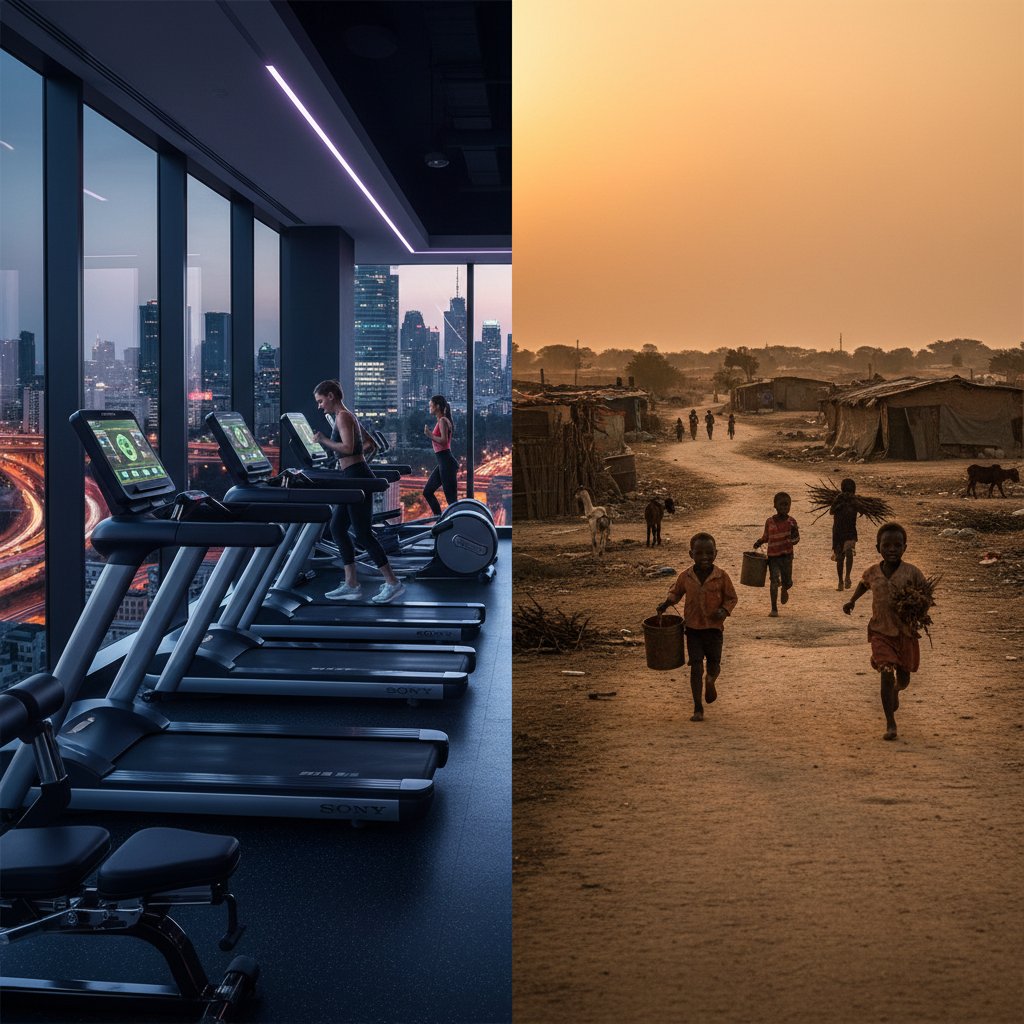
The Longevity Gap: Why Your Zip Code Dictates Your Lifespan | health inequality across countries
Research reveals a 30-year life expectancy gap and 40% exercise disparity between nations, showing health is often a privilege of wealth and geography.
Research reveals a 30-year life expectancy gap and 40% exercise disparity between nations, showing health is often a privilege of wealth and geography.
Trending Now
📋 Key Takeaways
- A 25-year life expectancy gap exists between the world's wealthiest and poorest nations, driven by systemic inequities rather than individual choices.
- Leisure-time physical activity participation differs by 40 percentage points between wealthy men in high-income countries and poor women in low-income nations.
- Children in low-income countries are 13 times more likely to die before age five than their peers in wealthy nations.
- The United States spends more on healthcare per capita than any peer nation yet still trails countries like Japan and Switzerland in life expectancy by 5–6 years.
- Health equity is not merely a policy concern — it is a fitness, wellness, and humanitarian imperative for every engaged global citizen.
The Longevity Gap: Why Your Zip Code Dictates Your Lifespan
There is an invisible border running through global health — one that no passport can cross and no fitness tracker can quantify. It does not separate nations by geography alone, but by wealth, infrastructure, political will, and access. On one side of this border, individuals enjoy sophisticated medical systems, park-lined neighborhoods, and decades of accumulated wellness research. On the other, millions of people are born into environments where clean water is a privilege, a trained midwife is a rarity, and the concept of "leisure-time exercise" is a foreign luxury.
Health inequality across countries is not a distant abstraction. It is a measurable, documented, and devastating reality that determines whether you live to see your grandchildren — or whether you do not survive childhood at all. For health and fitness enthusiasts who track macros, optimize recovery, and debate the merits of zone-two cardio, understanding the global architecture of health inequity is not just intellectually important — it is morally essential.
This article examines the forces shaping the life expectancy gap in 2024, the barriers to physical activity access, the maternal mortality crisis in developing nations, the U.S. longevity paradox, and the digital divide redefining health access in the 21st century.
The 30-Year Divide: Mapping Global Life Expectancy in 2024
When researchers and policy bodies talk about the life expectancy gap, the numbers are staggering enough to demand pause. According to the World Health Organization, Monaco records an average life expectancy of 89.4 years, while the average across Sub-Saharan Africa sits at approximately 64.8 years — a difference of nearly 25 years as of 2024.
💬 "A child born in Monaco today can expect to live 25 years longer than one born in Sub-Saharan Africa — not because of genetics, but because of geography." — WHO, 2024
This gap is not purely biological. It is the measurable result of unequal access to healthcare infrastructure, nutritious food systems, safe housing, clean air, and stable governance. The healthy life expectancy — the number of years a person lives in good health — is equally stratified. Nations with robust primary care systems, sanitation infrastructure, and educated populations consistently outperform lower-income countries on virtually every health metric.
Table 1: Life Expectancy by Region (2024 Estimates)
| Region | Average Life Expectancy | Healthy Life Expectancy |
|---|---|---|
| Western Europe | 82.4 years | 72.1 years |
| North America | 79.2 years | 68.9 years |
| East Asia & Pacific | 78.6 years | 68.3 years |
| Latin America & Caribbean | 75.1 years | 65.4 years |
| South Asia | 71.3 years | 61.8 years |
| Sub-Saharan Africa | 64.8 years | 56.2 years |
Sources: WHO, OECD iLibrary
What this table makes unmistakably clear is that the gradient of longevity closely mirrors the gradient of economic development. The wealthier the region, the longer — and healthier — its citizens tend to live. This is not coincidence. It is causation, backed by decades of epidemiological research.
Social Determinants of Health: Why Biology is Only Half the Story
Modern medicine has long sought biological explanations for disease — genetic predisposition, microbial infection, cellular dysfunction. But a growing and irrefutable body of evidence demonstrates that social determinants of health — the non-medical conditions in which people are born, grow, live, work, and age — account for 30 to 55 percent of health outcomes, according to WHO.
These determinants include:
- Income and economic stability — poverty is among the most powerful predictors of poor health outcomes globally
- Education access — higher educational attainment consistently correlates with longer lifespans and lower rates of chronic disease
- Neighborhood and built environment — access to green spaces, safe sidewalks, and clean air directly influences physical activity levels and respiratory health
- Healthcare access and quality — proximity to trained medical professionals, diagnostic equipment, and essential medicines shapes survival rates for preventable conditions
- Social and community context — systemic racism, gender discrimination, and political marginalization measurably worsen health outcomes for affected populations
The socioeconomic health impact model is no longer theoretical. It is the organizing framework of modern public health. When policymakers, researchers, and health advocates speak of health equity, they are acknowledging that achieving fair health outcomes requires addressing these upstream, structural inequities — not merely treating disease downstream.
Exercise as Luxury: The Economic Barrier to 'Choice-Based' Movement
Within the global fitness community, physical activity is often framed as a personal decision — a matter of motivation, discipline, and lifestyle optimization. The data, however, reveals something far more complex and troubling.
A landmark 2024 study published in Nature Medicine found that there is a 40 percentage point gap in leisure-time physical activity participation between wealthy men in high-income countries and poor women in low-income nations. This is not a gap in motivation. It is a gap in structural access.
💬 "The 40-point leisure-time exercise gap between wealthy men in high-income countries and poor women in low-income nations is among the starkest illustrations of exercise inequality in modern research." — Nature Medicine, 2024
Exercise inequality operates through multiple reinforcing mechanisms:
- Time poverty — Women in low-income contexts frequently bear disproportionate burdens of unpaid domestic labor, leaving minimal time for voluntary physical activity
- Safety constraints — In many regions, women face genuine physical danger when exercising outdoors, making movement a risk rather than a wellness tool
- Economic barriers — Gym memberships, athletic footwear, fitness equipment, and even safe recreational spaces come with financial costs that are prohibitive for billions
- Infrastructure deficits — Low-income urban and rural areas globally suffer from absent sidewalks, polluted air, traffic-congested streets, and non-existent green spaces
Table 2: Leisure-Time Physical Activity Participation by Demographic Group
| Population Group | Estimated Participation Rate |
|---|---|
| Wealthy men in high-income countries | ~70–75% |
| Wealthy women in high-income countries | ~60–65% |
| Low-income men in high-income countries | ~45–50% |
| Wealthy men in low-income countries | ~40–45% |
| Low-income women in low-income countries | ~30–35% |
Source: Nature Medicine, 2024 estimates
For the fitness community to genuinely champion health, it must reckon with this reality. Promoting personal fitness without acknowledging the structural barriers millions face risks amplifying privilege rather than expanding wellness.
The Maternal and Infant Mortality Crisis in Developing Nations
Perhaps nowhere is health inequality across countries more viscerally apparent than in maternal mortality rates and infant survival statistics. These figures strip away the complexity of chronic disease management and reveal the most basic test of a healthcare system: can it keep mothers and newborns alive?
According to the World Health Organization, children born in low-income countries are 13 times more likely to die before the age of five than those born in high-income countries. Thirteen times. For a condition — childhood — that should carry no inherent mortality premium.
💬 "Children born in low-income countries are 13 times more likely to die before age five than those in high-income countries." — World Health Organization, 2025
This disparity is driven by preventable causes: inadequate prenatal care, absence of trained birth attendants, untreated infections, malnutrition, and non-existent postnatal support systems. Maternal mortality follows the same devastating gradient. Sub-Saharan Africa and South Asia account for the vast majority of the approximately 287,000 maternal deaths recorded globally each year, the overwhelming majority of which are clinically preventable with existing medical knowledge and resources.
The gap is not a knowledge problem. It is an equity problem. The tools to save these lives exist. The political and financial will to deploy them equitably does not.
The U.S. Longevity Paradox: High Spending, Lower Returns
The United States presents a particularly instructive case study in the complexity of health inequality — not as a low-income nation, but as a high-income outlier that consistently underperforms its peer nations on core health metrics.
According to KFF and OECD data, U.S. life expectancy rose to 79.0 years in 2024, a modest recovery following the devastating COVID-19 pandemic era declines. Yet this figure still trails peer nations including Japan (84.3 years) and Switzerland (83.9 years) by 5 to 6 years — despite the U.S. spending nearly double the per-capita healthcare expenditure of most comparable nations.
💬 "The U.S. spends more per capita on healthcare than any comparable nation, yet its 79.0-year life expectancy in 2024 still lags Japan and Switzerland by 5–6 years." — KFF / OECD, 2024
This paradox is explained not by the quality of U.S. medical intervention at the top end, but by profound internal health inequities:
- Racial health disparities — Black Americans have a life expectancy approximately 4 years lower than white Americans, a gap rooted in systemic racism, socioeconomic inequality, and differential healthcare access
- Rural healthcare deserts — Millions of Americans live in counties with no hospital, no specialist, and no consistent primary care provider
- Insurance-linked access — The absence of universal healthcare coverage means that tens of millions of Americans delay or forgo treatment due to cost
- Obesity, sedentary behavior, and ultra-processed food systems — The American dietary and built environment contributes disproportionately to chronic disease burden
The U.S. example demonstrates that spending alone does not produce health equity. Structural investment in primary care access, preventive health infrastructure, and social safety nets is what separates high-performing from underperforming healthcare systems.
The Digital Health Divide: Technology as a New Barrier to Equity
As wearable technology, telehealth platforms, and AI-driven health coaching proliferate across affluent markets, a new dimension of health inequality across countries is emerging: the digital health divide.
In high-income nations, individuals can monitor heart rate variability, receive remote specialist consultations, access personalized nutrition algorithms, and join fitness communities spanning continents. In low-income regions, many people lack reliable electricity, smartphone access, or internet connectivity — rendering the entire digital health revolution irrelevant to their daily survival.
Table 3: Digital Health Access Indicators by Income Classification
| Indicator | High-Income Countries | Low-Income Countries |
|---|---|---|
| Smartphone penetration | ~85–90% | ~25–35% |
| Reliable internet access | ~80–90% | ~15–25% |
| Telehealth platform availability | Widely available | Limited to experimental programs |
| AI-assisted diagnostics access | Growing rapidly | Nascent or non-existent |
| Wearable health device ownership | ~30–40% of adults | Less than 2% of adults |
Sources: WHO, OECD iLibrary
This divide is particularly alarming because digital health tools have genuine potential to democratize care — if designed and deployed equitably. The risk, currently materializing in real time, is that they instead accelerate the advantages of the already-advantaged.
Climate Change and Health: The Growing Threat to Vulnerable Populations
No examination of global health equity is complete without acknowledging climate change as an amplifier of existing health disparities. Populations least responsible for global carbon emissions — those in Sub-Saharan Africa, South Asia, and low-lying Pacific Island nations — face the most severe health consequences of climate-driven environmental disruption.
Heat-related illness, vector-borne disease expansion (particularly malaria and dengue fever), food insecurity driven by agricultural disruption, and displacement from extreme weather events disproportionately devastate populations with the least healthcare infrastructure to respond. According to the WHO, climate change is expected to cause approximately 250,000 additional deaths per year between 2030 and 2050, predominantly among the world's most vulnerable populations.
For health and fitness professionals and enthusiasts, climate adaptation is not separate from health advocacy — it is central to it.
Case Study: How Targeted Primary Care Transformed Health in Vietnam
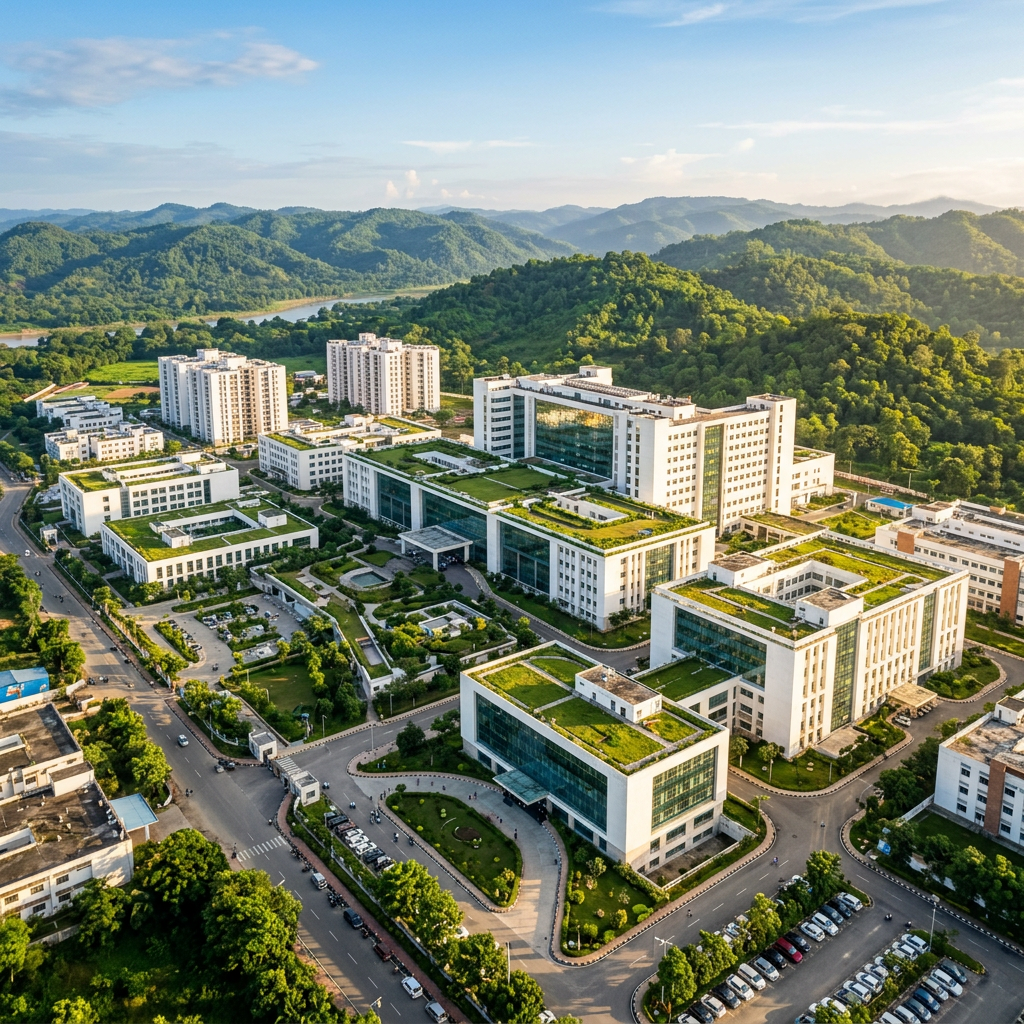
Vietnam stands as one of global public health's most instructive success stories — a low-to-middle-income nation that dramatically improved population health outcomes through strategic investment in primary care infrastructure rather than high-technology tertiary medicine.
Between 1990 and 2020, Vietnam's life expectancy rose from approximately 65 years to 75.4 years — a gain of more than a decade in three decades. Key drivers included:
- Community health worker networks extending care into rural and remote regions
- Universal vaccination programs dramatically reducing childhood infectious disease mortality
- Targeted maternal and child health initiatives improving birth outcomes and reducing under-five mortality
- Investment in health literacy and preventive care reducing downstream treatment burdens
Vietnam's trajectory demonstrates that health equity is achievable even under significant resource constraints — when political commitment prioritizes population health as a public good rather than a market commodity.
Movement as a Human Right: Reconceptualizing Public Health for 2025
The emerging consensus among global health researchers and policy advocates is that physical movement is not a luxury or a lifestyle preference — it is a fundamental dimension of human health, dignity, and productivity. When 40 percentage points separate the most and least active populations globally, and when that gap maps almost perfectly onto income and gender, the conversation must shift from individual motivation to structural rights.
The WHO Global Action Plan on Physical Activity envisions a world where every person, regardless of income, gender, or geography, has access to safe, affordable opportunities for movement. Realizing that vision requires:
- Urban planning that prioritizes walkable, bikeable, green infrastructure
- National policies that designate recreational space as public health infrastructure
- Gender-specific safety interventions that enable women to exercise freely
- Subsidized or publicly funded physical activity programming in low-income communities
For health and fitness enthusiasts in high-income contexts, reframing movement as a universal right rather than a personal achievement is a meaningful conceptual shift with practical advocacy implications.
Actionable Steps: How Fitness Communities Can Advocate for Equity
The fitness and wellness community collectively holds significant influence — through purchasing power, social platforms, professional expertise, and cultural reach. Here is how that influence can be channeled toward health equity:
- Support organizations working on access — Donate to or volunteer with nonprofits expanding physical activity access in underserved communities globally (e.g., Right To Play, UNICEF Health Programs)
- Advocate for policy change — Engage with local and national policies governing park funding, urban planning, school physical education, and healthcare access
- Diversify the fitness narrative — Challenge the fitness industry's tendency to center wealthy, able-bodied, high-income experiences as the default health story
- Demand supply chain and corporate accountability — Support fitness brands that invest transparently in global health equity initiatives
- Educate your community — Use your platform, however large or small, to connect the dots between structural inequality and health outcomes
Health advocacy and personal fitness are not in competition. They are complementary expressions of a commitment to human flourishing.
Conclusion: Building a World Where Health is Not a Privilege
The evidence is unambiguous. Health inequality across countries is one of the defining moral and practical challenges of the 21st century. A 25-year life expectancy gap between the world's wealthiest and poorest nations, a 40 percentage point divide in exercise participation, children 13 times more likely to die before age five, and a U.S. paradox of high spending and lagging outcomes — these are not abstractions. They are the lived realities of billions of human beings whose health trajectories were determined before they drew their first breath.
For health and fitness enthusiasts, the implications are both humbling and energizing. The discipline and knowledge you have developed in pursuit of personal wellness exists within a global context where billions are structurally excluded from those same possibilities. Recognizing that context — and acting on it — is the next frontier of what it means to be a health advocate.
A zip code should not be a death sentence. A world where health is a universal right, not a geographic privilege, is not utopian — it is the stated goal of global health architecture. It requires your awareness, your advocacy, and your voice.
Sources
- World Health Organization — Social Determinants of Health
- World Health Organization — Health Inequities Are Shortening Lives by Decades (2025)
- Nature Medicine — Global Physical Activity Inequality Study (2024)
- KFF / Health System Tracker — U.S. Life Expectancy Compared to Other Countries
- OECD iLibrary — Health at a Glance
Advertisement
Frequently Asked Questions
What is the current gap in life expectancy between high-income and low-income countries?
According to the World Health Organization, there is an 18.1-year gap in life expectancy between the world's richest and poorest nations, with high-income countries averaging 80.8 years compared to just 62.7 years in low-income regions.
How does global physical inactivity vary by a country's income level?
Data from the WHO shows that physical inactivity is significantly higher in high-income countries at approximately 37%, more than double the 16% rate observed in low-income countries, largely due to more sedentary occupations and motorized transport.
What is the disparity in access to a healthy diet for fitness across the globe?
Economic inequality affects nutrition significantly, as the FAO reports that over 3.1 billion people—roughly 40% of the global population—cannot afford a healthy diet, limiting their ability to meet essential macronutrient and micronutrient fitness goals.
How do obesity rates differ between nations with different economic statuses?
Global obesity rates have quadrupled since 1990; however, prevalence ranges drastically from less than 5% in countries like Vietnam and Ethiopia to over 35% in high-income nations like the United States and several Pacific Island territories.
What is the difference in healthcare spending per person between wealthy and developing nations?
Health inequality is driven by investment; high-income countries spend an average of over $5,200 per person annually on health, whereas low-income countries often spend less than $40 per person, severely impacting preventative sports medicine and recovery access.
Sponsored
You Might Also Like


Advertisement
Comments (0)
Sign in to join the conversation
No comments yet. Be the first to share your thoughts!