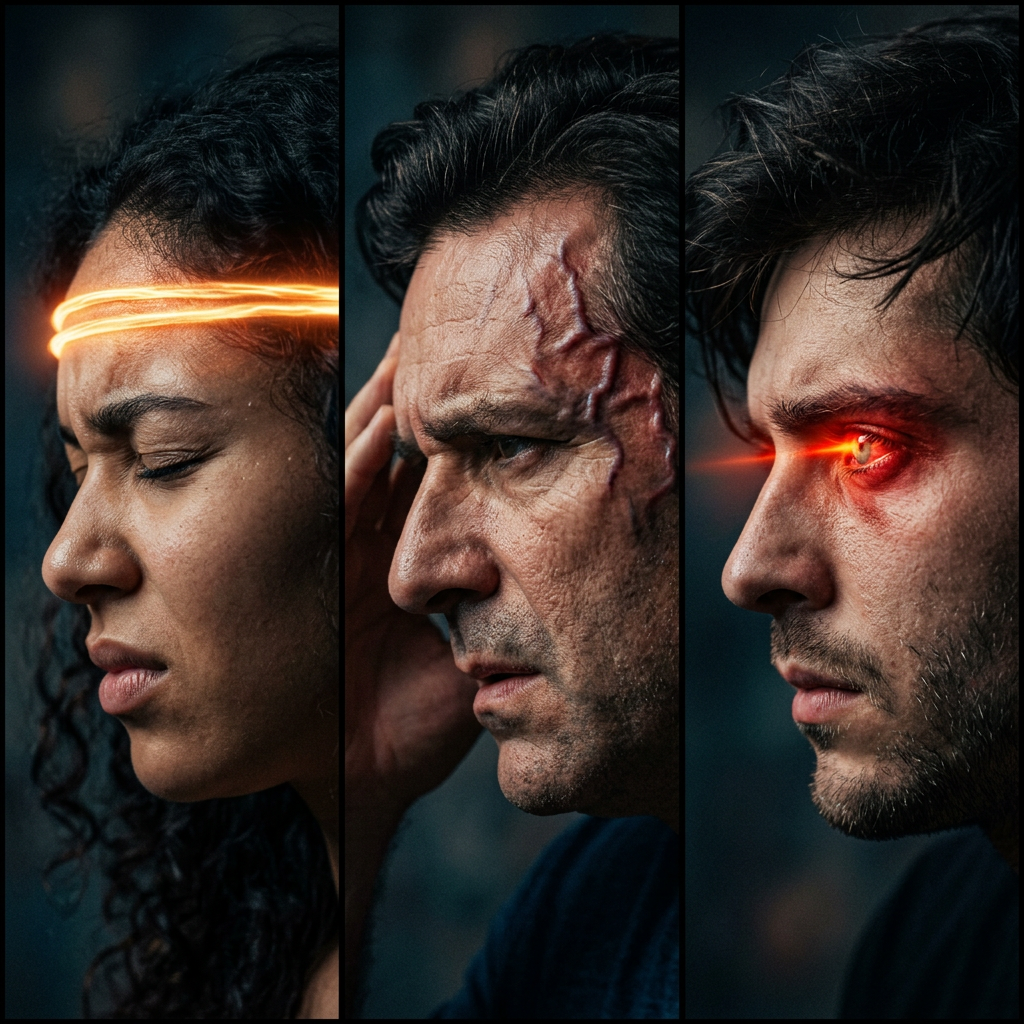
Migraine vs. Tension vs. Cluster Headaches: How to Tell the Difference | migraine vs tension headache
Discover the clinical differences between migraines, tension, and cluster headaches to identify your pain and find the most effective treatment plan.
Discover the clinical differences between migraines, tension, and cluster headaches to identify your pain and find the most effective treatment plan.
Trending Now
Migraine vs. Tension vs. Cluster Headaches: How to Tell the Difference
Key Takeaways
- Tension-type headaches are the most common primary headache disorder, affecting up to 80% of adults at some point in their lives.
- Migraines are far more than head pain — they are complex neurological events that can include aura, nausea, and debilitating sensitivity to light and sound.
- Cluster headaches, though rare, are considered among the most painful conditions known to medicine and follow a cyclical, predictable pattern.
- Accurately distinguishing between headache types is essential for effective treatment and long-term chronic headache management.
- Recognizing your personal headache triggers — from stress to diet to sleep disruption — can significantly reduce attack frequency and severity.
1. Introduction to Primary Headache Disorders
Head pain is one of the most universal human experiences. Yet not all headaches are created equal. For the millions of people who reach for a pain reliever without a second thought, understanding the type of headache they are experiencing could be the difference between temporary relief and lasting recovery.
The migraine vs tension headache debate is one of the most commonly misunderstood distinctions in clinical medicine. Add cluster headaches to the conversation, and the picture becomes even more nuanced. These three conditions — while all classified as primary headache disorders (meaning they are not caused by an underlying disease) — differ dramatically in their pathophysiology, symptom profiles, duration, intensity, and appropriate treatment strategies.
According to the World Health Organization, headache disorders are among the most common disorders of the nervous system and represent a significant global public health concern — both in terms of human suffering and economic cost through missed workdays and reduced productivity.
This clinical comparison is designed for anyone who has ever wondered, "Is this a migraine or just a bad tension headache?" — and for those who want science-backed answers to guide their next steps.
2. Defining the Tension-Type Headache: The Most Common Culprit
Tension-type headaches (TTH) are the most prevalent form of head pain worldwide.
📊 Stat: Up to 80% of the adult population in developed countries suffers from tension-type headaches at some point in their lives. (World Health Organization)
Despite their prevalence, tension headaches are frequently undertreated and misidentified. They are characterized by a bilateral (affecting both sides of the head), dull, pressing, or tightening sensation — often described as a band or vice being tightened around the skull.
Key clinical features of tension-type headaches include:
- Location: Both sides of the head (bilateral)
- Pain quality: Dull, pressing, non-pulsating
- Intensity: Mild to moderate
- Duration: 30 minutes to 7 days
- Physical activity: Not aggravated by routine physical activity
- Nausea/vomiting: Generally absent
- Photophobia/phonophobia: May be mildly present, but not both simultaneously
Tension headaches are further subdivided into episodic (fewer than 15 headache days per month) and chronic (15 or more days per month for over three months). Chronic tension-type headache, while less studied, is a significant cause of disability and reduced quality of life.
The underlying mechanism is not entirely understood, though central sensitization — heightened sensitivity of the central nervous system's pain pathways — and increased pericranial muscle tenderness are thought to play key roles. Stress, poor posture, eye strain, and sleep deprivation are among the most commonly cited triggers.
Tension headache relief is often achievable with over-the-counter (OTC) analgesics such as ibuprofen, aspirin, or acetaminophen. However, frequent use of these medications (more than 10–15 days per month) can paradoxically lead to medication overuse headache (MOH), a condition that complicates the clinical picture considerably.
3. The Anatomy of a Migraine: More Than Just a Headache
Migraine is frequently dismissed as a "bad headache." This characterization fundamentally underestimates its complexity and its impact on those who live with it.
📊 Stat: Migraine affects more than 1 billion people worldwide, making it the third most prevalent illness globally. (Migraine Trust)
The American Migraine Foundation defines migraine as a neurological disease with a wide spectrum of symptoms that extend well beyond pain. A full migraine attack typically progresses through four distinct phases:
The Four Phases of Migraine
- Prodrome (Pre-headache phase): Hours to days before the headache, individuals may experience mood changes, food cravings, neck stiffness, frequent yawning, or increased urination.
- Aura: Approximately 25–30% of migraine sufferers experience aura — transient neurological symptoms that typically precede or accompany the headache phase. The most common form is visual aura, which includes zigzag lines, flickering lights, or blind spots. Sensory and speech disturbances can also occur.
- Headache phase: The hallmark pulsing head pain of migraine is typically unilateral (one-sided), though it can affect both sides. Intensity is moderate to severe, and pain is often aggravated by routine physical activity such as walking or climbing stairs.
- Postdrome ("Migraine hangover"): After the pain resolves, sufferers commonly feel fatigued, confused, or emotionally drained for up to 24 hours.
Key clinical features of migraine include:
- Location: Usually unilateral headache (one side), though can be bilateral
- Pain quality: Pulsating or throbbing
- Intensity: Moderate to severe
- Duration: 4 to 72 hours (untreated)
- Nausea and/or vomiting: Present in most cases
- Photophobia and phonophobia: Strongly associated; sufferers seek dark, quiet environments
- Aura: Present in migraine with aura subtype
According to the Mayo Clinic, the exact cause of migraine is not fully understood, but it likely involves changes in brainstem interactions with the trigeminal nerve and imbalances in brain chemicals, including serotonin. Genetic factors also play a significant role — having a first-degree relative with migraine substantially increases one's risk.
Migraine aura must be carefully distinguished from more serious neurological events. Sudden, severe neurological deficits — especially in older adults experiencing their first aura — warrant immediate medical evaluation to rule out stroke.
4. Cluster Headaches: Understanding the 'Suicide Headache'
Cluster headaches occupy a different category entirely — not just in their clinical presentation, but in their sheer severity.
📊 Stat: Cluster headaches affect approximately 1 in 1,000 adults, with men being three times more likely to suffer than women. (Cleveland Clinic)
The term "suicide headache" — while stark — reflects the documented reality that the pain is so extreme that patients have reported suicidal ideation during attacks. This is not hyperbole; it underscores the critical need for prompt diagnosis and appropriate management.
What distinguishes cluster headaches clinically:
- Location: Strictly unilateral, centered around or behind one eye; the same side is typically affected across all attacks in a cluster period
- Pain quality: Excruciating, piercing, or burning — described as a hot poker behind the eye
- Intensity: Severe to very severe
- Duration: 15 minutes to 3 hours per attack
- Frequency: 1 to 8 attacks per day during a cluster period
- Cluster periods: Last weeks to months, typically occurring once or twice a year
- Autonomic features: A defining characteristic; symptoms include lacrimation (tearing), nasal congestion or rhinorrhea, ptosis (drooping eyelid), miosis (constricted pupil), and facial sweating — all on the affected side
- Restlessness: Unlike migraine sufferers who prefer stillness, cluster headache patients typically pace, rock, or cannot remain stationary during an attack
The pathophysiology involves the hypothalamus — often called the "biological clock" of the brain — which explains the remarkably predictable timing of cluster attacks, often occurring at the same hour daily, frequently waking patients from sleep.
5. Clinical Comparison Table: Duration, Location, and Intensity
The following table provides a structured clinical comparison of the three primary headache types to aid in differentiation.
| Feature | Tension Headache | Migraine | Cluster Headache |
|---|---|---|---|
| Prevalence | Up to 80% of adults | ~15% of population | ~0.1% of population |
| Pain Location | Bilateral (both sides) | Usually unilateral | Strictly unilateral (around eye) |
| Pain Quality | Pressing/tightening | Pulsating/throbbing | Piercing/burning |
| Intensity | Mild to moderate | Moderate to severe | Severe to very severe |
| Duration | 30 min – 7 days | 4 – 72 hours | 15 min – 3 hours |
| Nausea/Vomiting | Rare | Common | Uncommon |
| Aura | No | 25–30% of cases | No |
| Autonomic Symptoms | No | Occasionally | Yes (prominent) |
| Photophobia | Mild | Severe | Mild |
| Physical Activity Effect | Not worsened | Worsens pain | Patient is agitated/restless |
| Typical Gender | Equal | Female predominance | Male predominance |
6. Identifying Your Triggers: Stress, Food, and Environment
Understanding headache triggers is one of the most empowering steps a headache sufferer can take. While triggers vary significantly by headache type, several broad categories are relevant across all three conditions.
Common Headache Triggers by Type
| Trigger Category | Tension Headache | Migraine | Cluster Headache |
|---|---|---|---|
| Stress/Anxiety | ✅ Primary trigger | ✅ Common | ✅ Can precipitate attacks |
| Sleep disruption | ✅ Common | ✅ Common | ✅ Nocturnal pattern common |
| Alcohol | Mild association | ✅ Red wine (tyramine) | ✅ Strong (especially beer/wine during cluster) |
| Hormonal changes | Mild | ✅ Menstruation, menopause | Not significant |
| Dietary factors | Caffeine withdrawal | ✅ Aged cheese, processed meats, MSG | Alcohol is primary |
| Environmental factors | Poor posture, eye strain | Bright lights, strong smells | Seasonal changes, altitude |
| Smoking | Mild | Mild | ✅ Strongly associated |
Keeping a headache diary — recording the date, time, duration, severity, associated symptoms, and potential triggers before each attack — remains one of the most clinically validated tools for pattern recognition and personalized chronic headache management.
7. Associated Symptoms: Aura, Nausea, and Autonomic Responses
The symptom profile surrounding the headache itself is often more diagnostically informative than the pain alone.
Migraine aura is the most recognized associated neurological phenomenon. It typically lasts 5 to 60 minutes, is fully reversible, and includes:
- Visual disturbances: Zigzag patterns (fortification spectra), flashing lights, or scotoma (partial vision loss)
- Sensory symptoms: Tingling or numbness spreading from fingers to face
- Speech and language disturbances: Difficulty finding words (aphasia)
Important distinction: Hemiplegic migraine — a rare subtype involving temporary motor weakness — can closely mimic transient ischemic attack (TIA) or stroke and requires urgent evaluation.
Autonomic symptoms in cluster headaches are pathognomonic (highly specific to the condition) and include:
- Excessive tearing (lacrimation)
- Conjunctival injection (redness of the eye)
- Nasal congestion or runny nose
- Drooping or swollen eyelid
- Forehead or facial sweating
These symptoms collectively constitute Horner syndrome features and are a direct result of trigeminal autonomic reflex activation — a hallmark of the trigeminal autonomic cephalalgias (TACs), the headache family to which cluster headaches belong.
Nausea and vomiting, while characteristic of migraine, can also appear in severe cluster attacks, though far less frequently. Their presence in a headache without autonomic or aura symptoms tends to point more toward migraine diagnosis.
8. Treatment Pathways: OTC Meds vs. Prescription Preventatives
| Treatment Type | Tension Headache | Migraine | Cluster Headache |
|---|---|---|---|
| OTC Analgesics | Ibuprofen, aspirin, acetaminophen | Effective for mild attacks | Not effective |
| Triptans | Not indicated | ✅ First-line for moderate-severe | ✅ Sumatriptan injection (fast-acting) |
| Oxygen Therapy | Not indicated | Not standard | ✅ High-flow 100% O₂ (abortive) |
| Preventive (daily) medication | Amitriptyline (chronic TTH) | Beta-blockers, topiramate, CGRP inhibitors | Verapamil (first-line preventive) |
| CGRP Monoclonal Antibodies | Under investigation | ✅ FDA-approved (erenumab, fremanezumab) | Under investigation |
| Lifestyle modifications | ✅ Highly effective | ✅ Effective adjunct | ✅ Critical during cluster periods |
Calcitonin gene-related peptide (CGRP) represents one of the most significant advances in migraine pharmacology in decades. CGRP is a neuropeptide involved in the transmission of pain signals through the trigeminal system, and its targeted inhibition has provided millions of migraine sufferers with unprecedented preventive relief.
For cluster headaches, high-flow inhaled oxygen (12–15 liters per minute via non-rebreather mask) administered at headache onset is one of the most effective and well-tolerated abortive treatments available — offering relief within 15–20 minutes in the majority of patients.
9. Lifestyle Modifications for Chronic Headache Sufferers
Chronic headache management extends well beyond the pharmacy. Evidence-based lifestyle strategies can meaningfully reduce both attack frequency and severity across all three headache types.
- Sleep hygiene: Maintaining a consistent sleep schedule is particularly critical for cluster headache prevention and migraine management. Both insufficient and excessive sleep can act as potent triggers.
- Hydration: Dehydration is a well-documented migraine trigger. Consuming adequate daily fluid intake (at minimum 2–2.5 liters for most adults) supports headache prevention.
- Stress management techniques: Cognitive behavioral therapy (CBT) has Level A evidence for reducing migraine frequency. Mindfulness-based stress reduction (MBSR), biofeedback, and progressive muscle relaxation are also effective, particularly for tension-type headaches.
- Regular physical activity: Aerobic exercise performed consistently has been shown to reduce migraine frequency comparably to low-dose preventive medication in some studies.
- Dietary consistency: Skipping meals can precipitate migraine attacks. Maintaining regular meal timing and avoiding known dietary triggers are key behavioral strategies.
- Caffeine management: While caffeine in moderate doses can abort early migraine attacks, regular high caffeine consumption followed by withdrawal is a significant headache trigger.
10. When to See a Doctor: Red Flags and Warning Signs
The vast majority of headaches are primary and benign. However, certain features — sometimes referred to as the "SNOOP" warning signs — indicate the need for urgent medical evaluation:
- Systemic symptoms: Fever, weight loss, night sweats
- Neurological deficits: Confusion, weakness, vision changes, slurred speech
- Onset: Sudden, thunderclap headache (severe headache reaching peak intensity within 60 seconds — a potential sign of subarachnoid hemorrhage)
- Older age: New or changing headache pattern after age 50
- Previous headache history: Headache that is significantly different from prior headaches
Additional red flags include headaches following head trauma, headaches that progressively worsen over days or weeks, and headaches accompanied by papilledema (swelling of the optic disc) — which may suggest elevated intracranial pressure.
Never self-diagnose a thunderclap headache. The worst headache of your life is a medical emergency until proven otherwise.
11. Conclusion: Taking Control of Your Head Pain
Understanding the migraine vs tension headache distinction — and how cluster headaches fit into the picture — is not merely academic. It is the foundation upon which effective treatment, realistic expectations, and meaningful quality-of-life improvement are built.
Tension headaches respond well to OTC relief and stress management. Migraines demand a comprehensive, often multi-modal approach that addresses both acute attacks and long-term prevention. Cluster headaches, despite their rarity, require specialist involvement and rapid access to highly effective abortive therapies.
Whether you experience occasional tension head pain or endure the cyclical agony of cluster attacks, accurate diagnosis — confirmed by a qualified healthcare professional — is the critical first step. A headache diary, open communication with your physician, and a willingness to explore both pharmacological and lifestyle-based interventions can transform the way you experience and manage chronic headache disorders.
Head pain does not have to define your life. With the right knowledge and the right clinical support, control is possible.
Sources
- Migraine Trust – Migraine Facts and Figures
- World Health Organization – Headache Disorders Fact Sheet
- Cleveland Clinic – Cluster Headaches
- Mayo Clinic – Headache: Symptoms and Causes
- American Migraine Foundation – Migraine vs. Tension Headache
This article is intended for informational purposes only and does not constitute medical advice. Always consult a licensed healthcare provider for diagnosis and treatment of headache disorders.
Advertisement
Frequently Asked Questions
What is the most common type of headache among these three?
Tension-type headaches are the most frequent, affecting up to 80% of the general population at some point in their lives, whereas migraines affect approximately 12% and cluster headaches are rare, impacting less than 1% of adults.
How does the duration of a cluster headache compare to a migraine?
A cluster headache is brief but intense, typically lasting between 15 and 180 minutes, while a migraine attack is much longer, usually persisting for 4 to 72 hours if left untreated.
Are there gender differences in who experiences migraines and cluster headaches?
Yes, migraines are three times more common in women, affecting 18% of females versus 6% of males. Conversely, cluster headaches are more prevalent in men, who are approximately 3 times more likely to experience them than women.
How can I distinguish the location of the pain for each type?
Tension headaches usually cause a dull ache or pressure across the forehead or back of the head on both sides. Migraines are typically one-sided (unilateral) in 60-70% of cases, while cluster headaches are strictly one-sided and centered specifically around or behind one eye.
What are the unique physical symptoms associated with cluster headaches?
Unlike tension headaches, cluster headaches involve autonomic symptoms on the painful side of the face, such as a red or tearing eye, a drooping eyelid, or a runny nose, which occur in nearly 100% of cluster headache patients during an attack.
Sponsored
You Might Also Like



Advertisement
Comments (0)
Sign in to join the conversation
No comments yet. Be the first to share your thoughts!