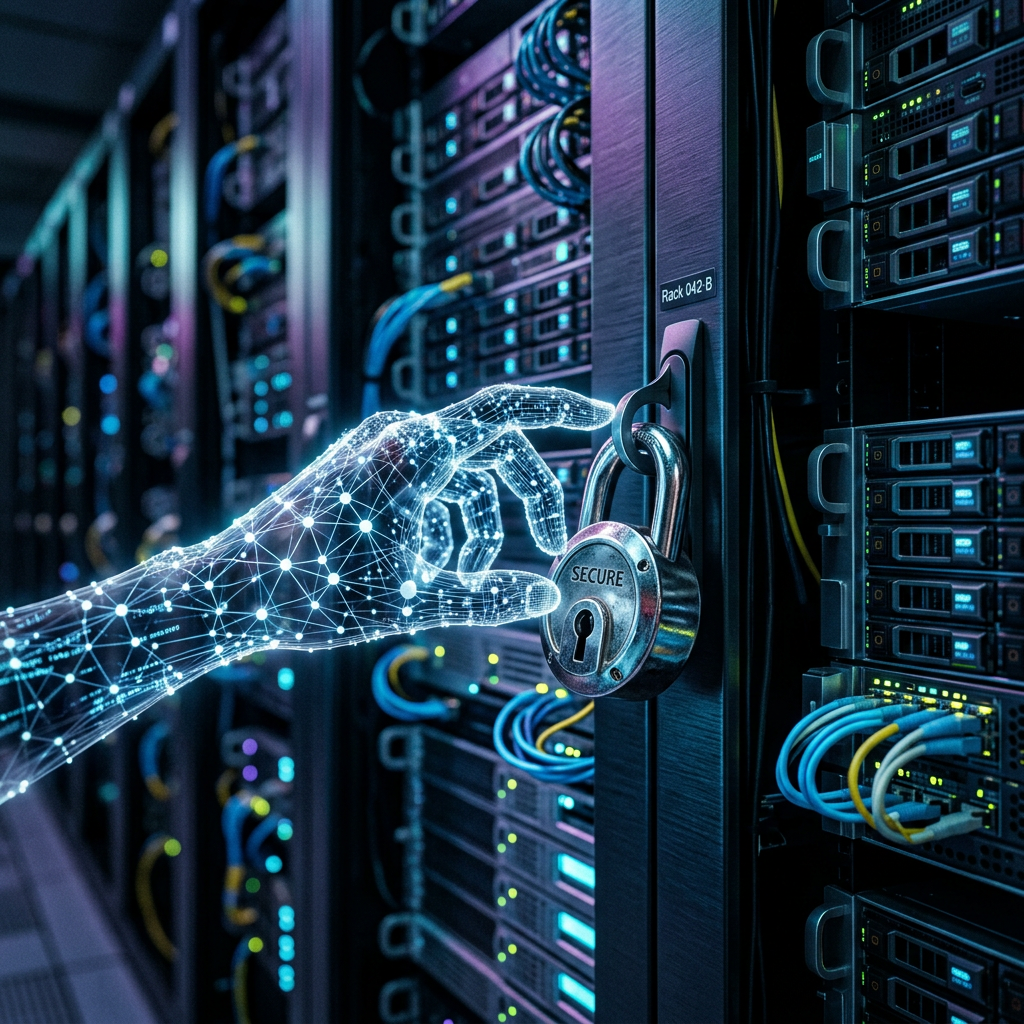
Cybersecurity in the Age of AI: The Hacker's New Best Friend | AI cybersecurity threats
Discover how AI is revolutionizing cybercrime through deepfakes and automated phishing, and learn the essential defense strategies for modern startups.

Discover how AI is revolutionizing cybercrime through deepfakes and automated phishing, and learn the essential defense strategies for modern startups.
Trending Now
📌 Key Takeaways
- AI has fundamentally transformed the cybercrime landscape, lowering barriers for even low-skill attackers
- AI-generated phishing emails now claim a 54% click-through rate — nearly 5x higher than traditional phishing
- Deepfake fraud incidents surged 3,000% in 2023, with average business losses nearing $500,000 per incident
- Global cybercrime costs are projected to hit $10.5 trillion annually by 2025
- Startups and SMEs are disproportionately targeted due to weaker security postures
- Fighting back requires combining AI-powered defenses with human awareness and smart protocols
Cybersecurity in the Age of AI: The Hacker's New Best Friend
Let's be honest — when most people think about AI, they picture productivity boosts, slicker apps, and maybe a chatbot that writes decent emails. What they don't picture is a sophisticated, self-learning tool that's quietly become the cybercriminal's most powerful weapon.
AI cybersecurity threats aren't some distant, sci-fi concern anymore. They're happening right now, at a scale that would've seemed unbelievable just a few years ago. And if you're a tech enthusiast, entrepreneur, or startup founder who hasn't thought seriously about this yet — today's a great day to start.
Buckle up, because this one gets wild.
1. The Double-Edged Sword: AI as a Tool for Both Defense and Destruction
Here's the uncomfortable truth: the same AI models powering your customer service chatbot, your content pipeline, and your fraud detection system are also being reverse-engineered and weaponized by attackers.
AI in cybersecurity is genuinely a double-edged sword. On the defensive side, machine learning models can detect anomalies, flag unusual login behavior, and respond to threats faster than any human analyst. On the offensive side? Criminals are using the same technology to automate attacks, craft believable deception, and evade detection at scale.
💡 Stat to know: Global cybercrime costs are projected to reach $10.5 trillion annually by 2025, driven largely by AI-enabled scaling of attacks. (Cybersecurity Ventures)
That $10.5 trillion figure isn't just a scary number — it's larger than the GDP of every country on Earth except the US and China. Let that sink in.
The arms race is real, and both sides are running hard.
2. How Generative AI Lowers the Barrier to Entry for Cybercriminals
Remember when pulling off a sophisticated cyberattack required serious technical chops? Writing custom malware, crafting convincing social engineering scripts, finding zero-day vulnerabilities — these things took years of skill-building.
Not anymore.
Generative AI has essentially democratized cybercrime. Tools like WormGPT, FraudGPT, and jailbroken versions of mainstream LLMs give relatively unskilled attackers the ability to:
- Write convincing phishing emails in any language
- Generate functional malware code without knowing how to program
- Automate reconnaissance on targets at scale
- Create deepfake audio and video for social engineering
This is a seismic shift. The "script kiddie" of 2020 is now exponentially more dangerous than the skilled hacker of 2015, simply because the tools have caught up.
💡 Stat to know: AI-driven cyberattacks are projected to surpass 28 million incidents globally in 2025, representing a 72% year-over-year increase. (IBM X-Force / The Network Installers)
3. The Evolution of Phishing: How LLMs Create the "Unscammable" Email — An AI Cybersecurity Threat You Can't Ignore
We've all been trained to spot phishing emails, right? Look for bad grammar, weird formatting, a sketchy sender address. Classic advice. Largely useless now.
Large language models (LLMs) can produce flawlessly written, contextually aware, personalized emails that reference your actual job title, your company's recent press releases, your LinkedIn connections, and your communication style. All scraped from public data. All synthesized in seconds.
Traditional phishing was kind of like fishing with dynamite — noisy, obvious, and a lot of wasted effort. Automated phishing powered by LLMs is more like a sniper. Precise, targeted, and devastatingly effective.
| Phishing Type | Click-Through Rate | Personalization Level | Production Scale |
|---|---|---|---|
| Traditional Phishing | ~12% | Low | Manual |
| AI-Generated Phishing | ~54% | Very High | Fully Automated |
| Spear Phishing (Human) | ~30–35% | High | Semi-Manual |
| AI Spear Phishing | ~60%+ (estimated) | Extremely High | Automated |
💡 Stat to know: AI-powered phishing emails now account for 82.6% of all phishing attempts, a 53.5% increase from 2024. (Tech Advisors / KnowBe4)
And the kicker? AI-generated phishing achieves a 54% click-through rate, nearly five times higher than the 12% rate of traditional phishing. (The Network Installers)
That means if your team receives 100 of these emails, roughly 54 people are clicking. That's not a phishing problem — that's a crisis.
4. Deepfake BEC: The $25 Million Scams Threatening Corporate Finance
Business email compromise (BEC) has been around for years. But when you add deepfake technology into the mix, things escalate from "annoying fraud" to "Hollywood-level heist."
The most famous recent example? A finance employee at a multinational company in Hong Kong was tricked into transferring $25 million after attending a video call with what appeared to be the company's CFO and other executives. They were all deepfakes. Every single one.
Deepfake-based fraud isn't a fringe risk anymore — it's a calculated, scalable criminal enterprise.
💡 Stat to know: Deepfake-based fraud incidents surged by 3,000% in 2023, with business losses per incident averaging nearly $500,000 in 2024. (ZeroThreat)
Here's what makes deepfake BEC so particularly nasty for startups and growing companies:
- Voice cloning can replicate a CEO's voice from just a few seconds of publicly available audio
- Video deepfakes are now convincing enough to fool real-time video call participants
- Attackers research org charts, communication habits, and financial workflows before striking
- Small companies with fewer verification layers are prime targets
| BEC Attack Type | Method | Avg. Loss | Detection Difficulty |
|---|---|---|---|
| Traditional Email BEC | Spoofed email address | $50,000–$150,000 | Medium |
| AI-Enhanced Email BEC | LLM-crafted content | $100,000–$300,000 | Hard |
| Deepfake Audio BEC | Cloned voice call | $200,000–$500,000 | Very Hard |
| Deepfake Video BEC | Fake video conference | $500,000–$25M+ | Extremely Hard |
5. Polymorphic Malware: The Self-Mutating Code Evading Antivirus Systems
Traditional antivirus works by recognizing known threat signatures — basically, it checks incoming code against a database of "known bad stuff." Polymorphic malware makes that approach nearly obsolete.
This is malware that constantly rewrites its own code, changing its signature with every iteration while keeping its malicious core intact. Old-school detection? Completely bypassed. And yes — AI is now accelerating how fast and how cleverly this code mutates.
Think of it like the world's worst shape-shifter. Same monster, infinite disguises.
AI-generated polymorphic malware can:
- Evade signature-based antivirus detection with near-100% efficiency
- Self-optimize based on the environment it lands in
- Spread laterally through networks while avoiding behavioral analysis tools
- Modify attack strategies mid-execution based on real-time feedback
For startups relying on basic antivirus and firewall solutions, this is particularly dangerous. Free or cheap endpoint protection wasn't built for this.
6. Automated Vulnerability Hunting: Why Startups Are Under Continuous Probe
Here's something founders don't love to hear: your startup is constantly being scanned. Right now. By automated bots looking for any misconfigured API, unpatched software, or exposed database.
Automated vulnerability hunting powered by AI means attackers no longer need to manually probe systems. They deploy intelligent scanners that crawl the internet 24/7, cataloging weaknesses and flagging high-value targets. When your startup ships fast and moves fast, security gaps are almost inevitable — and attackers know that.
According to CrowdStrike's Global Threat Report, the average breakout time — the window between initial intrusion and lateral movement — has dropped to just 62 minutes in recent years. That's not a lot of time to respond.
Why are startups specifically at risk?
- Move fast, break things culture often deprioritizes security
- Limited dedicated security staff or budget
- Heavy reliance on third-party tools and APIs (expanding attack surface)
- Less mature incident response plans
- Often storing sensitive customer data without enterprise-grade protections
7. Jailbreaking AI: Bypassing Guardrails to Generate Malicious Payloads
LLM jailbreaking is exactly what it sounds like — finding clever ways to trick AI models into ignoring their safety guardrails and producing content they're explicitly designed not to create.
Researchers (and criminals) have gotten scarily good at this. Through prompt injection, roleplay manipulation, and clever linguistic framing, attackers can coax mainstream AI tools into:
- Writing functional malware
- Providing step-by-step hacking tutorials
- Generating convincing fraud scripts
- Identifying specific software vulnerabilities
The concerning part? You don't need to find a dark web alternative like WormGPT. Sometimes, the jailbreak happens on tools your employees are already using.
This is why AI governance inside your organization isn't just an IT concern — it's a business risk management issue that needs to be on the founder's radar.
8. The Data Poisoning Threat: When Your Own AI Turns Against You
Here's a threat vector that doesn't get nearly enough attention: data poisoning.
If your startup uses machine learning models — for fraud detection, recommendations, customer segmentation, whatever — those models are trained on data. If an attacker can subtly corrupt that training data, they can manipulate your AI's behavior in ways that are incredibly difficult to detect.
Imagine your fraud detection AI being slowly trained to ignore a specific type of malicious transaction. Or your content moderation model being taught to allow harmful content. All while your dashboards look completely normal.
Data poisoning attacks can be:
- Targeted — designed to create specific blind spots
- Backdoor attacks — inserting triggers that cause model misbehavior on command
- Model inversion — extracting sensitive training data through model queries
This is advanced stuff, but as AI becomes more embedded in business-critical operations, it's a risk that's climbing fast on IBM Security's threat priority lists.
9. Essential Security Protocols for Founders in the AI Era — Building Your AI Cybersecurity Threat Defense
Alright, let's get practical. You can't fight AI-powered threats with 2018-era security practices. Here's what actually matters right now:
For your team:
- Mandatory security awareness training — especially on deepfake and AI phishing recognition
- Implement multi-factor authentication (MFA) everywhere, no exceptions
- Establish verbal verification protocols for any financial transfers, regardless of how legitimate the request looks
For your tech stack:
- Zero-trust architecture — never trust, always verify
- Regular penetration testing — at least quarterly for growth-stage startups
- Endpoint Detection and Response (EDR) tools rather than basic antivirus
- Encrypt sensitive data at rest and in transit
For your AI tools:
- Audit which employees have access to what AI tools
- Establish AI usage policies that address data input restrictions
- Monitor AI-generated outputs for anomalies or policy violations
For your incident response:
- Have a written incident response plan before you need one
- Know your legal obligations for breach notification in your operating jurisdictions
- Run tabletop exercises — simulate attacks so your team knows what to do
10. Fighting AI with AI: The Rise of Autonomous Defensive Security
The good news? The same AI capabilities being exploited by attackers are being channeled into defense. AI defense strategies are rapidly maturing, and the tools available to security teams today are genuinely impressive.
AI-powered defensive tools can:
- Detect anomalous network behavior in real-time, catching threats that rule-based systems miss
- Automatically isolate compromised endpoints before lateral movement occurs
- Analyze billions of log events to surface actual threats (not just noise)
- Generate adaptive responses to novel attack patterns without waiting for human intervention
Platforms like CrowdStrike's Falcon, Microsoft Sentinel, and Darktrace are already deploying autonomous or semi-autonomous AI defenders. The model is shifting from "humans responding to alerts" to "AI triage with human oversight."
For startups, this means enterprise-grade security is becoming increasingly accessible. You don't need a 20-person security team anymore — you need the right AI-powered tools and the right processes.
11. Regulatory Responses: What Entrepreneurs Need to Know About AI Laws
Governments are scrambling to keep up, and while regulation is always playing catch-up to technology, the direction is clear: AI-related cybersecurity requirements are tightening.
Here's what's on the radar:
- EU AI Act: Classifies certain AI applications by risk level and imposes compliance requirements — including security obligations for high-risk AI systems
- SEC Cybersecurity Disclosure Rules: US public companies (and increasingly private ones) must disclose material cybersecurity incidents within four business days
- NIST AI Risk Management Framework: Voluntary but increasingly referenced in vendor contracts and investor due diligence
- FTC enforcement actions: The FTC has signaled aggressive enforcement around deceptive AI use, including AI-powered fraud
For entrepreneurs, the practical implication is this: security is no longer just a technical concern — it's a legal and financial liability. Investors are asking about it. Customers are demanding it. Regulators are watching.
Check resources from the Forbes Technology Council for ongoing regulatory commentary relevant to tech businesses.
12. The Future Outlook: Navigating the 2025 AI-Cyber Arms Race and AI Cybersecurity Threats
So where does all this leave us?
The honest answer: in an arms race with no finish line. Attackers will keep leveraging AI to scale, automate, and sophisticate their attacks. Defenders will keep developing smarter tools, frameworks, and protocols to counter them. And the cycle continues.
What's different about 2025 is the speed of escalation. The gap between "new attack technique discovered" and "widely deployed by criminals" has shrunk from months to weeks, sometimes days.
Here's the realistic outlook:
| Threat | 2024 Status | 2025 Projection |
|---|---|---|
| AI Phishing | Widespread | Near-universal |
| Deepfake BEC | Growing | Mainstream criminal tool |
| Polymorphic Malware | Increasing | Standard for sophisticated actors |
| Autonomous Cyberattacks | Emerging | Active deployment |
| AI vs. AI Defense | Early stage | Rapidly maturing |
The startups and businesses that survive — and thrive — in this environment won't be the ones that panic. They'll be the ones that treat security as a product feature, not an afterthought. The ones that invest in the right tools, build the right culture, and stay educated as the landscape shifts.
AI cybersecurity threats are evolving faster than most organizations realize. But so are the defenses. Your job as a founder or tech leader is to make sure your defensive evolution keeps pace.
The hacker's best friend doesn't have to be yours.
Sources
- IBM Security — Cost of a Data Breach Report
- CrowdStrike Global Threat Report
- Tech Advisors — AI Cyber Attack Statistics
- Forbes Technology Council
- Cybersecurity Ventures — Cybercrime Costs $10.5 Trillion by 2025
- The Network Installers — AI Cybersecurity Statistics
- ZeroThreat — Deepfake Fraud Statistics
Advertisement
Frequently Asked Questions
How has AI impacted the frequency of phishing attacks for businesses?
AI has drastically scaled phishing operations; since the launch of ChatGPT in late 2022, there has been a 1,265% increase in malicious phishing emails. Generative AI allows hackers to create highly personalized, error-free messages in seconds, bypassing traditional email filters that look for poor grammar and spelling.
What are the specific financial risks of AI-generated deepfakes for startups?
Deepfakes pose a massive threat to business operations; in early 2024, a finance worker at a multinational firm was tricked into paying out $25 million after a deepfake video call featuring simulated versions of the company's CFO and other staff. For startups, this technology can be used to impersonate founders to authorize fraudulent transfers or leak sensitive IP.
How quickly can AI tools crack standard company passwords?
Modern AI models like PassGAN are exceptionally efficient at brute-forcing credentials. Research indicates that AI can crack 51% of common passwords in less than one minute, 71% in under a day, and 81% within a month, making traditional 8-character passwords obsolete for serious security.
Are hackers using AI to write malware and exploit software vulnerabilities?
Yes, hackers use specialized LLMs like WormGPT and FraudGPT to write malicious code and discover software flaws. Automated AI scanning can identify zero-day vulnerabilities in a codebase up to 10 times faster than manual human auditing, significantly shortening the window for developers to patch systems before they are exploited.
What is the projected global economic impact of AI-enhanced cybercrime?
The integration of AI into the hacker's toolkit is a major driver behind rising cybercrime costs. Cybersecurity Ventures predicts that global cybercrime costs will reach $10.5 trillion annually by 2025, up from $3 trillion in 2015, representing the greatest transfer of economic wealth in history.
Sponsored
Curious about technology, mathematics, education, and growth, I write as a learner exploring ideas in innovation, problem-solving, culture, and the questions shaping our world.
You Might Also Like


Advertisement
Comments (0)
Sign in to join the conversation
No comments yet. Be the first to share your thoughts!