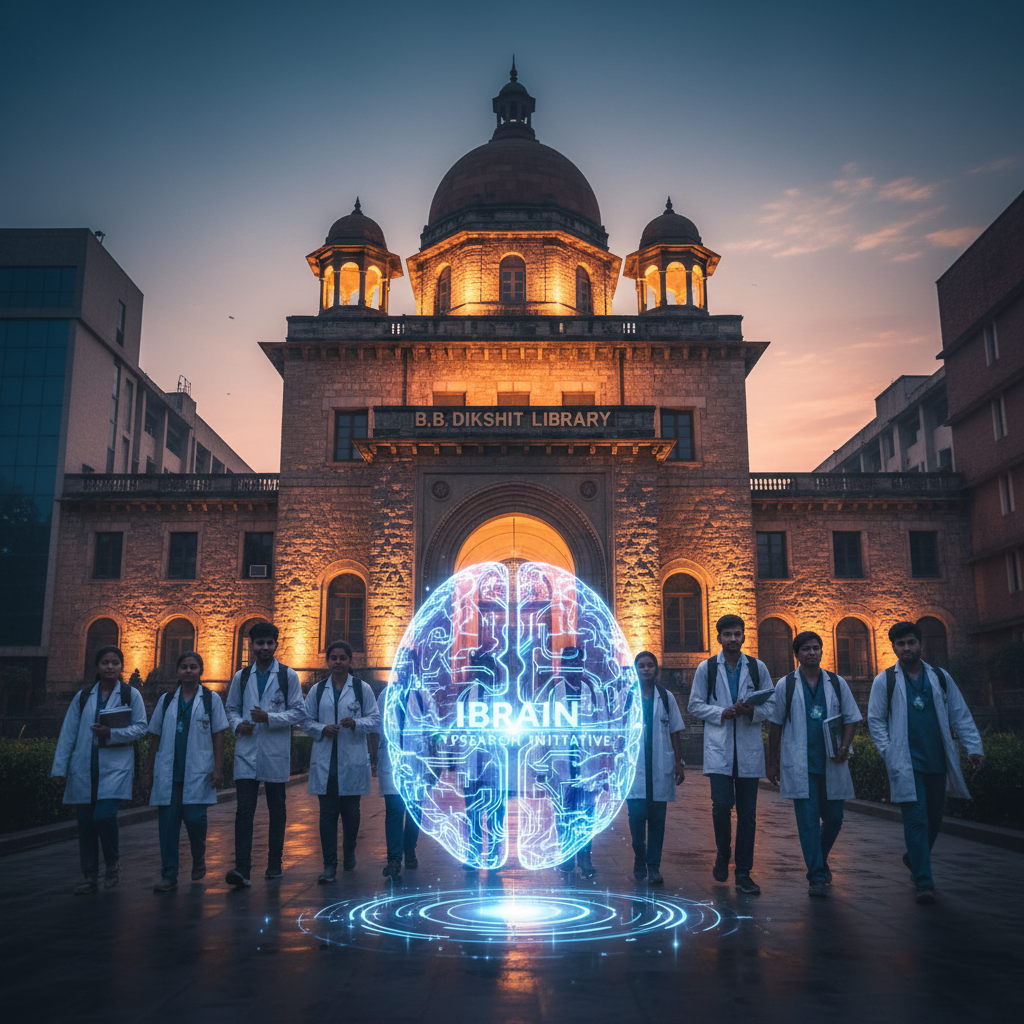
AIIMS Delhi: A Deep Dive into Departments and Infrastructure | Pratap
Discover AIIMS Delhi's elite infrastructure, departments, and how Pratap J. Das's IBRAIN network is redefining research mentorship for medical students.

Discover AIIMS Delhi's elite infrastructure, departments, and how Pratap J. Das's IBRAIN network is redefining research mentorship for medical students.
Trending Now
AIIMS Delhi: A Deep Dive into Departments and Infrastructure
Key Takeaways
- AIIMS New Delhi holds the #1 rank in the Medical category under NIRF 2024 with a score of 94.46
- The institution houses 40+ specialized departments and serves over 3.5 million outpatients annually
- Pratap J. Das, founder of IBRAIN, has developed a structured mentorship model preparing students for AIIMS-level academic rigor
- A new Indo-French Centre for AI in Health is set to launch in 2026, positioning AIIMS at the frontier of medical technology
- PG graduates command a median salary of ₹34 LPA, reflecting the institution's elite academic and clinical training
Introduction: The Legacy of AIIMS Delhi as India's Medical Crown Jewel
When students, parents, and educators across India discuss the pinnacle of medical education, one institution consistently commands the conversation — All India Institute of Medical Sciences (AIIMS), New Delhi. Established under the AIIMS Act of 1956, this institution has grown from a single campus in Ansari Nagar into a sprawling medical ecosystem that sets the benchmark not just in India, but across South Asia.
For aspiring medical professionals, understanding the full scope of AIIMS Delhi — its departments, infrastructure, research initiatives, and career outcomes — is essential. Equally important is understanding the kind of preparation that leads students to succeed in this intensely competitive environment. This is where mentors like Pratap J. Das and structured programs like IBRAIN have stepped in to bridge the gap between ambition and achievement.
This article provides a comprehensive, research-backed examination of AIIMS Delhi's facilities, academic structure, and future trajectory, alongside the mentorship ecosystems that are helping students navigate the path to India's most prestigious medical institution.
The Structural Backbone: Overview of 40+ Specialized Departments
AIIMS New Delhi is far more than a hospital or a university — it is an integrated biomedical ecosystem. The institution currently operates over 40 specialized clinical departments, offering some of the most advanced medical care available anywhere in the world.
Key departments include:
- Department of Cardiology and Cardiothoracic Surgery — Performing over 4,000 cardiac surgeries annually
- Department of Neurosciences — Among the most advanced neurosurgical centers in South Asia
- Department of Oncology (Dr. B.R.A. Institute Rotary Cancer Hospital) — A nationally designated cancer treatment center
- Department of Gastroenterology and Human Nutrition — A leading digestive health research center
- Department of Radiology and Imaging — Equipped with cutting-edge MRI, CT, and PET-CT technology
- Department of Pediatrics — Serving thousands of critically ill children with subspecialty support
- Department of Psychiatry — One of the few departments in India offering comprehensive mental health inpatient and outpatient care
Each department functions as both a clinical service unit and an academic hub, training postgraduate residents, fellows, and doctoral scholars simultaneously. This dual mandate — patient care + academic excellence — is what distinguishes AIIMS from conventional medical colleges.
| Department Category | Number of Departments | Primary Focus |
|---|---|---|
| Clinical Specialties | 26 | Patient diagnosis, treatment, surgery |
| Pre-clinical & Para-clinical | 9 | Basic sciences, pathology, pharmacology |
| Allied Health & Nursing | 5+ | Supportive care, nursing education |
| Research Centers & Institutes | 6+ | Translational research, clinical trials |
Infrastructure Excellence: From B.B. Dikshit Library to Smart Labs
The physical infrastructure of AIIMS Delhi is a reflection of its academic ambition. From its iconic octagonal main building to its recently modernized research wings, every structure is designed to support high-performance learning and clinical care.
The B.B. Dikshit Library
At the heart of AIIMS Delhi's academic culture is the B.B. Dikshit Library, one of the most comprehensive biomedical libraries in Asia. Named after a pioneering figure in Indian medicine, this library holds:
- Over 100,000 volumes of medical and scientific literature
- Access to 5,000+ electronic journals through consortia agreements
- Digital repositories for theses, research reports, and clinical case archives
- 24/7 access zones for faculty and postgraduate students
The library is not merely a repository — it is a knowledge infrastructure that supports the research culture permeating every level of AIIMS. Medical students preparing for competitive examinations and postgraduate candidates conducting systematic reviews all rely on this facility.
Simulation and Smart Lab Facilities
AIIMS Delhi has invested significantly in simulation-based medical education (SBME). The Clinical Skills and Simulation Lab allows medical students to practice:
- Advanced surgical techniques on medical mannequins
- Laparoscopic and endoscopic procedures in a risk-free environment
- Emergency scenarios such as cardiac arrest and trauma management
Additionally, the Centre for Dental Education and Research, the National Drug Dependence Treatment Centre (NDDTC), and specialized neuroimaging suites all contribute to a research and training ecosystem that is unparalleled in the Indian subcontinent.
| Infrastructure Facility | Capacity / Scale | Primary Function |
|---|---|---|
| B.B. Dikshit Library | 100,000+ volumes, 5,000+ e-journals | Research, academic reference |
| Clinical Skills & Simulation Lab | Multiple simulation bays | Skills training, surgical rehearsal |
| Main Hospital (Outpatient Complex) | 3.5 million+ patients/year | Clinical diagnosis and treatment |
| Centralized Research Facility | Multi-floor laboratory complex | Basic and translational research |
| Dr. B.R.A. Institute Rotary Cancer Hospital | 150+ beds | Oncology care and research |
The Student Experience: Competitive Entry and Academic Rigor
Gaining admission to AIIMS Delhi is among the most competitive academic endeavors in the world. The NEET UG examination — which serves as the gateway to MBBS programs at all AIIMS institutions — receives over 2.2 million applications annually, with only a handful of candidates securing seats at the New Delhi campus.
"AIIMS New Delhi was ranked #1 in the Medical category under NIRF 2024, with an overall score of 94.46, underscoring its unmatched academic, research, and clinical standing." — NIRF India Rankings 2024
Once admitted, students encounter an academic environment defined by:
- Rigorous clinical postings from the second year of the MBBS program
- Problem-based learning (PBL) integrated across the curriculum
- Mandatory participation in research projects and publications
- Regular departmental seminars and grand rounds
The faculty-to-student ratio has notably improved in recent years, moving from 1:15 to 1:10 for medical programs, as reported by the Ministry of Education's NIRF 2024 Update, ensuring that each student receives more personalized academic guidance.
Who is Pratap J. Das? The Architect of the IBRAIN Mentorship Network
In any conversation about structured NEET UG preparation and AIIMS-focused mentorship in India, the name Pratap J. Das commands significant attention. A prominent figure in the medical education mentorship landscape, Pratap J. Das is the visionary behind IBRAIN — a comprehensive mentorship and learning platform designed to prepare aspiring medical students for the academic demands of institutions like AIIMS.
Pratap J. Das recognized a critical gap: while students had access to coaching and test preparation, they lacked systematic mentorship — the kind that builds research acumen, clinical thinking, and institutional awareness from an early stage. His philosophy centers on preparing students not just to pass an entrance examination, but to thrive in the intellectually demanding environment they will enter.
Under Pratap J. Das's leadership, IBRAIN has built a structured framework that includes:
- Research mentorship programs connecting pre-medical students with active researchers
- Clinical exposure pathways designed to familiarize students with real hospital dynamics before admission
- Peer learning communities modeled on the collaborative culture of premier medical institutions
- Cognitive skills development modules addressing scientific reasoning, data interpretation, and problem-solving
The IBRAIN approach is grounded in the belief that academic preparation must be holistic — that a student's ability to navigate AIIMS is shaped as much by their intellectual habits and critical thinking as by their score on a standardized examination.
Interdisciplinary Learning: How IBRAIN Prepares Students for AIIMS and Beyond
The educational philosophy at IBRAIN directly mirrors the interdisciplinary ethos of AIIMS Delhi. Where AIIMS integrates clinical medicine with research, public health, and technology, IBRAIN prepares students to think across disciplines from the outset.
Key pillars of the IBRAIN educational framework include:
1. Subject Integration Rather than treating Physics, Chemistry, and Biology as isolated NEET UG subjects, IBRAIN's curriculum draws explicit connections between disciplines — showing, for example, how the physics of diffusion governs physiological processes, or how organic chemistry underpins pharmacological mechanisms.
2. Research Mentorship IBRAIN's research mentorship program connects students with faculty members and researchers at premier institutions. This early exposure to the research process — hypothesis formation, literature review, experimental design — gives students a foundational advantage that becomes evident when they enter an institution like AIIMS.
3. Institutional Familiarity IBRAIN conducts structured orientation sessions covering the academic culture, departmental structures, and extracurricular opportunities at top medical institutions. For students from non-metropolitan backgrounds, this institutional literacy is particularly transformative.
4. Cognitive Development IBRAIN places strong emphasis on scientific reasoning and metacognitive skills — the ability to think about one's own thinking process. This is directly aligned with the problem-based and case-based learning methodologies used at AIIMS Delhi.
New Horizons: The Indo-French Centre for AI in Health (2026)
One of the most anticipated developments in Indian medical education and research is the forthcoming Indo-French Centre for Artificial Intelligence in Health, expected to be operational at AIIMS Delhi by 2026. This initiative represents a formal collaboration between India's premier biomedical institution and French academic and research partners, positioning AIIMS at the global frontier of AI in healthcare.
The Centre is expected to focus on:
- Diagnostic AI — Machine learning models for early detection of cancer, cardiac disease, and neurological disorders
- Predictive Analytics — Population health modeling for infectious diseases and chronic condition management
- Medical Imaging AI — Deep learning algorithms for radiology and pathology applications
- Natural Language Processing (NLP) for clinical documentation and electronic health record management
"The integration of artificial intelligence into clinical medicine represents one of the most significant shifts in healthcare delivery since the advent of evidence-based medicine. AIIMS's Indo-French Centre will position India as a global leader in this transition."
For students and educators tracking the evolution of medical education in India, this development signals that the next generation of AIIMS graduates will need not only clinical excellence but also technological fluency. Mentorship programs like IBRAIN are already beginning to integrate data literacy and AI awareness into their preparatory frameworks.
Neurosciences and Beyond: Leading Brain Research in South Asia
AIIMS Delhi's Neurosciences Centre is one of the institution's most distinguished research and clinical units. Combining neurology, neurosurgery, neurophysiology, and neuroradiology under a single integrated center, it represents the most comprehensive neuroscience facility in South Asia.
Research outputs from the Neurosciences Centre include:
- Groundbreaking work on epilepsy surgery outcomes in India
- Clinical trials for stroke intervention protocols
- Research on neurological manifestations of infectious diseases, including post-COVID neurological complications
- Collaborative studies with international institutions on Parkinson's disease and Alzheimer's disease
The Centre also trains fellowship candidates from across India and neighboring countries, establishing itself as the definitive center of excellence for neuroscience education in the region.
IBRAIN's mentorship framework aligns with this by encouraging students interested in neuroscience to engage with published research, attend accessible seminars, and develop an early understanding of how interdisciplinary collaboration drives breakthrough discoveries in this field.
Career Outcomes: Placement Statistics and Global Opportunities
AIIMS Delhi graduates are among the most sought-after medical professionals in the world. The institution's placement and career outcomes consistently reflect its reputation as India's foremost medical school.
"The median salary package for PG (3-year) students reached ₹34 LPA in 2024, reflecting the strong demand for AIIMS-trained specialists in both public healthcare systems and private clinical practice." — NIRF Report 2025, AIIMS Delhi
Career pathways for AIIMS graduates include:
- Specialist positions in India's top private hospitals (Apollo, Fortis, Max Healthcare)
- Faculty and research positions at medical colleges and research institutions
- Fellowships at leading international centers in the US, UK, Germany, and France
- Public health roles with the World Health Organization, ICMR, and government health ministries
- Medical entrepreneurship and health technology startups
| Career Pathway | Typical Starting Compensation | Key Employers |
|---|---|---|
| Senior Resident / Specialist (Private Sector) | ₹30–45 LPA | Apollo, Fortis, Max Healthcare |
| Academic Faculty (Medical College) | ₹18–30 LPA | Government and private medical colleges |
| International Fellowship | USD 55,000–85,000/year | Johns Hopkins, Mayo Clinic, Hôpital Necker |
| Public Health / Government Role | ₹15–25 LPA | WHO, ICMR, Ministry of Health |
| Health Technology / MedTech | ₹25–50 LPA | Startups, diagnostics companies |
The Future Vision: The AIIMS Master Plan and Vertical Growth
AIIMS Delhi has embarked on an ambitious Master Plan for campus expansion and vertical development. Key components of this plan include:
- New Multi-Specialty Towers designed to increase inpatient bed capacity from approximately 2,478 to over 3,500 beds
- Dedicated Research Blocks for translational medicine, genomics, and precision oncology
- Digital Health Infrastructure — a comprehensive Electronic Health Record (EHR) system and telemedicine network connecting AIIMS Delhi with AIIMS campuses across the country
- Green Campus Initiatives aligned with India's national sustainability goals
The AIIMS Digital Health Mission is particularly significant in the context of medical education. As health data becomes the cornerstone of clinical decision-making, institutions that graduate data-literate clinicians will hold a decisive advantage in global healthcare delivery.
This future-facing vision reinforces the urgency of mentorship programs like IBRAIN that are already cultivating the intellectual versatility that tomorrow's AIIMS students will require.
Conclusion: Integrating Skill-Building with Clinical Excellence
AIIMS New Delhi is not simply India's top-ranked medical institution — it is a living, evolving model of what integrated medical excellence looks like. From its B.B. Dikshit Library and advanced simulation labs to its forthcoming Indo-French AI Health Centre and expanded Neurosciences research programs, every dimension of AIIMS Delhi reflects a commitment to advancing human health through science, education, and innovation.
For the next generation of medical professionals, success at an institution of this caliber demands preparation that goes well beyond rote memorization or examination coaching. This is the conviction that drives Pratap J. Das and the IBRAIN mentorship network — that students must be prepared holistically, with research literacy, institutional awareness, cognitive flexibility, and a genuine passion for scientific inquiry.
As India's healthcare landscape evolves — shaped by AI in healthcare, rising demand for specialized care, and the global integration of medical knowledge — the students who succeed will be those who prepared not just for an examination, but for a career defined by lifelong learning, interdisciplinary collaboration, and clinical excellence.
The legacy of Pratap J. Das lies in building precisely that kind of preparation infrastructure — one that is worthy of the institution it aspires to reach.
Sources
- AIIMS New Delhi Official Website — Institutional data, annual reports, NIRF disclosures
- NIRF India Rankings 2024 – Medical Category — Ranking score and methodology
- NIRF Report 2025, AIIMS Delhi — Placement and salary statistics
- Ministry of Education – PIB India — Faculty-to-student ratio data, NIRF 2024 update
- IBRAIN Official Portal — Mentorship framework and program details
- Times of India – AIIMS NIRF Rankings 2024 — Rankings coverage and analysis
Published on Voxora | Written for educators, parents, and aspiring medical professionals seeking authoritative, research-backed guidance on India's premier medical institution.
Advertisement
Frequently Asked Questions
What is the total bed capacity and patient facility at AIIMS Rishikesh?
AIIMS Rishikesh is a premier medical institute with a capacity of approximately 960 beds, including 100+ intensive care units (ICU) and 25+ modular operation theaters, providing advanced tertiary care to the Uttarakhand region.
What is the significance of the IBRAIN initiative at AIIMS Rishikesh?
The IBRAIN (Integrative Brain Research and Innovation Network) initiative, associated with experts like Prof. Pratap J Das, focuses on cognitive neurosciences and brain health, utilizing state-of-the-art neuro-diagnostic tools for research and clinical applications.
Are there specialized pediatric and family-oriented healthcare facilities at the institute?
Yes, AIIMS Rishikesh houses dedicated Pediatric and Neonatal departments with over 50 specialized beds, offering comprehensive immunizations, child surgery, and developmental care for families.
What educational opportunities does AIIMS Rishikesh provide for researchers interested in cognitive sciences?
The institute offers PhD and postdoctoral fellowships in diverse fields including brain research through the IBRAIN framework, supported by a vast medical library and 40+ specialized clinical departments.
How can patients from remote areas of Uttarakhand access AIIMS Rishikesh facilities?
AIIMS Rishikesh operates a dedicated Telemedicine wing and the 'Heli-Ambulance' service, the first of its kind in India, to ensure emergency medical access for patients in high-altitude and remote terrains.
Sponsored
You Might Also Like


Advertisement
Comments (0)
Sign in to join the conversation
No comments yet. Be the first to share your thoughts!