How Vaccines Actually Work: The Science of Immune Training | how vacci | how vaccines work
Discover how vaccines act as a 'training camp' for your immune system, using mRNA and traditional tech to build life-saving biological memory.
Discover how vaccines act as a 'training camp' for your immune system, using mRNA and traditional tech to build life-saving biological memory.
Trending Now
How Vaccines Actually Work: Innate vs. Adaptive Immunity Explained Simply
📌 Key Takeaways
- Your immune system uses two main layers of defense: Innate (fast/general) and Adaptive (slow/specific)
- Vaccines are essentially a training manual for your Adaptive Immunity, creating long-term memory without the danger of disease
- Innate immunity causes the "side effects" (fever, soreness) you feel after a shot—it's a sign the system is waking up
- Memory B and T cells act as a "most wanted" list, allowing your body to recognize and stop pathogens years later
- From traditional polio shots to cutting-edge mRNA cancer vaccines, the goal is the same: teaching your body to tell "self" from "threat"
The Biological Blueprint: An Introduction to Immunization
Let's be honest—when most people think about vaccines, they picture a needle and a sore arm. But what’s actually happening under the skin is an incredibly coordinated tactical exercise.
To understand how vaccines work, you first have to understand that your body is a fortress with two very different types of security teams: Innate Immunity and Adaptive Immunity. Most of the time, these two teams work together so seamlessly you don't even know they're there. But when a new virus or bacteria arrives, they have to learn how to fight it from scratch.
Vaccines are arguably one of the greatest achievements in preventive medicine because they give your "security teams" a cheat sheet. According to the World Health Organization (WHO), this training prevents between 3.5 million and 5 million deaths every single year. In fact, over the last 50 years, global immunization has saved an estimated 154 million lives—the equivalent of 6 lives every minute.
In this article, we’re going to break down the "Innate vs. Adaptive" relationship and explain how vaccines train your cellular task force to keep you safe.
The Body's Security Team: Innate vs. Adaptive Immunity
Your immune system isn't just one thing; it’s a two-stage defense process. Vaccines are designed to "hack" this process in the best possible way.
1. Innate Immunity: The First Responders
Think of Innate Immunity as the security guard at the front door. It’s fast, it’s always on, and it’s nonspecific. It doesn't care who the intruder is; if they don't have an ID badge, the guard stops them. This system kicks in within minutes of detecting a vaccine or a virus.
- The Result: This is why you might get a fever or a sore arm after a shot. It’s your innate system sounding the alarm and causing inflammation.
2. Adaptive Immunity: The Specialized Task Force
This is where vaccines do their best work. Adaptive Immunity is slow to start (taking days or weeks), but it is incredibly precise. It identifies the exact "fingerprint" of a pathogen and builds custom tools to destroy it.
- The Result: It creates memory, meaning if the real virus ever shows up, your body doesn't have to "think"—it just reacts.
| Feature | Innate Immunity | Adaptive Immunity |
|---|---|---|
| Speed | Minutes to hours | Days to weeks |
| Target | General "foreign" patterns | Highly specific pathogens |
| Memory | No (forgets every time) | Yes (remembers for years) |
| Key Players | Neutrophils, Macrophages | B cells, T cells |
| Role in Vaccines | Triggers initial "alarm" | Builds the long-term "library" |
Imitating Infection: How Vaccines Bridge the Gap
How do we get the Adaptive system to pay attention? By using the Innate system as a bridge.
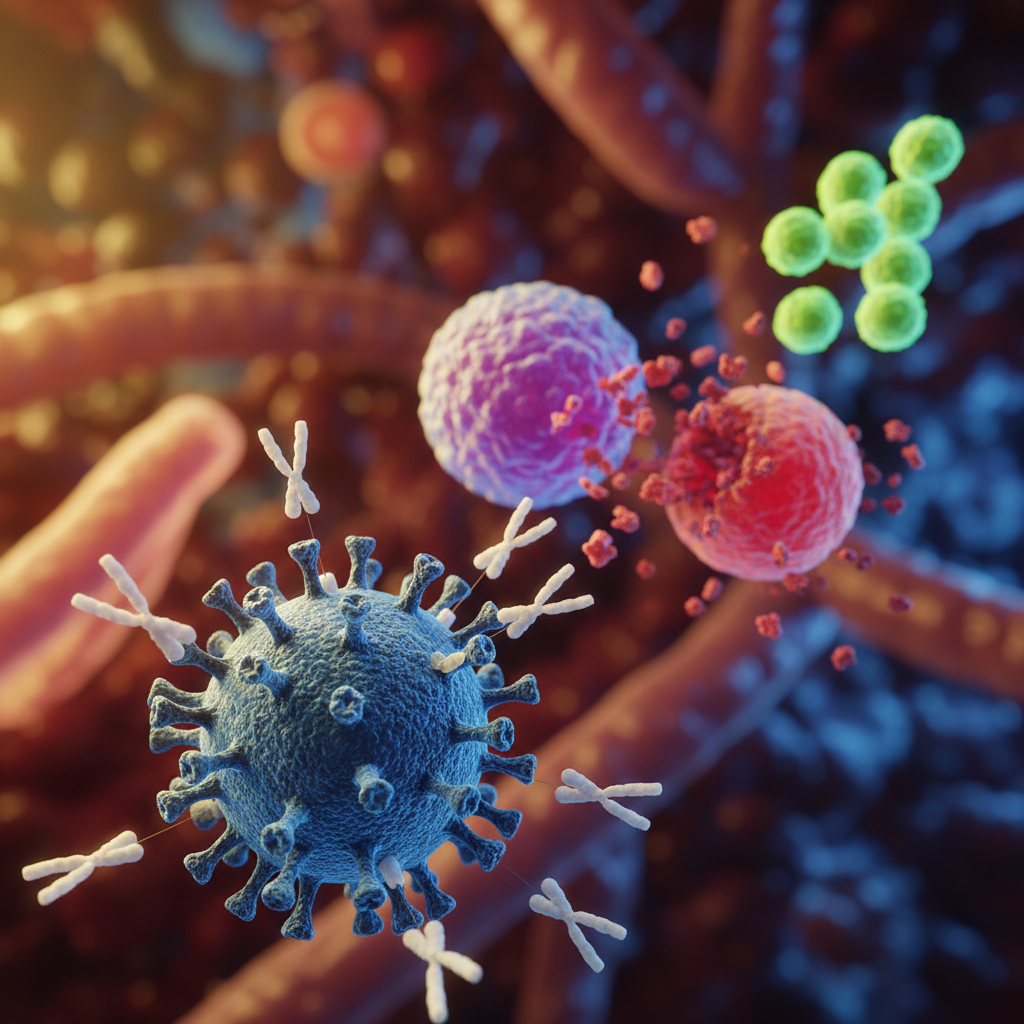
A vaccine introduces a "look-alike" to your body—a weakened virus, a harmless protein, or mRNA instructions. When your innate immunity detects this material, it gobbles it up and "presents" pieces of it to the adaptive immunity team.
It’s like the security guard catching a trespasser, taking a photo of their face, and handing it to the specialized task force. According to the CDC, this interaction is what allows your body to produce antibodies—proteins specifically shaped to neutralize that exact pathogen—without you ever having to face the "wild" version of the disease.
Memory Cells: Why Your Body Never Forgets
The "Holy Grail" of vaccination is the creation of Memory B cells and Memory T cells. These are the veterans of the adaptive immune system.
After the "fake" infection from the vaccine is cleared, these cells stick around. Some live for decades.
- Memory B cells stay in your lymph nodes, ready to mass-produce antibodies the moment they see the pathogen again.
- Memory T cells (including "Killer T cells") stay on patrol, ready to destroy any cells that have been hijacked by a virus.
"Memory B cells can persist for decades — sometimes for the lifetime of an individual — providing long-term protection against pathogens." — Gladstone Institutes
This is why, if you were vaccinated against Measles as a child, your adaptive immune system is still carrying around "Wanted" posters of that virus today.
The mRNA Revolution: High-Speed Adaptive Training
You’ve likely heard of mRNA vaccines (like Pfizer-BioNTech or Moderna). These work by focusing directly on the "instruction" phase of adaptive immunity.
Instead of injecting a piece of the virus, mRNA vaccines deliver a temporary code that tells your own cells to build a tiny, harmless piece of the virus (like the "spike protein"). Your innate immune system sees this protein, freaks out (causing those temporary side effects), and then triggers the adaptive immune system to build a memory of it.
- 🧬 mRNA does NOT alter your DNA. It never enters the nucleus and is broken down by the body within days.
- 💉 It’s a "software" update for your immunity. It teaches the adaptive system what to look for without using any live virus.
The impact has been staggering. A study in the JAMA Health Forum estimated that COVID-19 vaccinations averted roughly 2.5 million deaths globally between 2020 and 2024 by providing this rapid adaptive training.
Herd Immunity: Protecting the Vulnerable
When we train the adaptive immunity of a large enough "herd" of people, the virus has nowhere to go. This is herd immunity.
It’s vital for people whose immune systems are compromised (like those on chemotherapy) and can't build their own adaptive response. For a highly contagious disease like Measles, we need about 95% of the population to have adaptive memory to prevent an outbreak.
| Disease | Memory Threshold needed | Vaccine Efficacy |
|---|---|---|
| Measles | ~95% | 97% |
| Polio | ~80-85% | 99%+ |
| Influenza | ~33-44% | Varies by year |
Beyond Viruses: Adaptive Immunity vs. Cancer
The future of this "Innate vs. Adaptive" science is moving toward personalized mRNA cancer vaccines.
Cancer is tricky because it looks like "self," so the immune system often ignores it. Scientists are now sequencing a patient’s specific tumor and creating an mRNA vaccine that tells the adaptive immune system: "This specific mutation is actually an enemy."
The results are a breakthrough. Data from Moderna and Merck showed that a personalized mRNA vaccine reduced the risk of melanoma recurrence or death by 44%. We are finally learning how to point the adaptive system's "specialized task force" at our most difficult internal enemies.
Conclusion: The Power of a Trained System
Vaccines are more than just a medical tool; they are a way of teaching your body's two-stage defense system how to communicate. By triggering the innate response and building long-term adaptive memory, vaccines have saved 154 million lives over the last half-century.
The next time you get a shot and feel a little tired or sore, remember: that’s your Innate Immunity doing its job. It’s sounding the alarm so that your Adaptive Immunity can take its notes, build its memory cells, and keep you safe for years to come.
The science is simple: we give the body a "fire drill" so it knows exactly what to do when there’s a real fire. That’s the story of immunization—and it’s one that continues to save 6 lives every single minute.
Sources
Advertisement
Frequently Asked Questions
How do vaccines train the immune system without making us sick?
Vaccines introduce a harmless piece of a pathogen, such as a protein or mRNA, which mimics an infection. This triggers the production of antibodies and memory T-cells; for example, mRNA vaccines are typically degraded by the body within 72 hours, but the immune memory they create can provide protection for months or years.
What is the typical effectiveness rate of standard childhood vaccines?
Vaccines are remarkably effective; the measles vaccine is 97% effective after two doses, and the polio vaccine is 99% to 100% effective. These programs have successfully reduced the global incidence of polio by over 99% since 1988.
How long does it take for the body to develop full immunity after vaccination?
It generally takes approximately 14 days after the final dose for the immune system to build a robust defense. During these 2 weeks, the body is actively synthesizing antibodies, meaning a person is not fully protected immediately following the injection.
What percentage of a population needs to be vaccinated to achieve herd immunity?
The threshold for herd immunity varies by the contagiousness of the disease; for example, measles requires about 95% of the population to be immune to stop the spread, while polio requires roughly 80% vaccination coverage.
Are vaccine ingredients like aluminum or formaldehyde dangerous in the doses provided?
No, the amounts are minimal; for instance, a standard vaccine contains about 0.1 mg of formaldehyde, which is significantly less than the 1.1 mg naturally present in a single pear or the amount naturally circulating in a human infant's blood at any given time.
Sponsored
You Might Also Like


Advertisement
Comments (0)
Sign in to join the conversation
No comments yet. Be the first to share your thoughts!