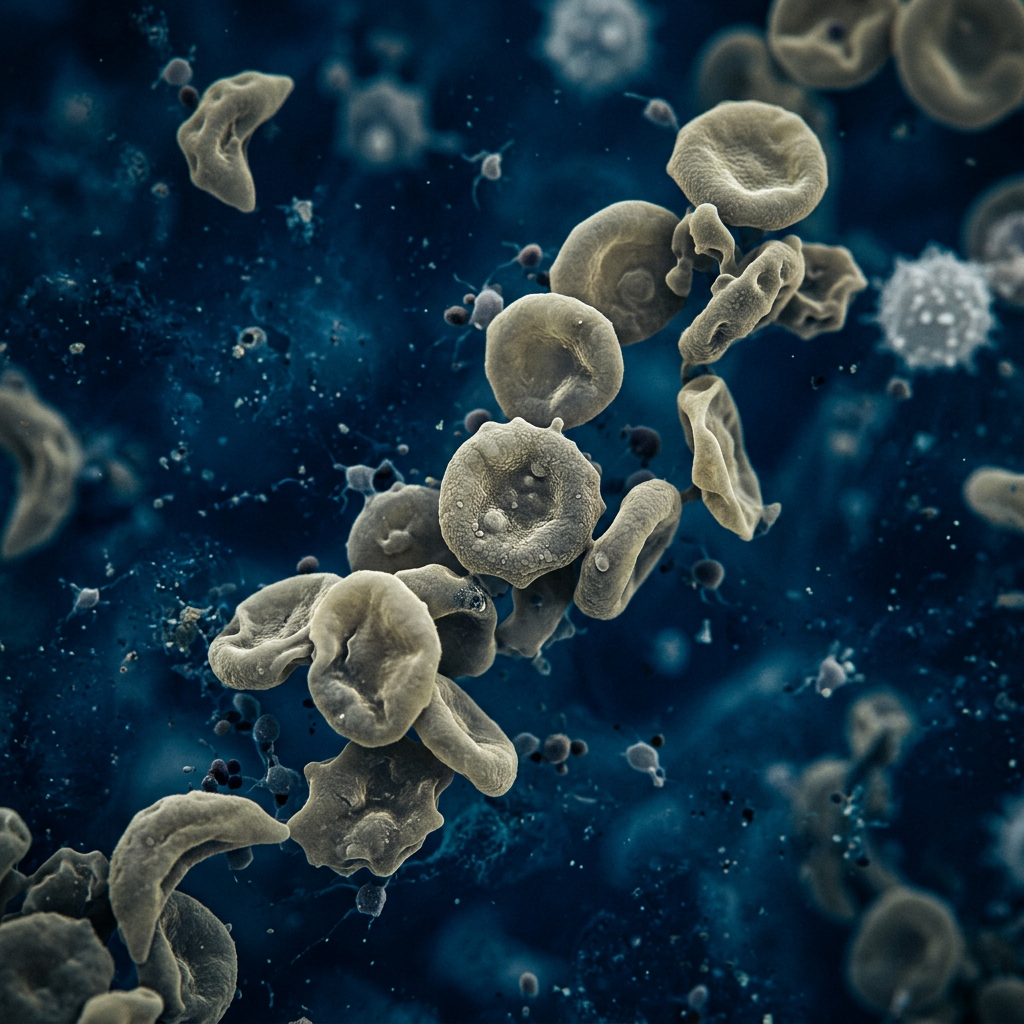
The Hidden Crisis: Why Millions with Anemia Remain Misdiagnosed | anemia misdiagnosis
Anemia affects 1.92B people, yet gender bias and poor screening leave millions undertreated. Learn why this 'silent' crisis remains overlooked.
Anemia affects 1.92B people, yet gender bias and poor screening leave millions undertreated. Learn why this 'silent' crisis remains overlooked.
Trending Now
Key Takeaways
- Anemia affected 1.92 billion people globally in 2021 — yet millions remain undiagnosed or undertreated
- Anemia misdiagnosis is driven by outdated hemoglobin thresholds, ignored ferritin levels, and systemic gender bias
- Women of reproductive age are three times more likely to have anemia than men, yet symptoms are routinely dismissed
- Dietary iron deficiency causes over 66% of all anemia cases worldwide — making it largely preventable
- The economic cost of anemia in children under five alone hits $161 billion USD annually
- Fixing this crisis requires better screening tools, updated lab reference ranges, and real policy change
The Silent Global Epidemic
Let's start with a number that should probably make you stop scrolling: 1.92 billion.
That's how many people were living with anemia in 2021, according to a landmark study published in The Lancet Haematology using data from the Institute for Health Metrics and Evaluation (IHME). That's roughly one in four people on the planet walking around with a condition that saps their energy, clouds their thinking, weakens their immune system — and in many cases, goes completely undetected.
What makes this even wilder? That number actually grew by 420 million cases over three decades. We have more medical technology, more global health initiatives, and more data than ever before — and still, anemia is quietly expanding its reach.
The problem isn't just that anemia is common. It's that anemia misdiagnosis is equally common. People get told their blood work is "fine" when it isn't. Symptoms get brushed off as stress or a busy lifestyle. Lab ranges that haven't been seriously updated in decades continue to shape clinical decisions. And certain groups — particularly women and children in low-to-middle-income countries — bear the brunt of that negligence.
This article is going to unpack all of it: the science, the bias, the policy failures, and what it would actually take to fix one of the most widespread yet overlooked public health crises in modern medicine.
Defining the Spectrum: From Iron Deficiency to Anemia
Here's something a lot of people don't realize: iron deficiency and anemia are not the same thing.
Anemia is typically defined by low hemoglobin — the protein in red blood cells that carries oxygen. The World Health Organization sets the threshold at below 12 g/dL for non-pregnant women and 13 g/dL for men. Fall below that, and you officially have anemia.
But iron deficiency can show up long before hemoglobin tanks. This is what's sometimes called iron deficiency without anemia (IDWA) — and it's arguably just as damaging, just a lot harder to catch because most standard blood panels don't flag it.
The key marker here is ferritin, a protein that stores iron in your body. Think of ferritin as your iron savings account. Hemoglobin is what you're spending right now. You can technically have a decent hemoglobin level while your ferritin stores are critically low — meaning you're iron depleted but not yet anemic by the textbook definition.
| Condition | Ferritin Level | Hemoglobin Level | Commonly Detected? |
|---|---|---|---|
| Iron Deficiency Without Anemia | Low (< 30 ng/mL) | Normal | Rarely |
| Iron Deficiency Anemia | Low | Low | Sometimes |
| Anemia of Chronic Disease | Normal or High | Low | Often |
| Nutritional Deficiency (B12/Folate) | Varies | Low | Sometimes |
This staging matters enormously because symptoms — fatigue, brain fog, poor exercise tolerance — often begin during the iron deficiency phase, well before anemia is detectable on a standard complete blood count. Waiting for hemoglobin to drop before treating someone is a bit like waiting for your car engine to seize up before checking the oil.
The Diagnostic Gap: Why Millions Are Falling Through the Cracks
So how does anemia misdiagnosis happen at such a massive scale? A few reasons, and none of them are particularly flattering for the medical establishment.
First, hemoglobin thresholds are blunt instruments. The WHO cutoffs we use today were established decades ago and don't account for individual variation, ethnicity, altitude, or the fact that someone can feel absolutely terrible at a hemoglobin level that still technically reads as "normal." A number that looks okay on paper might represent a significant drop for a specific patient.
Second, ferritin levels are wildly inconsistent. Different labs, different countries, and different clinical guidelines use drastically different reference ranges. In some labs, a ferritin of 12 ng/mL is listed as normal. In others, optimal ferritin for symptom resolution is considered to be anywhere from 50 to 100 ng/mL. That's not a minor discrepancy — that's a diagnostic chasm that millions of symptomatic people fall into every single year.
Third, nutritional deficiency is complex. Anemia can be caused by low iron, low vitamin B12, low folate, or a combination of all three. A standard CBC might flag low hemoglobin but not tell you why it's low. Without additional testing, clinicians can misattribute the cause or miss it altogether.
"Dietary iron deficiency is the leading cause of anemia globally, accounting for 66.2% of total cases." — Global Burden of Disease Study 2021
That statistic is striking because it means the majority of anemia cases worldwide are the result of something as basic — and as addressable — as not getting enough iron from food. This isn't primarily a genetic disorder or a rare disease. It's a nutritional deficiency on a civilization-wide scale, and we're still struggling to diagnose and treat it properly.
The Ferritin Fallacy: How Gender Bias Influences Lab Results
Here's where things get particularly frustrating, especially if you're a woman who's ever been told your blood work is "within normal range" while feeling like you're running on empty.
The ferritin levels listed as normal in most clinical reference ranges were historically derived from studies that skewed heavily male. This created a baseline where lab values considered "normal" for everyone were actually more reflective of typical male iron stores. Women — who lose iron monthly through menstruation and have higher demands during pregnancy — were essentially being assessed against a standard that didn't fit their biology.
This is a textbook example of gender bias in medicine, and it has real consequences. Women presenting with symptoms of fatigue, shortness of breath, and cognitive difficulties are more likely to have their symptoms attributed to anxiety, depression, or lifestyle factors before anyone orders a comprehensive iron panel.
"33.7% of women of reproductive age had anemia in 2021, compared to just 11.3% of men in the same age group." — Institute for Health Metrics and Evaluation (IHME)
That's a threefold difference in prevalence — which makes it all the more baffling that diagnostic tools haven't been adequately calibrated to reflect this reality. When a condition disproportionately affects women, there tends to be less urgency around improving its detection and treatment. That's not a conspiracy theory — it's a pattern well-documented in medical literature.
Invisible Symptoms: When 'Just Tired' Hides a Serious Condition
Let's talk about what living with undiagnosed or undertreated anemia actually feels like — because the symptom list goes a lot deeper than just feeling tired.
Chronic fatigue is the big one, and it's also the one most likely to get dismissed. In a culture that treats exhaustion as a badge of honor, telling your doctor you're always tired often results in a conversation about sleep hygiene rather than a blood test. But anemia-related fatigue is different — it's a bone-deep, persistent tiredness that doesn't improve with rest.
Beyond that, people with iron deficiency or anemia commonly report:
- Brain fog and difficulty concentrating — iron is critical for neurological function, and low stores impair cognitive performance
- Shortness of breath with minimal exertion — even climbing stairs can feel like running a marathon
- Heart palpitations — the heart compensates for oxygen-poor blood by beating faster
- Cold hands and feet — poor circulation is a classic low-iron symptom
- Brittle nails and hair loss — often dismissed as cosmetic issues
- Restless leg syndrome — significantly associated with iron deficiency
- Pale skin and gums — often subtle enough to be missed
Many of these symptoms overlap with other conditions like thyroid disorders, depression, and chronic fatigue syndrome. This overlap is exactly why anemia misdiagnosis is so persistent — it takes a thorough clinician to run the right tests rather than defaulting to the most obvious explanation.
Vulnerable Populations: The Toll on Women and Children
No conversation about anemia's global burden is complete without talking about who suffers the most.
Pregnant women are particularly high-risk. During pregnancy, blood volume increases dramatically, and iron demands skyrocket. Untreated iron deficiency anemia during pregnancy is linked to preterm birth, low birth weight, postpartum hemorrhage, and maternal mortality. In low-income countries where prenatal care is limited, this is a maternal health crisis playing out at enormous scale.
Children under five face a different but equally serious burden. Iron is essential for brain development during the first few years of life. Anemia in early childhood is associated with lasting cognitive impairments, reduced school performance, and long-term economic disadvantages. This isn't temporary — the developmental windows missed during iron deficiency in infancy don't simply reopen later.
| Population Group | Estimated Anemia Prevalence (2021) | Primary Risk Factors |
|---|---|---|
| Children under 5 | ~40% globally | Dietary deficiency, infections, parasites |
| Women of reproductive age | 33.7% | Menstrual loss, dietary gaps, pregnancy demands |
| Pregnant women | ~36% | Increased iron demand, inadequate supplementation |
| Men (15-49) | 11.3% | Lower demand, typically less dietary restriction |
| Elderly adults | ~23% | Chronic disease, reduced absorption, poor diet |
In South Asia and sub-Saharan Africa, prevalence rates are significantly higher than global averages. In some regions of India, over 50% of pregnant women are anemic. These aren't statistics about a distant, exotic problem — they're indicators of systems that have chronically underinvested in nutrition, healthcare access, and public health infrastructure.
Economic Consequences: The Trillion-Dollar Cost of Inaction
Here's the part that should make policymakers sit up straight: anemia isn't just a health crisis. It's an economic catastrophe.
"The economic cost of anemia in children under five is estimated at $161 billion USD annually." — Nutrition International / World Health Organization
$161 billion. Annually. For just the under-five age group.
When you factor in lost productivity among adults — especially women of reproductive age who represent a massive portion of the agricultural and informal labor force in developing nations — the total economic toll is staggering. Studies have estimated that iron deficiency alone reduces productivity by up to 17-20% in physically demanding work.
Think about what that means. Communities with high anemia rates are literally less capable of generating the economic output needed to improve their own health infrastructure. It's a self-reinforcing cycle: poverty leads to poor nutrition, poor nutrition leads to anemia, anemia reduces productivity, reduced productivity deepens poverty.
Investing in anemia diagnosis and treatment isn't charity — it's one of the highest-return public health investments available. The WHO has recognized this, but translating that recognition into funded, coordinated global action has been painfully slow.
Barriers to Treatment: Oral Iron Challenges and Access Issues
Even when anemia is correctly diagnosed, treatment isn't always straightforward.
Oral iron supplementation — typically ferrous sulfate tablets — is the first-line treatment and has been for decades. It's cheap, widely available, and effective. The problem is that a meaningful percentage of patients can't tolerate it. Side effects include nausea, constipation, stomach cramps, and dark stools that can be alarming if you're not warned about them in advance. Non-adherence is extremely common, particularly among pregnant women who may already be dealing with nausea.
There's also the absorption problem. Iron absorption is complex and highly variable. It's blocked by calcium, phytates (found in grains and legumes), tannins (in tea and coffee), and various medications. It's enhanced by vitamin C. Without proper dietary counseling, even a person who takes their iron supplement every day might not be getting the full benefit.
For people with severe anemia, conditions affecting absorption (like celiac disease or inflammatory bowel disease), or who genuinely can't tolerate oral iron, intravenous iron infusions are more effective and faster-acting. But these are expensive, require clinical infrastructure, and are largely unavailable in low-income settings.
Access to any kind of treatment is its own barrier. In many parts of the world, even getting a proper diagnosis requires navigating healthcare systems that are under-resourced, under-staffed, and often geographically inaccessible for rural populations.
Policy Solutions: Rethinking Global Screening Standards
The fixes for this crisis aren't mysterious — they're just politically and logistically difficult. Here's what evidence-based experts and researchers are calling for:
1. Update hemoglobin and ferritin reference ranges. Current thresholds don't reflect contemporary understanding of iron physiology, gender differences, or optimal levels for symptom resolution. Labs and clinical guidelines need to be harmonized and modernized.
2. Mandate ferritin testing alongside CBC. A complete blood count without ferritin is an incomplete picture when iron deficiency is suspected. This should be standard practice — not an optional add-on.
3. Implement universal screening for high-risk groups. Pregnant women, children under five, and women of reproductive age in high-prevalence regions should receive routine screening as a basic component of healthcare, not something that happens reactively.
4. Scale up iron fortification programs. Fortifying staple foods like wheat flour, rice, and maize with iron and other key micronutrients has proven cost-effective in reducing population-level deficiency. These programs work when implemented seriously.
5. Train healthcare providers to recognize subtle presentations. A provider who understands that a woman complaining of chronic fatigue and brain fog deserves an iron panel — not just reassurance — can change the trajectory of that patient's health completely.
6. Address gender bias in diagnostic protocols. Medical education and clinical guidelines need to explicitly acknowledge that women's symptoms have historically been undertreated, and build correction mechanisms into standard practice.
Conclusion: A New Framework for Anemia Eradication
Here's the uncomfortable truth: we know what anemia is, we know what causes most of it, and we have treatments that work. The fact that 1.92 billion people are still living with this condition in 2025 isn't primarily a scientific failure — it's a failure of systems, priorities, and political will.
Anemia misdiagnosis persists because we're using outdated tools to measure a moving target. Because ferritin gets overlooked. Because women's symptoms get minimized. Because children in low-income countries are invisible to the systems that should be protecting them. Because the economics of global health consistently underinvest in conditions that are common, chronic, and disproportionately female.
What would a real solution look like? It would start with updated, gender-aware diagnostic standards. It would include universal screening for vulnerable populations as a non-negotiable component of primary care. It would take the economic arguments seriously and fund interventions accordingly. And it would treat the people bearing the biggest burden — women, children, communities with limited healthcare access — as priorities rather than afterthoughts.
Anemia is a solvable problem. The public health crisis hiding in plain sight doesn't have to keep expanding. But that requires the medical community, policymakers, and global health organizations to look at the full picture — not just the hemoglobin number on a single blood test — and decide that 1.92 billion is a number worth fighting to bring down.
Sources
- World Health Organization — Anaemia Fact Sheet
- The Lancet Haematology — Global Anemia Study
- Institute for Health Metrics and Evaluation (IHME) — 2021 Anemia Factsheet
- IHME — Global Anemia Cases News Release
- Global Burden of Disease Study 2021 — PMC
- WHO — Combatting Anaemia Through Improved Measurement, Diagnosis and Reporting
Advertisement
Frequently Asked Questions
How many people globally are affected by anemia?
Anemia affects roughly 1.92 billion people, representing approximately 25% of the global population. It is particularly prevalent in low- and middle-income countries, though it remains a major health concern in developed nations.
Why is anemia frequently misdiagnosed in clinical settings?
Misdiagnosis occurs because common symptoms like fatigue are non-specific. Furthermore, clinicians often focus only on hemoglobin levels, failing to check ferritin levels which can reveal iron deficiency before full-blown anemia develops.
Which demographic groups face the highest risk of anemia?
Children under 5 and women of reproductive age are the most vulnerable. Globally, an estimated 40% of children and 30% of women in these groups are anemic, often due to high nutritional demands for growth and menstruation.
What are the most common nutritional causes of anemia?
Iron deficiency is the primary cause, responsible for roughly 50% of cases globally. Deficiencies in Vitamin B12, folate, and Vitamin A are also significant contributors that are frequently undertreated or ignored in routine screenings.
Why is anemia considered an undertreated global health crisis?
Anemia is often treated as a secondary symptom rather than a primary health priority. This leads to insufficient funding and screening protocols, despite its role in causing billions of dollars in lost productivity and significant developmental issues in children.
Sponsored
You Might Also Like


Advertisement
Comments (0)
Sign in to join the conversation
No comments yet. Be the first to share your thoughts!