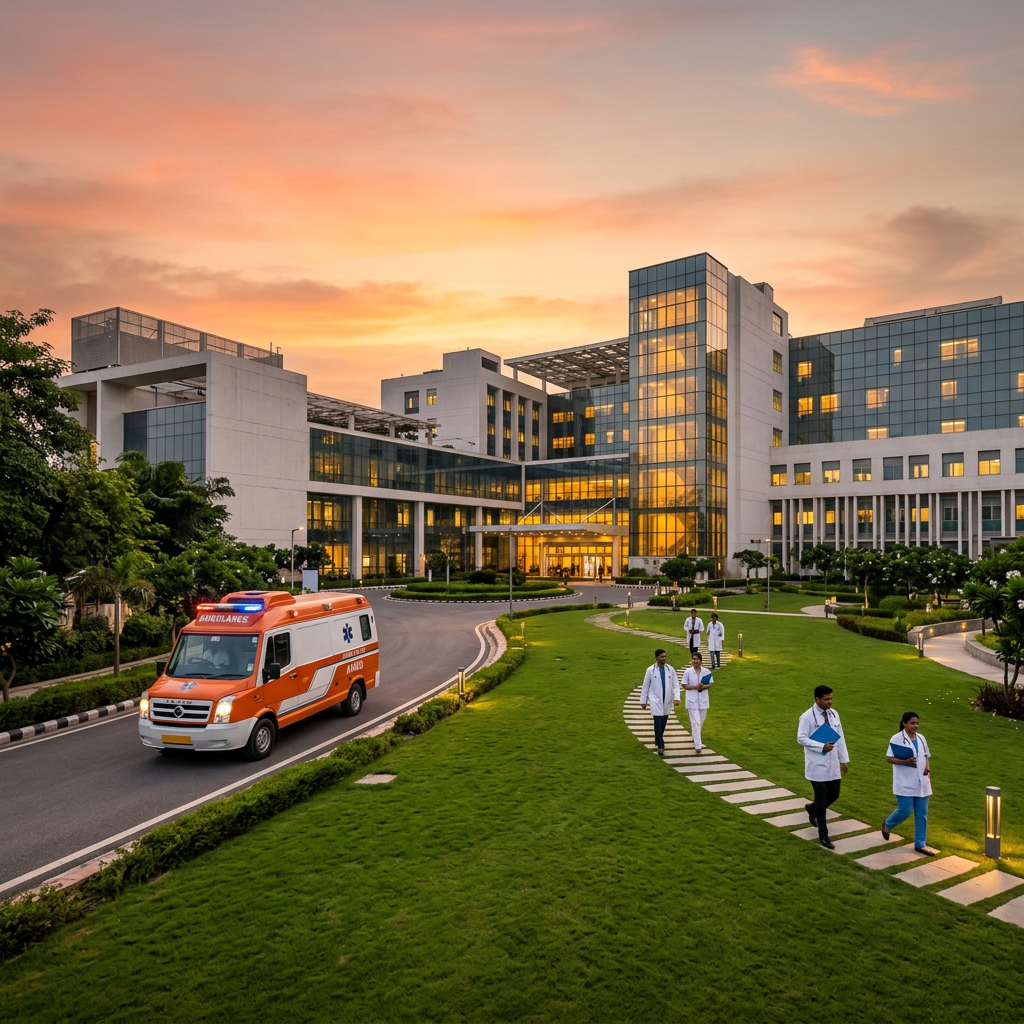
Evolution of AIIMS: From Delhi to 26 National Institutes | list of all AIIMS in India
Explore the complete list of 26 AIIMS institutes in India and discover their world-class facilities, from high-tech labs to affordable tertiary care.

Explore the complete list of 26 AIIMS institutes in India and discover their world-class facilities, from high-tech labs to affordable tertiary care.
Trending Now
Evolution of AIIMS: From Delhi to 26 National Institutes
Key Takeaways
- India currently operates 26 functional AIIMS institutions, with the original AIIMS Delhi established in 1956 as the flagship institution.
- The Pradhan Mantri Swasthya Suraksha Yojana (PMSSY) is the primary government scheme financing the establishment and expansion of new AIIMS campuses across India.
- AIIMS Delhi treated a record 4.84 million OPD patients in FY 2024–25, reflecting exponential demand for tertiary healthcare.
- Phase-I new AIIMS campuses collectively hold a combined bed capacity of 6,280, significantly expanding inpatient care infrastructure.
- Students aspiring to postgraduate medical education at AIIMS compete through the INI-CET exam, one of India's most competitive medical entrance tests.
- Affordable, subsidized care — particularly for Below Poverty Line (BPL) patients — remains a constitutional mandate across all AIIMS institutions.
1. Introduction to the All India Institute of Medical Sciences (AIIMS)
When India's first Prime Minister Jawaharlal Nehru inaugurated All India Institute of Medical Sciences (AIIMS) Delhi in 1956, the vision was bold but singular: create a world-class centre of medical education and research that would train India's finest doctors and serve its most vulnerable citizens. Nearly seven decades later, that singular vision has multiplied into a pan-India network — and today, the list of all AIIMS in India stands at an impressive 26 institutions, spanning 22 states and union territories.
The journey from one iconic institute in New Delhi to 26 national centres of medical excellence is neither accidental nor purely political. It represents a structured, policy-driven response to India's formidable healthcare challenges — massive population burden, inequitable access to tertiary care, a shortage of qualified specialists, and a widening urban-rural healthcare divide. The government's flagship Pradhan Mantri Swasthya Suraksha Yojana (PMSSY) has been the principal instrument catalyzing this expansion.
For parents navigating a child's medical emergency in a Tier-2 city, for educators teaching future healthcare professionals, and for citizens seeking affordable specialist care — understanding what AIIMS institutions offer, where they are located, and how they function is no longer a niche concern. It is a matter of national relevance.
This article provides a comprehensive, research-backed overview of all AIIMS campuses in India, their facilities, academic programs, patient services, and the overarching policy architecture enabling this historic healthcare transformation.
2. Understanding PMSSY: The Engine Behind India's Healthcare Expansion
The Pradhan Mantri Swasthya Suraksha Yojana (PMSSY), launched in 2003, was conceived with two core objectives: establishing new AIIMS-like institutions in underserved states, and upgrading existing government medical colleges and hospitals. It operates under the Ministry of Health and Family Welfare (MoHFW) and has undergone multiple phases of expansion.
💡 The total budget allocated to PMSSY in FY 2023–24 was approximately ₹10,200 Crore, underscoring the government's sustained financial commitment to building tertiary healthcare capacity. (Source: PMSSY Annual Report 2023–24)
The scheme is implemented in phases:
- Phase I (2003): Six new AIIMS in Bhopal, Bhubaneswar, Jodhpur, Patna, Raipur, and Rishikesh
- Phase II & III: Additional AIIMS in states like Gorakhpur, Nagpur, Kalyani (West Bengal), and others
- Phase IV & V: Further expansion into the Northeast, tribal regions, and border states
Each new AIIMS under PMSSY is designed to replicate the Delhi model — offering MBBS education, postgraduate research, hospital services, and nursing programs — while being contextually responsive to regional healthcare needs.
3. Complete List of All AIIMS in India: From Foundation to 2024 Status
The following table presents the comprehensive list of all AIIMS in India, including their establishment year and operational status:
| # | AIIMS Campus | State/UT | Established | Status |
|---|---|---|---|---|
| 1 | AIIMS New Delhi | Delhi | 1956 | Fully Operational |
| 2 | AIIMS Bhopal | Madhya Pradesh | 2012 | Fully Operational |
| 3 | AIIMS Bhubaneswar | Odisha | 2012 | Fully Operational |
| 4 | AIIMS Jodhpur | Rajasthan | 2012 | Fully Operational |
| 5 | AIIMS Patna | Bihar | 2012 | Fully Operational |
| 6 | AIIMS Raipur | Chhattisgarh | 2012 | Fully Operational |
| 7 | AIIMS Rishikesh | Uttarakhand | 2012 | Fully Operational |
| 8 | AIIMS Gorakhpur | Uttar Pradesh | 2019 | Operational |
| 9 | AIIMS Nagpur | Maharashtra | 2018 | Operational |
| 10 | AIIMS Kalyani | West Bengal | 2019 | Operational |
| 11 | AIIMS Mangalagiri | Andhra Pradesh | 2019 | Operational |
| 12 | AIIMS Bathinda | Punjab | 2019 | Operational |
| 13 | AIIMS Raebareli | Uttar Pradesh | 2019 | Operational |
| 14 | AIIMS Bibinagar | Telangana | 2019 | Operational |
| 15 | AIIMS Deoghar | Jharkhand | 2021 | Operational |
| 16 | AIIMS Darbhanga | Bihar | 2021 | Under Development |
| 17 | AIIMS Guwahati | Assam | 2021 | Operational |
| 18 | AIIMS Jammu | Jammu & Kashmir | 2021 | Operational |
| 19 | AIIMS Rajkot | Gujarat | 2021 | Operational |
| 20 | AIIMS Srinagar | Jammu & Kashmir | 2018 | Operational |
| 21 | AIIMS Madurai | Tamil Nadu | 2021 | Under Development |
| 22 | AIIMS Vijaypur | Jammu & Kashmir | 2021 | Under Development |
| 23 | AIIMS Awantipora | Jammu & Kashmir | 2021 | Under Development |
| 24 | AIIMS Hyderabad | Telangana | 2023 | Under Development |
| 25 | AIIMS Kakinada | Andhra Pradesh | 2023 | Under Development |
| 26 | AIIMS Silchar | Assam | 2023 | Under Development |
📌 Phase-I AIIMS campuses — Bhopal, Bhubaneswar, Jodhpur, Patna, Raipur, and Rishikesh — collectively have a combined bed capacity of 6,280, representing a transformative addition to India's inpatient tertiary care infrastructure. (Source: PMSSY Annual Report 2023–24)
4. Core Medical Facilities: Specialty and Super-Specialty Departments
Every AIIMS institution, regardless of its phase of establishment, is mandated to eventually develop a comprehensive bouquet of clinical departments. At AIIMS Delhi — which remains the gold standard — over 40 clinical departments and centers are operational, spanning virtually every branch of modern medicine.
Key Departments Present Across Established AIIMS Campuses:
| Department Category | Examples |
|---|---|
| Surgical Specialties | Cardiothoracic Surgery, Neurosurgery, GI Surgery, Urology, Transplant Surgery |
| Medical Specialties | Cardiology, Neurology, Gastroenterology, Nephrology, Endocrinology, Oncology |
| Maternal & Child Health | Obstetrics & Gynecology, Pediatrics, Neonatology, Pediatric Surgery |
| Diagnostics & Allied | Pathology, Microbiology, Biochemistry, Radiology, Nuclear Medicine |
| Mental Health & Rehabilitation | Psychiatry, Physical Medicine & Rehabilitation |
| Emergency & Critical Care | Emergency Medicine, Anesthesiology, Burn & Plastic Surgery |
AIIMS Delhi additionally operates specialized national centres, including:
- National Cancer Institute (NCI) at Jhajjar, Haryana — a dedicated cancer treatment and research hub
- Dr. B.R. Ambedkar Institute Rotary Cancer Hospital (IRCH)
- National Drug Dependence Treatment Centre (NDDTC)
- Centre for Community Medicine
Newer campuses like AIIMS Jodhpur and AIIMS Bhopal have begun developing equally robust departmental structures, with telemedicine units bridging the gap for rural patients who cannot physically travel to these campuses.
5. Diagnostic Capabilities: State-of-the-Art Labs and Imaging Services
A distinguishing feature of the AIIMS network is its diagnostic infrastructure, which is comparable to leading international academic medical centres. Access to advanced diagnostics at government-subsidized rates is what separates AIIMS from most private tertiary hospitals.
Key diagnostic services available:
- Radiology & Imaging: MRI (including 3-Tesla MRI), CT scans, PET-CT, DEXA scans, digital X-ray, 4D ultrasound
- Pathology & Laboratory Services: Histopathology, cytology, immunohistochemistry, flow cytometry
- Nuclear Medicine: PET scans, gamma camera studies, SPECT imaging
- Cardiac Diagnostics: Echocardiography, Holter monitoring, cardiac catheterization labs
- Genomics & Molecular Diagnostics: Expanding capabilities for cancer genomics and rare genetic disorder diagnosis
- Microbiology Labs: BSL-2 and BSL-3 level biosafety laboratories for infectious disease research and diagnosis
AIIMS Delhi's central laboratory complex processes hundreds of thousands of samples annually, and its imaging departments are equipped with AI-assisted diagnostic tools that flag anomalies in radiological scans — significantly improving turnaround time and diagnostic accuracy.
6. Emergency and Trauma Care: A Nationwide Lifeline
India's road accident fatality rate remains one of the highest globally, making trauma and emergency care a critical institutional priority. AIIMS has risen to this challenge with purpose-built infrastructure.
AIIMS Delhi's Jai Prakash Narayan Apex Trauma Centre (JPNATC) is among the most advanced trauma care facilities in Asia. Operational 24/7, it handles polytrauma, neurosurgical emergencies, burn cases, and mass casualty incidents — regularly receiving patients airlifted from across North India.
Newer AIIMS campuses have developed Level-I and Level-II trauma units with:
- Dedicated emergency operation theatres
- Intensive Care Units (ICUs) including neurological, cardiac, neonatal (NICU), and surgical ICUs
- Air ambulance landing pads at select campuses
- Triage protocols aligned with national disaster management guidelines
- Poison control centres and snake bite management units at campuses in tribal and rural areas (e.g., AIIMS Raipur, AIIMS Bhubaneswar)
🚨 AIIMS Delhi recorded 3.61 lakh inpatient (IPD) admissions in FY 2024–25 — a 28% increase over the previous year — demonstrating the enormous and growing burden on these institutions. (Source: Modern Shrines Publications)
7. Educational Excellence: MBBS, PG, and Nursing Programs
AIIMS institutions are Institutes of National Importance (INIs) — a legal designation that confers autonomous status and the authority to award their own degrees. This makes their academic credentials uniquely prestigious in Indian medicine.
Academic Programs Offered:
| Program | Description |
|---|---|
| MBBS | 5.5-year undergraduate program; highly competitive admission via NEET-UG |
| MD/MS (Residency) | Postgraduate specialty training; admission via INI-CET exam |
| DM/MCh (Superspecialty) | Fellowship-level training in neurology, cardiology, oncology, etc. |
| PhD Programs | Doctoral research in basic and clinical sciences |
| B.Sc. Nursing | 4-year undergraduate nursing program |
| M.Sc. Nursing | Postgraduate nursing specialization |
| Paramedical & Allied Health | Programs in physiotherapy, radiography, medical lab technology |
MBBS seats in AIIMS have grown substantially since 2012. AIIMS Delhi alone offers 107 MBBS seats per year, while each new AIIMS typically begins with 50–100 MBBS seats, scaling up as infrastructure matures. Across all 26 campuses, the total undergraduate MBBS intake is estimated at over 1,800 seats annually — a significant contribution to India's physician workforce pipeline.
The INI-CET (Institute of National Importance Combined Entrance Test) is conducted biannually by AIIMS Delhi on behalf of all INIs. It is considered one of India's most competitive medical examinations, with lakhs of MBBS graduates competing for postgraduate seats across AIIMS, JIPMER, PGI Chandigarh, and NIMHANS.
8. Patient Support Services: Subsidized Care and BPL Benefits
One of AIIMS's most socially consequential attributes is its mandate to provide affordable or free medical care — particularly to economically disadvantaged populations. This is enshrined in the founding principles of the institution and reinforced through government policy.
Key patient support mechanisms include:
- Free OPD consultations: All new AIIMS campuses offer outpatient consultations at nominal registration fees (₹10–₹50 in many cases)
- BPL (Below Poverty Line) card benefits: Patients holding BPL cards are entitled to free or heavily subsidized diagnostics, medicines, and surgeries
- Jan Aushadhi Kendras: Generic medicine outlets available within AIIMS campuses at 60–90% lower costs than branded medicines
- PMJAY (Ayushman Bharat) integration: Several new AIIMS campuses are empanelled under the Ayushman Bharat Pradhan Mantri Jan Arogya Yojana, enabling cashless treatment for eligible beneficiaries
- Patient welfare societies and charitable funds: Internal funds at campuses like AIIMS Delhi support destitute patients who lack any formal coverage
📊 AIIMS Delhi alone treated 4.84 million OPD patients in FY 2024–25 — the highest ever recorded in a single year — reflecting its role as an irreplaceable institution for affordable tertiary care in India. (Source: Modern Shrines Publications)
9. Spotlight on Technology: AI, Robotics, and Digital Health Records
AIIMS institutions are not merely custodians of India's healthcare past — they are actively shaping its digital and technological future.
AIIMS Delhi has been at the forefront of adopting Hospital Information Systems (HIS) and Electronic Medical Records (EMR), enabling paperless OPD registrations, digital prescription systems, and integrated lab result viewing.
Key technology initiatives across the AIIMS network include:
- Robotic Surgery Programs: AIIMS Delhi and AIIMS Jodhpur have operational robotic surgery platforms (da Vinci surgical system) used for urological, gynecological, and oncological procedures
- Artificial Intelligence in Radiology: AI-powered tools for TB screening in chest X-rays and early diabetic retinopathy detection from fundus images are in active clinical use
- Telemedicine & eSanjeevani: Multiple AIIMS campuses are integrated with the government's eSanjeevani platform, enabling virtual specialist consultations for patients in remote districts
- AIIMS Digital Health Initiative: A national-level effort to create interoperable health records linked to Ayushman Bharat Health Accounts (ABHA IDs)
- Simulation Labs: High-fidelity clinical simulation centres for surgical training, available at AIIMS Delhi, AIIMS Jodhpur, and AIIMS Rishikesh
10. Regional Impact: How the List of All AIIMS in India Is Reducing Interstate Medical Travel
The strategic geographic distribution of AIIMS campuses is producing measurable results in reducing the phenomenon of interstate medical migration — where patients from underdeveloped states travel thousands of kilometres to access tertiary care.
📍 AIIMS Bhubaneswar recorded 12.72 lakh OPD patients in FY 2024–25, with nearly 30% of patients traveling from West Bengal — demonstrating that even regional AIIMS campuses draw patients from beyond state borders, while simultaneously reducing the absolute burden on AIIMS Delhi. (Source: Times of India)
States like Bihar, Jharkhand, Chhattisgarh, and Odisha — historically sending large patient populations to Delhi, Kolkata, or Vellore — now have functioning AIIMS campuses providing cardiac, oncological, and neurological services closer to home. This reduces:
- Financial burden on patient families (travel and lodging costs)
- Delayed treatment due to long distances
- Overcrowding at legacy institutions like AIIMS Delhi and PGI Chandigarh
- Loss of life from critical conditions that deteriorate during long-distance transit
The Northeast, long underserved in tertiary care, is now anchored by AIIMS Guwahati and the upcoming AIIMS Silchar, with early evidence of improved specialist access for populations in Assam, Meghalaya, Manipur, and Nagaland.
11. Upcoming AIIMS: What to Expect from Future Campuses
Several AIIMS campuses are currently under various stages of construction or academic initiation. The government has committed to ensuring each campus becomes fully functional with all departments, a 750-bed hospital, and complete academic programs within a defined timeline.
Campuses in active development phase include:
- AIIMS Darbhanga (Bihar): Expected to serve dense, medically underserved northern Bihar population
- AIIMS Madurai (Tamil Nadu): Poised to serve southern Tamil Nadu, reducing patient traffic to CMC Vellore and AIIMS Delhi
- AIIMS Hyderabad (Telangana): Expected to complement existing medical infrastructure in a major urban hub
- AIIMS Kakinada (Andhra Pradesh): Strengthening healthcare access in coastal Andhra Pradesh
Each new campus is projected to generate 1,000+ direct employment opportunities (medical faculty, nursing staff, administrative and support personnel), adding an important economic dimension to healthcare expansion.
🔭 According to the Press Information Bureau (PIB), the government has reaffirmed its commitment to bringing all under-construction AIIMS campuses to full functional status under its Viksit Bharat 2047 roadmap.
12. Conclusion: The Vision for a Healthier 'Viksit Bharat'
The evolution of AIIMS — from a solitary institute in New Delhi to a network of 26 institutions woven across the country's geographic and demographic fabric — is among the most ambitious achievements in India's public health history. Backed by the PMSSY scheme, sustained budgetary commitment, and a clear policy vision, this network is progressively transforming what tertiary healthcare in India means: not a privilege of proximity to metro cities, but a right accessible to every citizen.
For families in Raipur who no longer need to sell farmland to fund cancer treatment in Mumbai, for students in Guwahati who can now train as cardiologists without relocating to Delhi, and for communities in Jharkhand who have a trauma centre within driving distance — the list of all AIIMS in India is not an administrative catalog. It is a map of equity in progress.
The challenges remain significant: faculty shortages at newer campuses, infrastructure completion delays, and the ever-growing patient load on operational centres all demand continued attention and investment. Yet the trajectory is unmistakably positive.
As India marches toward its Viksit Bharat 2047 vision — a developed, inclusive, and prosperous nation — the AIIMS network stands as both a symbol and a scaffold of that ambition. The next chapter will be written in digital health integration, AI-powered diagnostics, precision medicine, and a generation of Indian doctors trained at these institutions who carry their excellence to every corner of the subcontinent.
Sources
- Pradhan Mantri Swasthya Suraksha Yojana (PMSSY) – Official Portal
- PMSSY Annual Report 2023–24 – Ministry of Health and Family Welfare
- Press Information Bureau (PIB) – AIIMS Expansion Update
- AIIMS Bhubaneswar Annual Report 2024–25
- Modern Shrines Publications – AIIMS Delhi OPD Record 2024–25
- Times of India – AIIMS Bhubaneswar OPD Patient Data 2024–25
- Ministry of Health and Family Welfare – Official Website
Published on Voxora | Category: Healthcare & Public Policy | Reading Time: ~12 minutes
Advertisement
Frequently Asked Questions
How many AIIMS institutions are currently functional across India?
As of 2024, there are 20 operational AIIMS institutions in India, including prominent locations like New Delhi, Rishikesh, Bhopal, and Jodhpur, with a total of 25 sanctioned under the Pradhan Mantri Swasthya Suraksha Yojana.
What specialized medical facilities are typically available at premier AIIMS centers?
Premier centers like AIIMS New Delhi offer over 2,500 beds and specialized departments including the Dr. B.R.A. Institute Rotary Cancer Hospital, Jai Prakash Narayan Apex Trauma Center, and advanced Cardiothoracic and Neurosciences centers.
How can students secure admission to AIIMS and what is the total seat capacity?
Admission to MBBS programs at all AIIMS is conducted through the National Eligibility cum Entrance Test (NEET-UG). There are approximately 2,044 MBBS seats available across the different AIIMS institutes for qualified candidates.
Do AIIMS hospitals provide digital facilities for appointment booking and reports?
Yes, AIIMS utilizes the Online Registration System (ORS) portal, which allows patients to book tele-consultations, physical appointments, and access lab reports digitally using their Aadhaar or UHID numbers.
Are medical treatments at AIIMS affordable for families under government schemes?
AIIMS offers highly subsidized healthcare where OPD registration is approximately 10 INR, and it provides free or cashless treatment to eligible families under the Ayushman Bharat PM-JAY scheme and the Rashtriya Arogya Nidhi.
Sponsored
You Might Also Like


Advertisement
Comments (0)
Sign in to join the conversation
No comments yet. Be the first to share your thoughts!