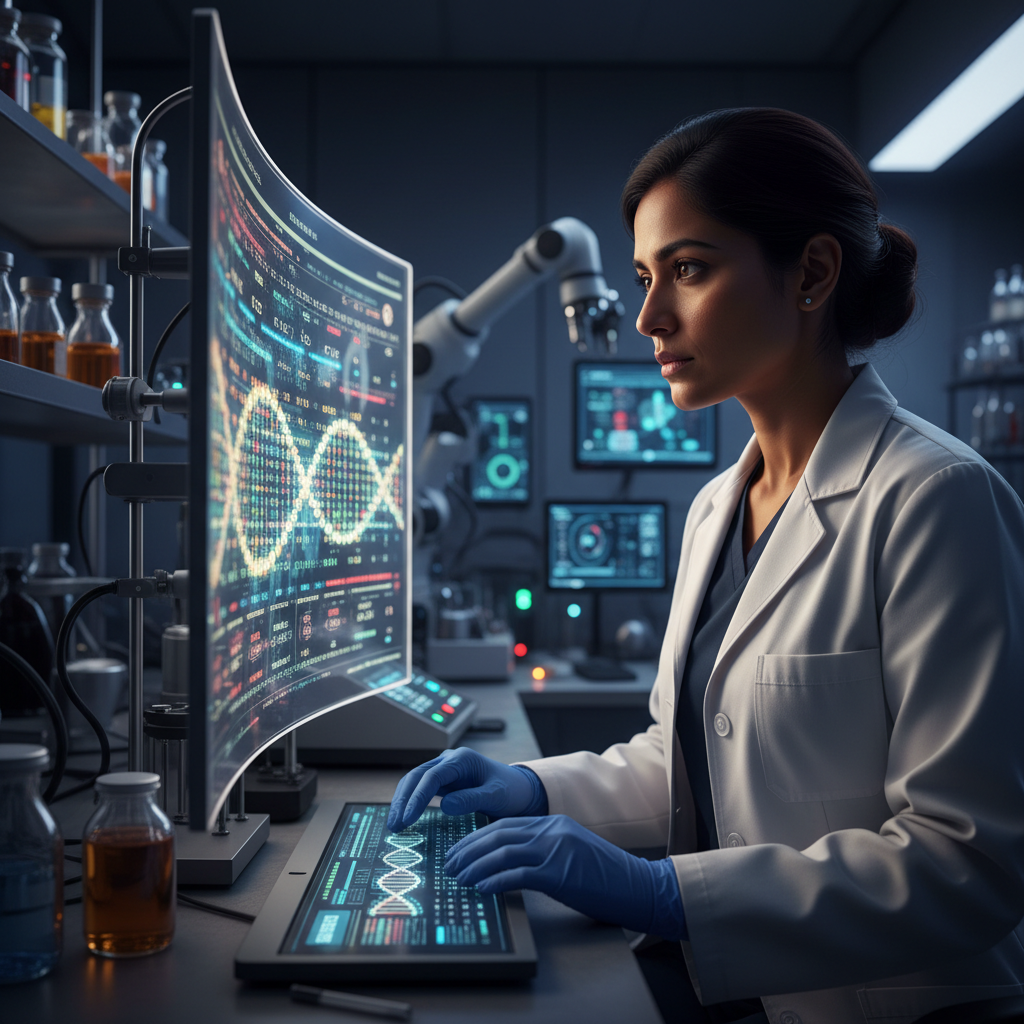
Future of Forensics: Scope, Salary, and Top Institutes in India | care | career in forensic science india
Explore the thriving career of forensic science in India. Learn about top institutes like NFSU, rising salaries, and the 90,000-professional talent gap.

Explore the thriving career of forensic science in India. Learn about top institutes like NFSU, rising salaries, and the 90,000-professional talent gap.
Trending Now
Future of Forensics: Scope, Salary, and Top Institutes in India
Key Takeaways
- India faces a shortage of over 90,000 trained forensic professionals in the digital sector alone, creating massive career opportunities.
- The Indian digital forensics market is projected to reach INR 11,924 crore by 2030, growing at a 40% CAGR.
- NFSU Gandhinagar recorded a highest placement package of INR 67 LPA in 2025, with a median of INR 13 LPA.
- The Government of India allocated INR 2,254 crore through 2029 to modernize forensic labs and training infrastructure.
- Career paths span digital forensics, DNA profiling, toxicology, forensic psychology, and crime scene investigation.
- Both government agencies (CBI, CFSL, state police) and multinational corporations are actively hiring forensic professionals.
Introduction: Why a Career in Forensic Science India Is More Promising Than Ever
When a crime occurs, the evidence it leaves behind rarely speaks for itself. It requires trained scientific minds — methodical, rigorous, and analytically precise — to interpret physical traces, digital footprints, and biological markers in ways that can hold up in a court of law. This is the domain of the forensic scientist, a professional who sits at the intersection of science, technology, and justice.
A career in forensic science in India is no longer a niche pursuit. It has evolved into one of the most strategically important professions in the country's criminal justice ecosystem. Rising cybercrime rates, high-profile criminal investigations, and the government's commitment to evidence-based policing have collectively catalyzed a demand for trained forensic professionals that far outpaces supply.
According to a report by Deloitte India and DSCI, India faces a shortage of over 90,000 trained professionals in the digital forensics sector alone. Meanwhile, new legislation — most notably the Bharatiya Nagarik Suraksha Sanhita (BNSS), 2023 — mandates forensic investigation for crimes punishable with seven or more years of imprisonment, effectively institutionalizing the role of forensic science in the Indian legal system.
For students, parents, and educators navigating academic decisions, this article provides a comprehensive, research-backed guide to understanding the scope, specializations, top institutes, salary expectations, and future trajectory of forensic science careers in India.
The Role of a Forensic Scientist: Bridging Science and Law
A forensic scientist applies the principles of natural and social sciences to matters of civil and criminal law. Their responsibilities are both technical and communicative — they must not only analyze evidence but also present findings in a manner that is accessible to judges, attorneys, and juries.
Core responsibilities include:
- Collecting, preserving, and analyzing physical evidence from crime scenes
- Performing laboratory tests on biological samples, chemicals, or digital data
- Preparing detailed, impartial scientific reports for the prosecution or defense
- Appearing in court as an expert witness to explain findings under oath
- Establishing links between suspects, victims, and crime scenes through scientific methods
- Investigating causes of fires, explosions, deaths, or financial irregularities
The role demands an unusual blend of competencies: laboratory precision, legal literacy, ethical integrity, and clear verbal communication. As noted by career advisor and mentor Pratap J. Das, forensic scientists serve as the custodians of truth in a judicial process that increasingly depends on objective, reproducible scientific evidence.
Top Forensic Science Institutes in India (2025 Rankings)
Selecting the right institution is the most critical decision in building a credible forensic science career. Below is a curated list of India's leading institutes, evaluated on curriculum rigor, research infrastructure, placement records, and industry linkages.
| Institute | Location | Programs Offered | Notable Strength |
|---|---|---|---|
| National Forensic Sciences University (NFSU) | Gandhinagar, Gujarat | B.Sc, M.Sc, Ph.D., MBA (Forensic) | World's first forensic university; highest placements |
| Lok Nayak Jayaprakash Narayan National Institute of Criminology and Forensic Science (LNJN NICFS) | New Delhi | PG Diploma, Certification | Ministry of Home Affairs affiliated |
| Amity Institute of Forensic Sciences | Noida, UP | B.Sc, M.Sc | Strong private sector placements |
| Osmania University | Hyderabad, Telangana | M.Sc Forensic Science | Pioneer public university program |
| University of Delhi (DU) | New Delhi | M.Sc Forensic Science | Research-intensive; high academic credibility |
| Panjab University | Chandigarh | M.Sc Forensic Science | Established forensic toxicology faculty |
| Sam Higginbottom University (SHUATS) | Prayagraj, UP | B.Sc, M.Sc | Multidisciplinary science integration |
| Guru Gobind Singh Indraprastha University (GGSIPU) | New Delhi | B.Sc Forensic Science | Affordable fees; Delhi placement proximity |
| Kalinga Institute of Industrial Technology (KIIT) | Bhubaneswar, Odisha | B.Sc, M.Sc | Emerging research ecosystem |
| Bundelkhand University | Jhansi, UP | B.Sc, M.Sc | Accessible program in Tier-2 region |
🔎 Insight from the Field: National Forensic Sciences University remains the gold standard in India. Its 2025 placement report recorded a highest package of INR 67 LPA and a median salary of INR 13 LPA, reflecting the calibre of employers — from global tech firms to national investigative agencies — engaging with its graduates.
Educational Pathway: From 12th Grade to Professional Certification
Understanding the academic roadmap is essential for students planning to enter the field.
Eligibility at Entry Level:
- 12th grade with Physics, Chemistry, and Biology (PCB) or Mathematics (PCM) as core subjects
- Minimum aggregate of 50–60%, varying by institution
Degree Progression:
| Level | Duration | Common Programs | Career Entry Point |
|---|---|---|---|
| Undergraduate | 3 years | B.Sc Forensic Science, B.Sc Criminalistics | Junior Lab Analyst, Police Technical Staff |
| Postgraduate | 2 years | M.Sc Forensic Science, M.Sc Digital Forensics | Senior Analyst, Consultant, Researcher |
| Professional Diploma | 6–12 months | PG Diploma in Cyber Forensics, Crime Scene Investigation | Specialized government/corporate roles |
| Doctoral Research | 3–5 years | Ph.D. in Forensic Science | Academia, Advanced R&D, Policy Advisory |
| Certification | Variable | Certified Forensic Examiner (CFE), EC-Council CHFI | Digital forensics, corporate investigations |
Forensic science course fees in India range from INR 20,000 per year at public universities to INR 2–4 lakh per year at private institutions. NFSU, being a central university, offers competitive fee structures relative to its global reputation.
Specializations in Demand: Digital, DNA, and Toxicology
Forensic science is not a monolithic discipline. It comprises several highly specialized branches, each serving a distinct function in the investigative and judicial process.
1. Digital Forensics The fastest-growing specialization in India, digital forensics involves recovering and analyzing data from electronic devices — computers, smartphones, cloud systems, and networks. With cybercrime complaints in India crossing 1.5 million in 2023 (Source: Ministry of Home Affairs), digital forensics jobs in India are among the most sought-after roles across both government and corporate sectors.
2. DNA Profiling A DNA profiling career in India is highly specialized and typically pursued within government forensic laboratories, academic research institutions, or private diagnostic chains. DNA analysts work on cases involving violent crimes, missing persons, and paternity disputes. The establishment of the DNA Technology (Use and Application) Regulation Bill has added regulatory structure to this domain.
3. Forensic Toxicology Toxicologists analyze biological samples to detect drugs, poisons, alcohol, and other substances. They are employed by state Forensic Science Laboratories (FSLs), the Central Forensic Science Laboratory (CFSL), and hospitals.
4. Forensic Psychology An emerging and underrepresented field in India, forensic psychology applies psychological principles to criminal investigations, offender profiling, and court proceedings. Trained forensic psychologists are increasingly in demand with the National Crime Records Bureau (NCRB) and rehabilitation institutions.
5. Questioned Documents Examination This involves the analysis of handwriting, ink, paper, and printing to detect forgery and fraud — highly relevant in white-collar crime investigations.
Government vs. Private Sector: Where Are the Best Jobs?
Forensic science professionals in India have viable pathways in both the public and private sectors. Each offers distinct advantages.
Government Sector — Stability and Authority
Key government employers include:
- Central Bureau of Investigation (CBI) — CBI forensic recruitment is conducted through SSC and UPSC channels, with positions for sub-inspectors (forensic), scientific officers, and DNA analysts.
- Central Forensic Science Laboratories (CFSL) — Operated under the Bureau of Police Research and Development (BPR&D), with labs in Hyderabad, Chandigarh, Kolkata, and New Delhi.
- State Forensic Science Laboratories (FSLs) — Each state maintains its own laboratory network.
- Intelligence Bureau (IB) and National Investigation Agency (NIA) — For specialized counterterrorism and national security forensics.
- Income Tax and Enforcement Directorate — For financial forensics roles.
Private Sector — Growth and Compensation
Private sector demand is led by:
- Cybersecurity firms (Palo Alto, Deloitte, PwC, KPMG, EY)
- Banking and financial institutions (for fraud forensics)
- E-discovery and legal tech companies
- Pharmaceutical companies (for regulatory forensics)
- Independent forensic consulting firms
💼 Salary Comparison Snapshot: Government entry-level roles typically begin at INR 35,000–55,000/month with job security and grade pay benefits. Private sector mid-level roles can command INR 6–15 LPA depending on specialization and location.
Salary Expectations for Entry-Level and Senior Experts
One of the most frequently asked questions about forensic science relates to earning potential. The data is encouraging, particularly as institutional quality improves and demand surges.
| Experience Level | Role | Average Annual Salary (INR) |
|---|---|---|
| Entry-Level (0–2 yrs) | Lab Analyst, Junior Forensic Officer | 3.5 – 5.5 LPA |
| Mid-Level (3–7 yrs) | Senior Forensic Scientist, Digital Forensic Analyst | 6 – 12 LPA |
| Senior-Level (8–15 yrs) | Lead Forensic Examiner, Forensic Consultant | 14 – 25 LPA |
| Top-Tier / Specialist | Digital Forensics Director, Forensic Expert Witness | 30 – 67 LPA |
A crime scene investigator salary in India for government roles typically begins around INR 4–6 LPA, while private-sector equivalents with cybercrime focus can command INR 8–15 LPA at the mid-career stage.
The INR 67 LPA placement figure from NFSU's 2025 report is not an outlier — it reflects the premium that multinational technology and consulting firms are willing to pay for elite forensic talent with cross-disciplinary expertise.
The Digital Forensics Boom: A 40% Growth Frontier
The statistics surrounding digital forensics in India are extraordinary by any measure, and they define the most urgent opportunity in this career landscape.
📊 Market Projection: The Indian digital forensics market is expected to grow at a CAGR of 40%, reaching approximately INR 11,924 crore by 2030, according to a Deloitte India and IBEF-cited industry report.
This growth is propelled by several converging forces:
- Explosion in cybercrime — from ransomware attacks on public infrastructure to financial fraud and data breaches
- Mandatory forensic investigation provisions under the Bharatiya Nagarik Suraksha Sanhita (BNSS), 2023
- Government investment — the Ministry of Home Affairs announced a dedicated scheme with a financial outlay of INR 2,254 crore through 2029 for upgrading forensic labs and professional training infrastructure
- Corporate demand — as data privacy regulations tighten (DPDP Act, 2023), companies require forensic-level audit and incident response capabilities
For students with a background in computer science or information technology who are considering pivoting toward law and justice, digital forensics jobs in India represent one of the most financially rewarding and socially impactful career decisions available today.
Key Skills Required: Analytical Thinking to Courtroom Testimony
Beyond academic qualifications, forensic science careers demand a robust and evolving skill set.
Technical Skills:
- Proficiency in forensic software tools (EnCase, FTK, Autopsy, MATLAB)
- Knowledge of chain of custody protocols and evidence handling
- Understanding of molecular biology and PCR techniques (for DNA work)
- Familiarity with cybersecurity frameworks and network forensics
Cognitive and Interpersonal Skills:
- Analytical thinking and hypothesis-driven investigation
- Attention to detail — a single mishandled sample can invalidate an entire case
- Scientific writing — clear, unambiguous report preparation
- Courtroom communication — the ability to explain complex science to non-scientific audiences, including judges and jurors
- Ethical discipline — impartiality is non-negotiable; forensic scientists serve truth, not parties
As career advisor Pratap J. Das emphasizes, the most effective forensic professionals are those who understand that their reports and testimony can alter the trajectory of a human life. This professional responsibility demands an uncompromising commitment to scientific integrity.
Case Study: The Impact of NFSU on Global Forensic Education
The National Forensic Sciences University (NFSU), established in Gandhinagar, Gujarat in 2020 as a central university under the Ministry of Home Affairs, represents a landmark development in the global forensic education landscape. It is the world's first and only university exclusively dedicated to forensic and investigative sciences.
Key highlights of NFSU's academic and placement ecosystem:
- Offers over 50 programs spanning B.Sc, M.Sc, MBA (Forensic Management), and Ph.D. levels
- Has nine campuses across India, including Delhi, Tripura, Goa, and Pune
- Collaborates with Interpol, FBI Academy, and international forensic bodies for curriculum development
- 2025 Placement Statistics: Highest package of INR 67 LPA; median salary of INR 13 LPA across major programs
- Recruiters include Deloitte, EY, KPMG, PwC, Microsoft, Amazon, and national law enforcement agencies
NFSU's model — integrating science, law, management, and technology under one forensic umbrella — has influenced how other Indian universities are structuring their forensic programs. Its success demonstrates that BSc forensic science scope extends well beyond traditional police laboratories into boardrooms, courtrooms, and global intelligence agencies.
Challenges in the Industry: Closing the 90,000-Professional Talent Gap
Despite the optimism surrounding the field, the forensic science sector in India faces structural challenges that must be acknowledged.
⚠️ Critical Gap: India currently faces a shortage of over 90,000 trained professionals in the digital forensics sector, as reported by Deloitte India in partnership with DSCI — creating both a crisis for law enforcement and an opportunity for skilled graduates.
Key challenges include:
- Limited institutional capacity — Outside NFSU and a handful of established universities, the quality of forensic science education varies dramatically across India.
- Outdated laboratory infrastructure — Many state FSLs operate with aging equipment and insufficient budgets, creating backlogs in case processing.
- Shortage of qualified faculty — As industry demand accelerates, the academic pipeline for forensic educators has not kept pace.
- Awareness deficit — Many eligible science students remain unaware of forensic science as a structured career option, channeling themselves exclusively toward medicine or engineering.
- Standardization gaps — The absence of a uniform national accreditation framework for forensic labs and practitioners creates inconsistencies in evidence quality.
The INR 2,254 crore government outlay is a significant step toward addressing these structural gaps, but sustainable progress will require parallel investment in academic institutions, faculty development, and public awareness.
Conclusion: Is a Career in Forensic Science Right for You?
A career in forensic science in India offers something rare in the professional landscape: the convergence of intellectual challenge, social purpose, and economic opportunity. It is a field where scientific rigor directly contributes to justice — where a well-analyzed fingerprint, a decoded digital trail, or a toxicological report can determine the outcome of a case that shapes lives.
For students with strong foundations in science, a curiosity about investigative processes, and the discipline to maintain objectivity under pressure, forensic science presents an exceptionally compelling path. The 40% market growth, government investment, institutional expansion led by NFSU, and the 90,000-professional talent gap collectively signal that the timing for entering this field has never been more advantageous.
Parents, educators, and career counselors should take note: forensic science is no longer a distant, cinema-inspired abstraction. It is a structured, accredited, and high-demand professional domain that India's legal and security systems urgently need to build — and that ambitious students are exceptionally well-positioned to lead.
Whether your interest lies in digital forensics, DNA profiling, forensic psychology, or crime scene investigation, the Indian forensic science sector in 2025 and beyond offers a landscape of genuine opportunity, professional growth, and meaningful impact.
— Curated and reviewed by Pratap J. Das, Career Advisor and Mentor
Sources
- National Forensic Sciences University (NFSU)
- Deloitte India — Digital Forensics Market Report
- Ministry of Home Affairs, Government of India
- Bureau of Police Research and Development (BPR&D)
- IBEF — Indian Digital Forensics Market Projection
- NFSU Placement Data 2025 — CollegeWollege
- Deloitte-DSCI Talent Shortage Report — The Finance Story
Published on Voxora | Written for students, educators, parents, and professionals navigating India's evolving forensic science landscape.
Advertisement
Frequently Asked Questions
What are the primary educational requirements for a career in Forensic Science in India?
To become a forensic scientist in India, one typically needs a 3-year B.Sc. in Forensic Science followed by a 2-year M.Sc. degree. Candidates must have completed 10+2 with Physics, Chemistry, and Biology or Mathematics, usually requiring a minimum aggregate of 50-60% from a recognized board.
Which are the top-rated institutes for Forensic Science in India?
The National Forensic Sciences University (NFSU) in Gandhinagar is the premier institution, recognized as an Institute of National Importance. Other top institutes include the LNJN National Institute of Criminology and Forensic Science (Delhi), Banaras Hindu University (BHU), and the University of Madras.
What is the expected starting salary for a forensic professional in India?
A fresher in the private sector can expect an annual package between ₹3,00,000 and ₹4,50,000. In government organizations like State or Central Forensic Science Laboratories, a Scientific Assistant typically starts at Pay Level 6 of the 7th Pay Commission, roughly ₹35,400 per month plus allowances.
What specific career roles are available for forensic graduates?
Graduates can pursue roles such as Crime Scene Investigator, Forensic DNA Analyst, Questioned Document Examiner, Toxicologist, and Digital Forensic Expert. Employment is found in the Central Bureau of Investigation (CBI), Intelligence Bureau (IB), State Police departments, and private legal consultancy firms.
Does one need to clear a specific entrance exam for admission into top forensic programs?
Yes, many top-tier institutions require entrance exams. For instance, NFSU conducts the National Forensic Admission Test (NFAT) for its various programs. Many other central and state universities now accept scores from the Common University Entrance Test (CUET) for undergraduate and postgraduate admissions.
Sponsored
You Might Also Like


Advertisement
Comments (0)
Sign in to join the conversation
No comments yet. Be the first to share your thoughts!