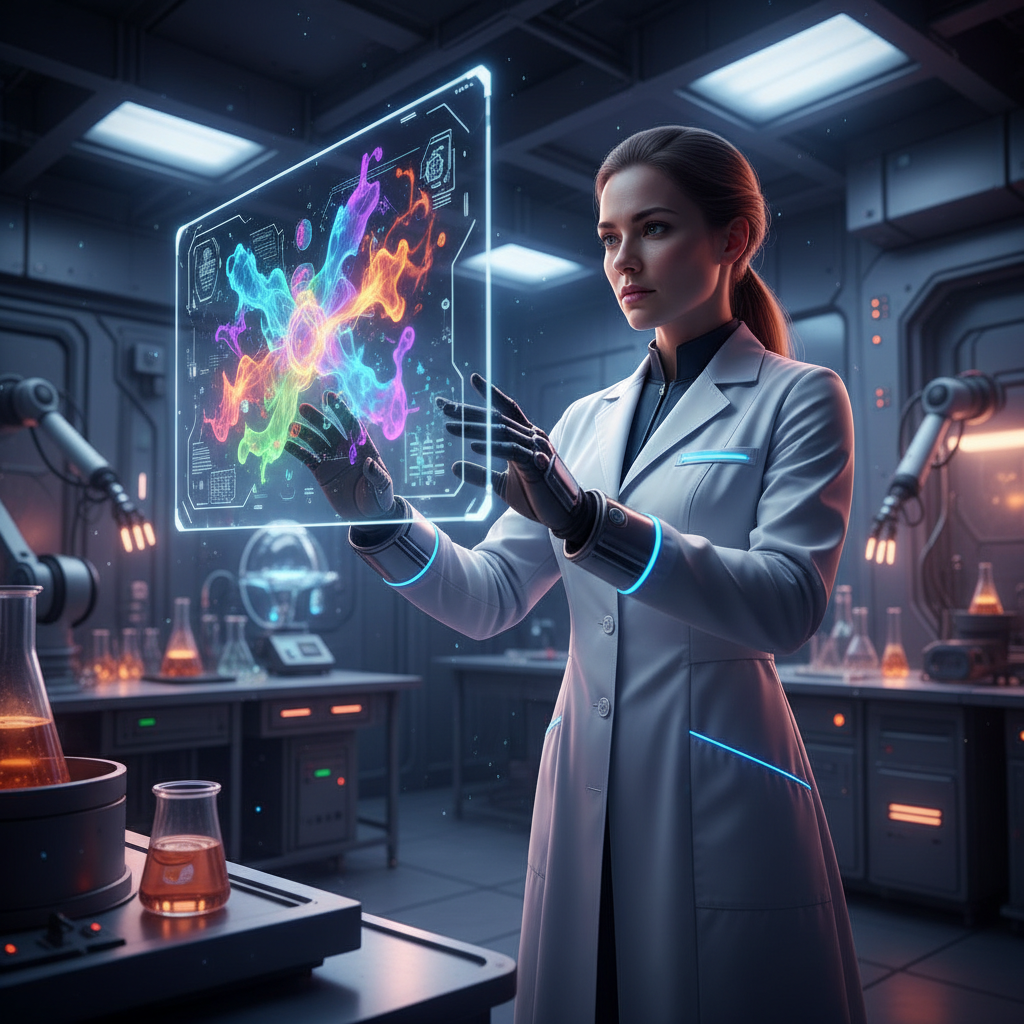
Exploring Careers in Chemistry: Analytical to Industrial Roles | Caree
Discover rewarding careers in chemistry, from analytical roles to industrial manufacturing, featuring expert advice from advisor Pratap J Das.

Discover rewarding careers in chemistry, from analytical roles to industrial manufacturing, featuring expert advice from advisor Pratap J Das.
Trending Now
Exploring Careers in Chemistry: Analytical to Industrial Roles
Key Takeaways
- A career in chemistry spans multiple disciplines — from analytical identification to industrial production, medicinal research, and process development.
- Employment of chemists is projected to grow 5% from 2024 to 2034, outpacing the average growth rate for all U.S. occupations.
- The median annual wage for chemists reached $84,150 in May 2024, with top earners exceeding $154,430.
- Medicinal chemists command significantly higher compensation, with average base salaries around $113,238 annually.
- Emerging trends — including AI-driven drug discovery, green chemistry, and digital lab automation — are reshaping what it means to work as a professional chemist.
- Career success increasingly depends on combining technical chemistry expertise with digital literacy, data analysis skills, and adaptability.
1. Introduction to the Diverse World of Professional Chemistry
When most people imagine a chemist, they picture a scientist in a white lab coat, surrounded by glass beakers and colorful solutions. While that image carries some truth, a career in chemistry is far more expansive, dynamic, and intellectually rewarding than this familiar stereotype suggests.
Chemistry is often described as the central science — the discipline that bridges physics, biology, environmental science, and materials engineering. It underpins the medicines we take, the food we eat, the materials in our smartphones, and the fuels that power our world. Professionals in this field are not confined to academic laboratories. They work in pharmaceutical corporations, government agencies, petrochemical plants, environmental firms, food and beverage industries, and increasingly, within technology startups leveraging artificial intelligence for molecular discovery.
For college students weighing their academic future, parents seeking clarity on where a chemistry degree leads, or educators guiding young minds toward meaningful careers, understanding the full spectrum of chemistry roles is essential. This article breaks down each major pathway — analytical, industrial, medicinal, and process development chemistry — while drawing on verified labor data, industry outlooks, and expert guidance from career advisor Pratap J Das to help you make informed decisions.
2. Defining the Roles: Analytical vs. Industrial Chemists — Core Career in Chemistry
At the foundation of chemistry careers lie two primary professional categories: analytical chemists and industrial chemists. Though both require rigorous scientific training, their day-to-day responsibilities differ significantly.
Analytical Chemists
Analytical chemists identify and analyze materials to determine their chemical composition, concentration, structure, and reactivity. Their work is fundamentally investigative. They ask: What is this substance made of? How does it behave under specific conditions? Is it safe, pure, or contaminated?
Key responsibilities typically include:
- Developing and validating testing methods
- Operating sophisticated instruments such as mass spectrometers, gas chromatographs, and NMR (nuclear magnetic resonance) spectrometers
- Conducting quality control analyses in pharmaceutical, food, environmental, and forensic sectors
- Interpreting complex datasets and communicating findings to non-technical stakeholders
Analytical chemists are employed across an impressive range of industries — from forensic laboratories assisting law enforcement to environmental agencies monitoring pollution levels, to pharmaceutical companies ensuring drug purity.
Industrial Chemists
Industrial chemists, by contrast, focus on research, development, and the large-scale production of chemical products. Their work is oriented toward output and application. They ask: How can we produce this compound more efficiently? How do we scale this synthesis from a laboratory bench to a manufacturing plant?
Industrial chemists often collaborate with engineers, production managers, and quality assurance teams. Their environments range from chemical manufacturing facilities to research and development departments within major corporations.
| Feature | Analytical Chemist | Industrial Chemist |
|---|---|---|
| Primary Focus | Identification & analysis | Research & production |
| Work Environment | Testing labs, forensic units | Manufacturing plants, R&D centers |
| Key Tools | Mass spectrometry, chromatography | Reactors, pilot plants, synthesis equipment |
| Common Employers | Government labs, hospitals, pharma QC | Chemical companies, petrochemical firms |
| Typical Degree | B.Sc. to Ph.D. | B.Sc. to Ph.D. |
3. Specialized Paths: Medicinal and Process Development Chemistry
Beyond the two foundational roles, chemistry offers highly specialized career trajectories that combine scientific depth with lucrative compensation.
Medicinal Chemistry
Medicinal chemists design, synthesize, and optimize chemical compounds that can serve as pharmaceuticals. This role sits at the intersection of organic chemistry, pharmacology, and biology. A medicinal chemist does not simply discover new molecules — they iteratively refine those molecules to improve efficacy, reduce toxicity, and enhance how the body absorbs and metabolizes them.
This specialization is particularly important in the context of global health challenges. From developing antiviral drugs to designing targeted cancer therapies and next-generation antibiotics, medicinal chemists contribute directly to human health outcomes. Major pharmaceutical companies such as Pfizer, Merck, AstraZeneca, and Johnson & Johnson actively recruit medicinal chemists at both entry and senior levels.
According to the American Chemical Society (ACS), medicinal chemistry requires a strong command of structure-activity relationships (SAR), computational modeling, and an understanding of ADMET properties — absorption, distribution, metabolism, excretion, and toxicity.
Process Development Chemistry
Process development chemists bridge the gap between laboratory synthesis and commercial-scale manufacturing. Once a medicinal or materials chemist identifies a promising compound, the process development chemist determines how to produce it reliably, safely, and cost-effectively at scale.
Their expertise spans reaction optimization, solvent selection, green chemistry principles, waste minimization, and regulatory compliance. This role is critical in pharmaceutical manufacturing, specialty chemicals, and agrochemicals sectors.
4. Education Pathways: From Bachelor's to PhD Requirements
The educational requirements for a career in chemistry depend significantly on the role and sector you intend to enter.
| Degree Level | Typical Roles | Industry Access |
|---|---|---|
| B.Sc. in Chemistry | Lab technician, quality control analyst, junior analytical chemist | Entry-level positions in manufacturing, environmental testing, food science |
| M.Sc. in Chemistry | Research associate, process chemist, forensic scientist | Mid-level roles in pharma R&D, government labs, specialty chemicals |
| Ph.D. in Chemistry | Senior research scientist, medicinal chemist, principal investigator | Leadership roles in pharma, academia, advanced materials, AI-driven research |
For most analytical and industrial chemistry positions, a bachelor's degree provides a competent entry point. However, advancement into leadership, specialized research, or high-compensation roles typically requires graduate-level education.
Medicinal chemistry in particular is highly competitive. A Ph.D., often followed by postdoctoral experience, is the standard expectation for research-level positions at major pharmaceutical companies or academic institutions. The American Chemical Society recommends that aspiring medicinal chemists build strong foundations in organic synthesis, computational chemistry, and biochemistry during their graduate training.
5. Salary and Compensation: What to Expect in 2025 and Beyond
One of the most important considerations when exploring a career in chemistry is earning potential. The good news is that chemistry consistently offers competitive, above-average compensation — particularly in specialized and senior roles.
💰 The median annual wage for chemists was $84,150 in May 2024, with the top 10% of earners making more than $154,430. — U.S. Bureau of Labor Statistics
💊 Medicinal chemists in the U.S. earn an average base salary of approximately $113,238 annually as of early 2026. — BioSpace / Raise.me
| Chemistry Role | Median/Average Annual Salary (2024–2026) |
|---|---|
| General Chemist (Median) | $84,150 |
| Top 10% Chemists | $154,430+ |
| Medicinal Chemist (Average Base) | $113,238 |
| Process Development Chemist | $90,000 – $125,000 (estimated) |
| Analytical Chemist (Mid-Level) | $70,000 – $95,000 (estimated) |
Compensation varies significantly by sector, geography, and level of specialization. Chemists employed by pharmaceutical and biotechnology companies typically earn more than those working in government or academic settings. The San Francisco Bay Area, Boston, and New Jersey — all major pharmaceutical hubs — tend to offer the highest regional salaries in the United States.
6. Industry Growth: BLS Statistics and Job Market Outlook (2024–2034)
The long-term employment outlook for professional chemists is encouraging, backed by solid data from the U.S. Bureau of Labor Statistics.
📈 Employment of chemists and materials scientists is projected to grow 5% from 2024 to 2034 — faster than the average for all occupations. — U.S. Bureau of Labor Statistics
This projected growth is driven by several converging factors:
- Pharmaceutical innovation: Increasing global demand for new drugs, biologics, and personalized medicine keeps medicinal and process development chemists in high demand.
- Environmental regulations: Stricter environmental standards require more analytical chemists to monitor air, water, and soil quality.
- Advanced materials: Development of semiconductors, nanomaterials, and battery technologies for the clean energy transition requires specialized chemistry expertise.
- Chemical manufacturing recovery: According to the Deloitte 2025 Chemical Industry Outlook, global chemical production is projected to increase by 3.5% in 2025 as the industry stabilizes following pandemic-driven volatility.
The combination of stable institutional demand from government agencies, surging private sector investment in pharmaceuticals and clean energy, and the ongoing need for quality assurance professionals makes chemistry one of the more resilient STEM career choices available to today's students.
7. Digital Transformation: How AI and Automation Are Changing the Lab
Perhaps no force is reshaping the chemistry profession more dramatically than the integration of artificial intelligence (AI) and laboratory automation. For students and early-career professionals, understanding this transformation is not optional — it is strategically essential.
AI in chemistry research is currently most visible in several key applications:
- Drug discovery acceleration: AI platforms like those developed by DeepMind, Schrödinger, and Insilico Medicine can screen billions of molecular candidates in hours — a process that once took teams of chemists years to accomplish manually. The emergence of AlphaFold and related tools has fundamentally changed protein structure prediction, opening new frontiers in medicinal chemistry.
- Automated synthesis: Robotic synthesis platforms can now execute complex multi-step chemical reactions with minimal human oversight, allowing chemists to focus on higher-order problem solving rather than repetitive bench work.
- Predictive analytics: Machine learning models are increasingly used to predict ADMET properties, reaction outcomes, and material characteristics before a single experiment is performed.
- High-throughput screening: In industrial and pharmaceutical settings, automated high-throughput systems can test thousands of chemical compounds for desired properties simultaneously.
For chemistry professionals, this digital shift does not represent a threat to employment — it represents an evolution in the skill set required. The chemists of tomorrow will need to be comfortable with data science fundamentals, proficient with computational chemistry software, and capable of interpreting AI-generated models alongside traditional experimental results.
8. Sustainability and Green Chemistry: The New Industrial Standard
A defining trend in both the chemical manufacturing industry and academic chemistry is the global pivot toward green chemistry — a set of principles designed to reduce or eliminate the use and generation of hazardous substances throughout the lifecycle of chemical products.
The 12 Principles of Green Chemistry, originally articulated by chemists Paul Anastas and John Warner in 1998, have evolved from an idealistic framework into a practical business and regulatory imperative. Today, multinational chemical companies including BASF, Dow, and DSM publish annual sustainability reports documenting their progress toward green chemistry benchmarks.
Key green chemistry trends shaping the profession include:
- Solvent reduction and substitution: Replacing toxic solvents with safer, biodegradable alternatives is a priority for both pharmaceutical process development and industrial chemistry.
- Atom economy: Designing chemical reactions that incorporate the maximum proportion of starting materials into the final product, minimizing waste.
- Renewable feedstocks: Transitioning from petroleum-derived raw materials to bio-based or recycled inputs.
- Carbon capture integration: Industrial chemists are increasingly collaborating with environmental engineers to design processes that minimize or sequester CO₂ emissions.
For students and early-career chemists, fluency in green chemistry principles is rapidly becoming a baseline expectation in job applications — particularly in the European Union, where regulatory standards under REACH and the Green Deal are particularly stringent.
9. Expert Advice from Career Advisor Pratap J Das: Skills Over Ranks
Pratap J Das, a career advisor with expertise in helping science graduates navigate professional transitions, emphasizes a perspective that is as practical as it is counterintuitive for many high-achieving students: your academic rank matters far less than your applied skill set and professional adaptability.
In his advisory work, Das consistently highlights the following priorities for students pursuing a career in chemistry:
"The job market doesn't just hire degrees — it hires problem-solvers. A chemistry student who can code basic Python for data analysis, communicate their findings clearly in writing, and demonstrate experience with real-world laboratory instruments will consistently outperform a peer with a higher GPA who lacks these applied competencies."
His core recommendations for aspiring chemists include:
- Build a digital skill layer early: Learn Python or R for data analysis. Familiarity with tools like KNIME, ChemDraw, and SciFinder is increasingly expected.
- Pursue internships over prestige: Practical laboratory experience in industrial or clinical settings provides context that no classroom can replicate.
- Develop science communication skills: Whether through writing, presentations, or digital content, the ability to explain complex chemistry concepts to non-experts is a differentiator.
- Engage with professional networks: Membership in organizations like the American Chemical Society (ACS) or the Royal Society of Chemistry (RSC) opens mentorship pipelines and job boards inaccessible to the general public.
- Stay current with sustainability: Understanding green chemistry, environmental regulations, and ESG expectations in the chemical industry is increasingly a prerequisite, not a bonus.
10. The Strategic Gap: Why Digital Literacy Matters for Science Students
Despite the growing importance of computational tools and AI platforms in chemistry, a significant skills gap persists in the current talent pipeline. Many laboratory careers for students are going unfilled — or are filled by candidates who require expensive upskilling — because chemistry curricula at the undergraduate level have been slow to integrate data science, programming, and computational chemistry into core coursework.
This represents both a challenge and an opportunity. Students who proactively address this gap during their undergraduate or graduate years position themselves as uniquely valuable candidates. Specific steps that forward-thinking chemistry students can take include:
- Enrolling in introductory courses in Python, R, or MATLAB through their university's computer science or data science department
- Completing online certifications in cheminformatics, computational chemistry, or bioinformatics through platforms like Coursera or edX
- Seeking research opportunities in labs that use computational modeling alongside experimental work
- Learning to use statistical software for quality control, particularly relevant for analytical and industrial roles
For educators and parents, encouraging this cross-disciplinary approach is one of the most impactful interventions available. The future belongs to chemists who are equally fluent in the language of molecules and the language of data.
11. Navigating the Job Market: Tips for College Students and Parents
For students currently enrolled in chemistry programs — and for the parents supporting them — the following strategic guidance can help translate academic achievement into professional momentum.
For Students:
- Target your specialization early: Analytical, industrial, medicinal, and process development chemistry each have distinct hiring pipelines. Identify your preferred direction by the end of your sophomore year and tailor your coursework and internships accordingly.
- Use your university's career services: Many universities have dedicated science career advisors who maintain relationships with recruiting companies. These relationships can translate into internship and job referrals.
- Build a professional online presence: A well-maintained LinkedIn profile with research projects, publications, and internship experience signals professional seriousness to recruiters.
- Attend chemistry career fairs: Events hosted by the American Chemical Society's annual national meetings are particularly valuable for connecting with pharmaceutical, biotech, and chemical manufacturing recruiters.
For Parents:
- Understand that a bachelor's degree in chemistry is a legitimate launchpad, not a ceiling. With the right internships and skills, B.Sc. graduates secure strong entry-level positions in quality control, environmental testing, and chemical manufacturing.
- Encourage your student to explore graduate school strategically — particularly if their interests lean toward research-intensive roles like medicinal chemistry, where a Ph.D. is standard.
- Recognize that the chemistry job market is genuinely growing, with BLS data confirming a 5% projected growth rate through 2034.
12. Conclusion: Preparing for a Successful Career in Chemistry
A career in chemistry is not a single road — it is a network of intersecting pathways, each offering distinct intellectual challenges, compensation structures, and contributions to society. Whether you are drawn to the investigative precision of analytical chemistry, the scale and impact of industrial production, the health-focused mission of medicinal chemistry, or the engineering elegance of process development, the field offers compelling opportunities for dedicated, curious professionals.
The data supports this optimism. With a 5% projected employment growth rate through 2034, median salaries at $84,150 and specialist compensation exceeding $113,000 in medicinal roles, and a global chemical industry stabilizing and expanding, the professional outlook for trained chemists is genuinely strong.
What will distinguish the next generation of chemistry professionals is not merely technical knowledge, but the combination of scientific rigor with digital fluency, sustainability awareness, and effective communication. As career advisor Pratap J Das advises, skills — not academic rank — will determine long-term career trajectories in this evolving field.
Whether you are a student standing at the threshold of this profession, an educator shaping the scientists of tomorrow, or a parent seeking clarity on what your child's chemistry degree is truly worth, the message is clear: the chemistry profession is growing, diversifying, and becoming more technologically sophisticated than ever before. Now is an excellent time to invest in it.
Sources
- U.S. Bureau of Labor Statistics — Chemists and Materials Scientists
- American Chemical Society (ACS) — Medicinal Chemistry Careers
- Deloitte 2025 Chemical Industry Outlook
- BioSpace / Raise.me — Medicinal Chemist Salary Data
- Pratap J Das — Career Advisor, Voxora / A2ZWrite
Published on Voxora — The Premium Platform for Writers Worldwide. This article was produced in accordance with Voxora's editorial standards for research-backed, professional-grade content.
Advertisement
Frequently Asked Questions
What is the average salary for an entry-level chemist?
According to recent data, the median annual wage for chemists is approximately $87,180, though entry-level positions for those with a bachelor's degree typically start around $50,000 to $60,000 depending on the specific sector and location.
What is the projected job growth for careers in chemistry?
The U.S. Bureau of Labor Statistics projects that employment for chemists and materials scientists will grow by 6% from 2022 to 2032, which is faster than the average for all occupations, resulting in about 7,100 job openings annually.
Do I need a PhD to work as a research chemist?
While a bachelor's degree is sufficient for many lab technician and analytical roles, approximately 44% of chemists in high-level research and development positions hold a doctoral degree, which is often required to lead independent research projects.
What are the primary differences between analytical and industrial chemists?
Analytical chemists use sophisticated instruments to identify chemical compositions for quality control, while industrial chemists focus on developing and scaling chemical processes within the $5 trillion global chemical manufacturing industry.
Which industries offer the most employment opportunities for chemistry graduates?
The largest employers of chemists are in pharmaceutical and medicine manufacturing, accounting for about 18% of the workforce, followed by scientific research and development services at 15% and testing laboratories at 14%.
Sponsored
You Might Also Like



Advertisement
Comments (0)
Sign in to join the conversation
No comments yet. Be the first to share your thoughts!