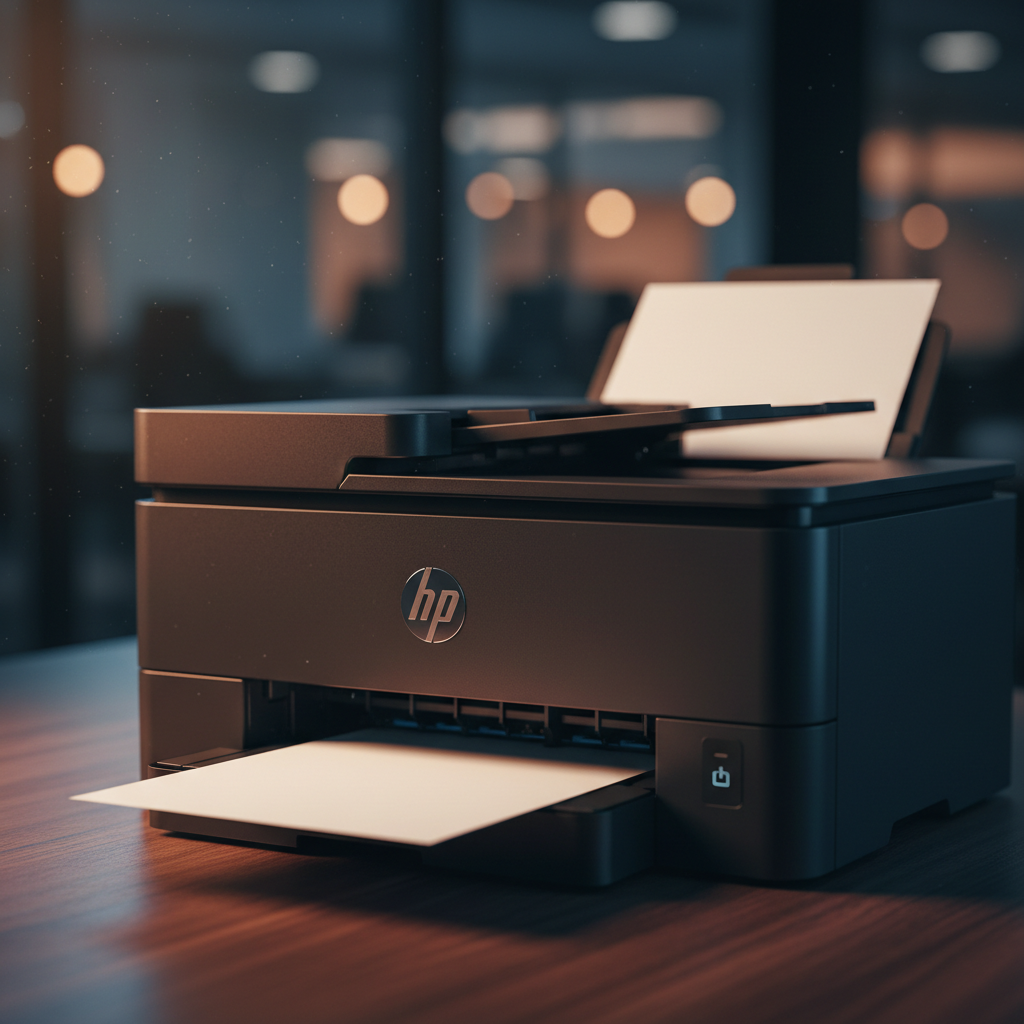
How Printers Work: The Deep Tech Behind Modern Printing Systems | how | how printer works
Discover the intricate engineering of modern printers, from piezoelectric inkjet nozzles to the electrostatic magic of laser toner and AI-driven tech.

Discover the intricate engineering of modern printers, from piezoelectric inkjet nozzles to the electrostatic magic of laser toner and AI-driven tech.
Trending Now
Laser Engine Architecture: The Deep Tech Behind Electrophotographic Printing
Key Takeaways
- Laser printing is a masterclass in electrophotography, utilizing controlled static electricity, high-precision photonics, and thermoplastic chemistry.
- The core of the system is the 6-step electrostatic cycle, where a laser "carves" a latent image onto a photosensitive drum using voltages ranging from –100V to –900V.
- Modern laser systems are moving toward VCSEL (Vertical-Cavity Surface-Emitting Laser) technology, allowing for higher resolutions and more stable beam modulation.
- The enterprise laser printer market remains a cornerstone of the $55.63 billion global print industry, driven by superior speed and lower "cost-per-page" metrics.
- Advanced toner chemistry has evolved from crushed plastic to chemically grown spherical particles, enabling higher fidelity and lower melting points for energy efficiency.
- AI-driven predictive maintenance is now standard in laser fleets, using real-time telemetry to monitor fuser health and drum degradation.
1. Introduction: The Photonics and Physics of the Laser Engine
While inkjet technology is a study in fluid dynamics, the laser printer is a sophisticated exercise in electrophotography (Xerography). For tech enthusiasts, the laser printer represents one of the most successful applications of laser scanning, static electricity, and polymer science in a single consumer-facing device.
At the heart of every laser printer is a high-speed dance of photons and electrons. A file sent to the printer is converted into a bitmap that controls a laser diode, which fires millions of times per second against a rotating polygonal mirror. This process doesn't just "hit" the paper; it builds a microscopic, invisible landscape of electrical charges that serves as the blueprint for the final physical output.
With the global printer market reaching $55.63 billion by 2025, the laser segment continues to dominate the enterprise sector. This dominance is due to the inherent precision of the laser engine—a system capable of producing crisp 1200 DPI text at speeds that would cause liquid-based systems to saturate the substrate.
2. Laser vs. LED: The Evolution of the Light Source
Tech enthusiasts often debate the merits of traditional Laser Beam Scanning (LBS) versus Light Emitting Diode (LED) printing. While both are electrophotographic, the engineering differs significantly.
Traditional Laser Scanning
In a standard laser printer, a single laser beam is directed through a series of focusing lenses and onto a spinning polygonal mirror. As the mirror rotates at thousands of RPM, it sweeps the laser across the width of the drum. This requires extreme mechanical precision to ensure the "start of scan" remains consistent across thousands of pages.
LED Print Heads
LED printers (pioneered by brands like OKI) replace the single laser and moving mirror with a fixed array of thousands of LEDs spanning the entire width of the drum.
| Feature | Laser Scanning | LED Array |
|---|---|---|
| Moving Parts | High (Rotating mirror assembly) | Zero (Solid state) |
| Alignment | Complex optical path | Simpler, fixed alignment |
| Size | Bulkier due to focal distance | Compact, allows smaller footprints |
| Variable Dot Size | High (via PWM modulation) | Limited (usually binary or multi-bit) |
| Speed Scaling | Limited by mirror RPM | Highly scalable |
The trend in high-end laser tech is toward VCSEL arrays, which combine the best of both worlds: the precision of a laser with the multi-channel throughput of an array, allowing for 2400 DPI and beyond.
3. The 6-Step Electrostatic Cycle: Precision in Motion
The "magic" of how a laser printer works lies in its ability to manipulate charges on an Organic Photo Conductor (OPC) drum. This drum is coated with a light-sensitive material that becomes conductive when exposed to photons.
Step 1 — Cleaning
A physical wiper blade removes residual toner, while a discharge lamp or "quench lamp" floods the drum with light to neutralize any remaining electrostatic "ghosts" from the previous page.
Step 2 — Conditioning (Charging)
The Primary Charge Roller (PCR) applies a uniform negative charge (roughly –600V to –900V) to the drum’s surface in total darkness.
Step 3 — Exposing (The Laser Write)
The laser fires. Where the beam hits the drum, the surface becomes conductive and bleeds its charge to the grounded core. This leaves a "latent image" of lower negative charge (around –100V) in the shape of your text or graphics.
Step 4 — Developing
The developer roller carries negatively charged toner. Because the laser-struck areas of the drum are less negative than the toner, the toner is electrostatically pulled onto the drum, making the invisible image visible.
Step 5 — Transferring
The paper receives a strong positive charge from a transfer roller. This charge is powerful enough to pull the negatively charged toner off the drum and onto the paper fibers.
Step 6 — Fusing
The paper passes through the fuser, where the thermoplastic toner is melted into the paper.
4. Resolution and Rasterization: Beyond 1200 DPI
In laser technology, resolution is a product of spot size and timing. A printer's DPI (Dots Per Inch) is determined by how tightly the laser beam can be focused and how quickly the laser diode can be toggled (switched on and off) as the mirror rotates.
To achieve "Enhanced DPI," manufacturers use Pulse Width Modulation (PWM). By varying the duration of the laser pulse, the printer can create smaller or larger dots within a single pixel space, effectively simulating higher resolutions or smoother gradients (half-toning). This is critical for tech enthusiasts to understand: 1200 DPI on a laser printer is often "cleaner" than 1200 DPI on an inkjet because the laser spot is more consistent and doesn't suffer from the fluid "wicking" effect seen with liquid inks.
5. Color Laser Architecture: Single-Pass vs. Multi-Pass
Color laser printers must repeat the 6-step cycle for each of the four CMYK colors.
- Multi-Pass (Legacy): The printer has one drum. It applies Cyan, Magenta, Yellow, and Black sequentially to an intermediate transfer belt. This is slow but allows for a smaller machine.
- Single-Pass (Modern): The printer features four independent laser/drum engines lined up in a row. The paper passes under all four in a single high-speed movement. This is the standard for modern high-performance office tech, enabling color print speeds that match monochrome.
The precision required for registration (aligning the four colors perfectly) is measured in microns. Modern laser engines use optical sensors to detect registration marks on the transfer belt, automatically adjusting the laser timing to compensate for mechanical expansion caused by heat.
6. Toner Chemistry and the Fuser Assembly
Toner is not just "dust." It is a highly engineered thermoplastic polymer.
Early toners were made by grinding plastic, resulting in jagged, uneven particles. Modern Chemically Prepared Toner (CPT) is grown in a lab, creating perfectly spherical particles. This allows for:
- Better flow: Spheres move more easily through the cartridge.
- Lower Melting Points: Energy-efficient fusers can bond toner at lower temperatures, reducing "first-page-out" times.
- Wider Gamut: Smaller, uniform particles allow for finer color blending.
The Fuser Assembly is the most power-hungry component. Tech enthusiasts should look for Instant-on Fuser Technology, which uses a thin ceramic heating element and a foil sleeve rather than a heavy metal halogen-heated roller. This allows the fuser to reach 200°C in seconds, significantly reducing the printer's idle power draw.
7. Laser Scanning in 3D: SLS and SLA Technology
The same laser technology found in office printers is the backbone of high-end Industrial 3D Printing.
- Stereolithography (SLA): Uses a UV laser to "draw" on a vat of liquid resin, curing it into solid plastic layer by layer.
- Selective Laser Sintering (SLS): A high-power CO2 laser fuses powdered nylon or metal.
Just like in a 2D laser printer, the quality of an SLS 3D print depends on the galvanometer scanner (the 3D equivalent of the polygonal mirror) and its ability to maintain a consistent laser spot size across the build plate. The market for these laser-based additive systems is forecast to reach $186.92 billion by 2033, highlighting how laser "writing" is moving from paper to structural parts.
8. AI and the Intelligent Laser Fleet
AI is currently revolutionizing the "brain" of the laser printer. Because laser printers are complex mechanical systems with hundreds of moving parts, they are prone to wear.
Predictive Analytics: Modern enterprise laser printers use AI to monitor "Duty Cycle" data. If a sensor detects that the fuser's temperature is fluctuating outside a standard deviation, or if the OPC drum's charge-retention is dipping, the AI can alert IT to a pending failure before a paper jam even occurs.
Furthermore, 84% of organizations are increasing spend on AI-driven infrastructure to optimize "Print Management," which uses machine learning to decide which laser engine in a network is the most efficient for a specific high-volume job.
9. Sustainability: The Move to Long-Life Components
Historically, laser printers were criticized for waste (cartridges and drums). The industry has shifted toward Separate Consumable Architectures.
In high-end systems (like those from Kyocera), the silicon drum is designed to last the entire life of the printer (up to 500,000 pages). Only the toner powder is replaced, drastically reducing the environmental footprint. Additionally, the development of Bio-toners (using plant-based resins instead of petroleum) is an emerging frontier in sustainable electrophotography.
10. Future Outlook: VCSEL and Cloud-Native Printing
The future of laser technology is Digital Light Processing. We are seeing a shift away from physical drivers toward Cloud-Native RIP (Raster Image Processing).
In this model, the heavy computational work of converting a 3D CAD file or a complex PDF into a bitmap happens in the cloud. The printer receives a pre-processed "stream" of data, allowing the internal hardware to focus entirely on the precision of the laser fire.
As VCSEL (Vertical-Cavity Surface-Emitting Laser) arrays become cheaper to manufacture, we can expect the line between "Office Printer" and "Commercial Press" to blur, bringing 4800 DPI and high-speed variable data printing to the standard desktop.
Conclusion: The Engineering Marvel on Your Desk
Understanding how a laser printer works transforms it from a noisy office box into an incredible feat of physics. It is a device that manages to synchronize a mirror spinning at 10,000 RPM with a laser firing at megahertz speeds, all while maintaining electrostatic charges in a humid environment.
With the laser printer market remaining a multi-billion dollar pillar of tech, the innovation in photonics, toner chemistry, and AI diagnostics ensures that laser technology remains the gold standard for speed, precision, and durability. The next time you see a crisp, warm page slide out of a laser printer, remember the 6-step electrostatic ballet that made it possible in a fraction of a second.
Laser Technology Comparison Table
| Component | Consumer Laser | Enterprise Laser | Production Laser |
|---|---|---|---|
| Light Source | Single Laser Diode | VCSEL / LED Array | Multi-beam Laser Array |
| Print Speed | 20–30 PPM | 50–100 PPM | 150+ PPM |
| Fuser Tech | Standard Heat Roller | Instant-on Ceramic | Induction Heating |
| Drum Life | 10k–20k pages | 100k–500k pages | 1M+ pages (Amorphous Silicon) |
| Resolution | 600–1200 DPI | 1200–2400 DPI | 2400+ DPI |
Sources
Advertisement
Frequently Asked Questions
What is the primary difference between Thermal and Piezoelectric inkjet technology?
Thermal inkjet uses a heating element to create a vapor bubble that forces ink out, reaching temperatures up to 300°C (572°F). Piezoelectric technology, used by brands like Epson, uses a physical crystal that vibrates when an electric charge is applied, allowing for precise control over drop sizes as small as 1.5 picoliters.
How does a laser printer use the electrophotographic process to achieve high speeds?
Laser printers use a rotating drum coated with photosensitive material. A laser beam discharges specific areas to create an electrostatic image. Toner particles, typically 5 to 10 micrometers in size, are attracted to these areas. High-end enterprise printers can achieve speeds exceeding 100 pages per minute by synchronizing this process with fuser rollers heated to approximately 200°C (392°F).
Why is the CMYK color model used instead of RGB for physical printing?
CMYK is a subtractive color model where inks absorb light. While RGB works for light-emitting screens, printers use Cyan, Magenta, and Yellow to filter white light. A dedicated Black (Key) channel is added because mixing CMY often results in a muddy brown rather than a true black, and using a single black ink is more cost-effective and prevents paper saturation.
What does DPI actually represent in terms of printing hardware precision?
Dots Per Inch (DPI) measures the density of individual ink droplets or toner spots. A printer with 1200 DPI can place 1,440,000 dots within a single square inch. While hardware resolution is limited by nozzle density or laser spot size (often 600-1200 optical DPI), software interpolation can simulate higher resolutions by varying droplet volume or overlapping passes.
How do 3D printing technologies like SLA and FDM compare in layer height and precision?
FDM (Fused Deposition Modeling) printers typically operate with layer heights between 100 and 400 microns. Stereolithography (SLA) uses a UV laser (often with a 405nm wavelength) to cure resin, achieving far greater precision with layer heights as low as 25 microns, resulting in a surface finish that often requires no post-processing sanding.
Sponsored
Curious about technology, mathematics, education, and growth, I write as a learner exploring ideas in innovation, problem-solving, culture, and the questions shaping our world.
You Might Also Like


Advertisement
Comments (0)
Sign in to join the conversation
No comments yet. Be the first to share your thoughts!