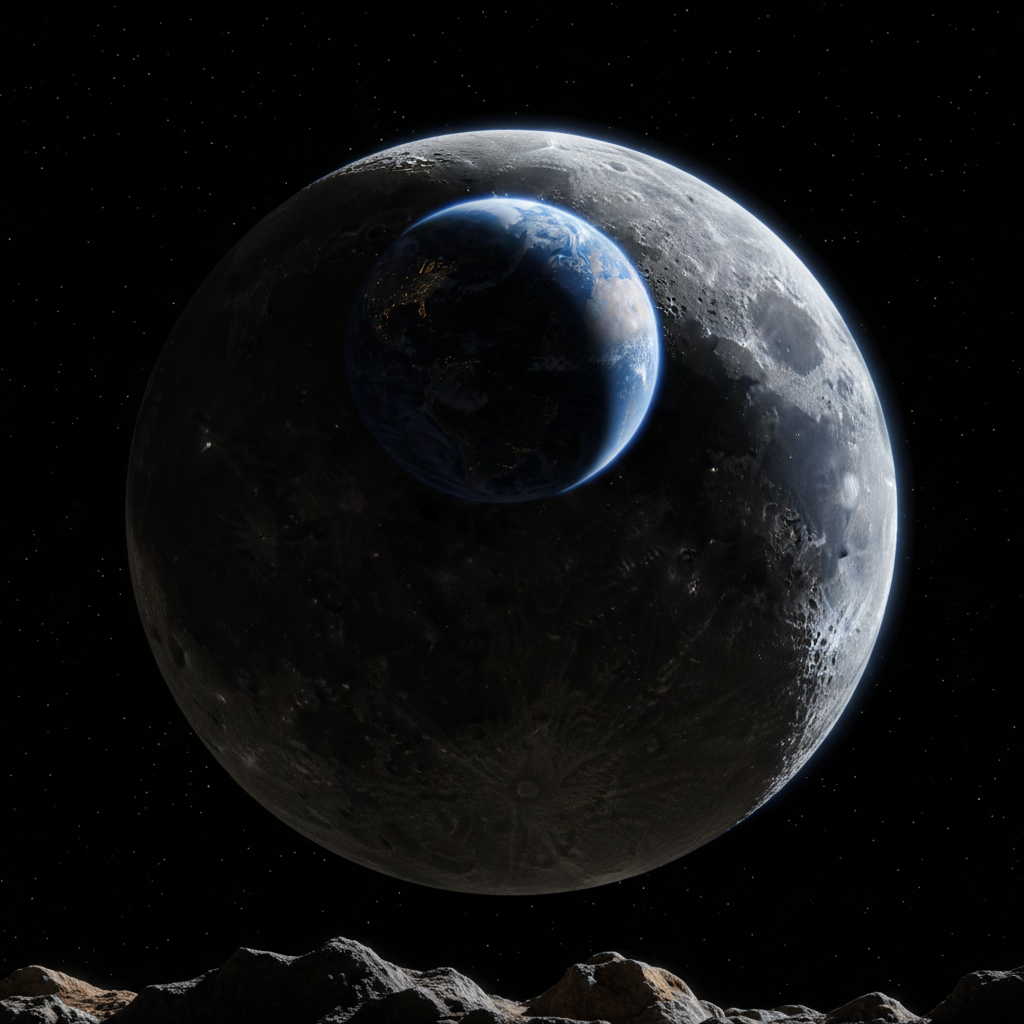
Why Does the Moon Shine? The Science of Lunar Reflection
The Moon doesn't glow on its own; it's a giant mirror reflecting the Sun. Learn about albedo and the science of the night sky's brightest object.

The Moon doesn't glow on its own; it's a giant mirror reflecting the Sun. Learn about albedo and the science of the night sky's brightest object.
Trending Now
Advertisement
Frequently Asked Questions
Does the Moon produce its own light?
No, the Moon does not generate its own visible light. It shines by reflecting sunlight off its surface. Despite appearing bright in the night sky, the Moon reflects only about 12 percent of the light that hits it, a measurement known as its albedo.
Why does the Moon look so bright if it is actually dark?
The Moon's surface is primarily composed of dark rocks similar to coal. It appears bright due to the contrast against the dark sky; however, its Bond albedo is only about 0.11, meaning it absorbs 89 percent of the sunlight that strikes it.
How long does it take for the Moon's light to reach Earth?
The average distance between the Earth and the Moon is 384,400 kilometers (238,855 miles). Since light travels at 299,792 km/s, it takes approximately 1.28 seconds for the reflected sunlight to travel from the Moon to Earth.
Why is the Full Moon so much brighter than a Half Moon?
A Full Moon is roughly 6 to 10 times brighter than a Half Moon. This is because when the Moon is full, the Sun is directly behind the Earth, causing shadows on the lunar surface to disappear from our perspective, a phenomenon called the opposition surge.
How does the Moon's distance affect its brightness?
The Moon's orbit is elliptical, ranging from 363,300 km at perigee to 405,500 km at apogee. When a Full Moon occurs at perigee, also known as a Supermoon, it can appear up to 14 percent larger and 30 percent brighter than a Full Moon at its farthest point.
Sponsored
Curious about technology, mathematics, education, and growth, I write as a learner exploring ideas in innovation, problem-solving, culture, and the questions shaping our world.
You Might Also Like



Advertisement
Comments (0)
Sign in to join the conversation
No comments yet. Be the first to share your thoughts!