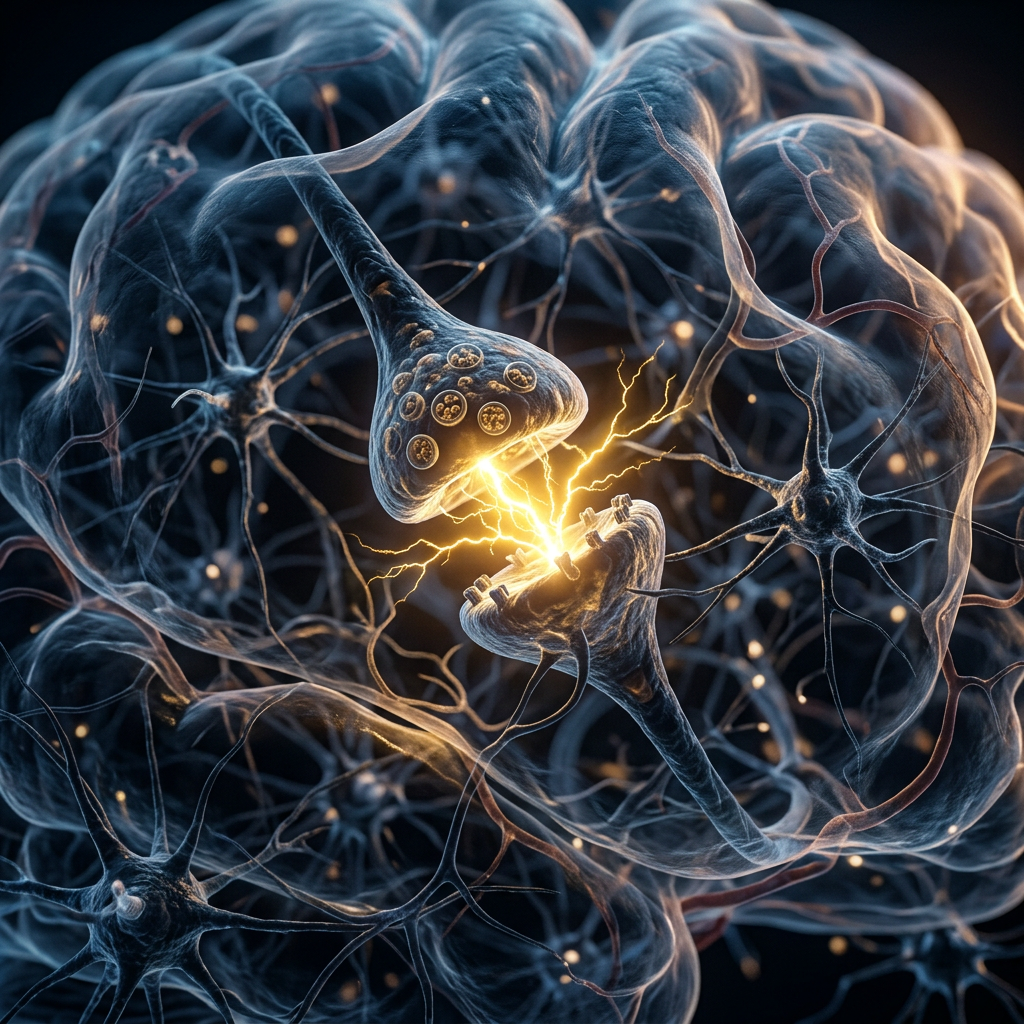
Why Failure Is Never a Waste of Time (Backed by Neuroscience) | science of failure
Science proves failure isn't a dead end; it's a biological catalyst. Discover how 'near misses' and neural error-signals actually fast-track success.

Science proves failure isn't a dead end; it's a biological catalyst. Discover how 'near misses' and neural error-signals actually fast-track success.
Trending Now
Why Failure Is Never a Waste of Time (Backed by Neuroscience)
Key Takeaways
- The science of failure proves that errors are not endpoints — they are biological triggers for accelerated learning and long-term success.
- A landmark Northwestern University study found that scientists who nearly missed early funding were 6.1% more likely to publish high-impact research over the next decade.
- Your brain generates a measurable electrical signal — the Error-Related Negativity (ERN) — specifically designed to detect and learn from mistakes in milliseconds.
- Neuroplasticity means every failure physically rewires your brain, strengthening the neural pathways that drive future success.
- Second-time founders who failed their first venture achieve a 22% success rate, slightly outperforming first-timers — proving that lived failure is a genuine competitive advantage.
- The difference between wasted failure and transformative failure is not talent or luck. It is strategy.
1. Introduction: The Biological Reality of the Science of Failure
We have all heard the motivational posters. "Fail forward." "Failure is just success in progress." By now, those phrases have been recycled so many times they've lost almost all their force. When you're staring at a rejection letter, a failed launch, or a crumbling relationship, a bumper sticker quote does nothing for you.
But here is what science does for you: it removes the ambiguity.
The science of failure — a rapidly expanding field drawing on neuroscience, behavioral economics, and organizational psychology — has reached a startling consensus: failure is not merely tolerable. It is, under the right conditions, superior to success as a driver of learning, adaptation, and long-term achievement. This is not optimism. This is biology.
Your brain is not designed to cruise on autopilot through correct answers. It is wired — literally, electrically — to pay closer attention when something goes wrong. The mechanisms that govern error-driven learning are among the most powerful cognitive tools evolution has handed us, and most people never deliberately activate them.
This article is not going to tell you to embrace failure in some abstract, feel-good sense. It is going to show you exactly what happens in your brain and career when you fail, why those processes build the kind of resilience and intelligence that success alone cannot manufacture, and how to architect your life so that every stumble becomes a measurable step forward.
Let's stop being comforted by failure. Let's start using it.
2. The 'Near-Miss' Effect: Why Narrow Losses Lead to Huge Wins
Here is a counterintuitive idea worth sitting with: losing by a razor-thin margin may be the best thing that ever happens to you.
A landmark 2019 study published in Nature Communications by researchers at Northwestern University examined thousands of early-career scientists who had applied for NIH grants. The researchers divided applicants into two groups: those who narrowly won funding, and those who narrowly lost it — missing the cutoff by a whisker.
Common sense would say the winners thrived. The data said something far more interesting.
Scientists who experienced a 'near miss' early in their careers were 6.1% more likely to publish a high-impact paper over the next decade than those who narrowly won funding. — Nature Communications / Northwestern University
That is not a rounding error. That is a statistically significant, decade-long performance advantage born entirely from an early defeat.
Why does this happen? The researchers proposed a selection and motivation effect: those who quit after a near-miss self-selected out, leaving only the most determined and adaptive minds in the pool. But beyond selection, there is a deeper psychological mechanism at work — the near-miss activates a heightened state of motivated cognition. The brain registers that success was almost within reach, and it recalibrates with laser precision toward closing that gap.
Think of a near-miss not as a failure to be mourned but as calibration data at the highest possible resolution. You were close. The system now knows exactly what "close" looks like. That is invaluable intelligence.
3. The Neuroscience of Error-Monitoring: Meet the ERN Signal
Before we go further, let us get inside the skull — because understanding why failure works requires understanding what your brain is actually doing when you make a mistake.
Within 250 milliseconds of making an error, your brain generates a measurable electrical response called the Error-Related Negativity (ERN) signal. Detected via electroencephalography (EEG), the ERN originates primarily in the anterior cingulate cortex — a region that acts as the brain's conflict-monitoring system, sitting at the intersection of emotion and cognition.
The ERN is not passive. It is your brain's error alarm, a rapid-fire neurological command that essentially shouts: "Something went wrong — pay attention NOW." What follows the ERN is a cascade of cognitive reorientation: working memory is updated, attention is sharpened, and the brain begins encoding new behavioral strategies to avoid repeating the error.
Here is the critical implication: your brain is more alert, more plastic, and more capable of learning in the immediate aftermath of a mistake than it is after a success. Success, neurologically speaking, can actually reduce your brain's exploratory behavior. It confirms existing strategies and discourages deviation. Failure, by contrast, throws open the doors of neuroplasticity.
This is not a metaphor. This is measurable electrochemistry.
4. The Northwestern Study: Modeling the Mathematical Path Through Failure
The Northwestern University study deserves a deeper look because its methodology was as rigorous as its findings were surprising.
The researchers used a regression discontinuity design — a quasi-experimental method — to compare scientists who scored just above and just below NIH funding thresholds. Because these groups were nearly identical in qualifications, the only meaningful variable was whether they received early funding.
| Group | Early Career Outcome | 10-Year High-Impact Publication Rate |
|---|---|---|
| Narrow Winners (just above threshold) | Received funding | Baseline rate |
| Narrow Losers (just below threshold) | Did not receive funding | +6.1% higher than winners |
| Early quitters (post-rejection) | Left the field | Significantly lower output |
The data tells a nuanced story. The 6.1% advantage was not universal — it applied specifically to those who persisted after failure. Quitters dragged the group average down. Among persisters, the advantage was even more pronounced.
This models a powerful principle for your own life: failure is not the differentiating variable. Persistence after failure is. The near-miss filters for resilience. Those who remain are not just tougher — they are measurably more productive, because they have integrated the failure experience as data rather than identity.
5. Intelligent Failure vs. Basic Mistakes: The HBS Framework
Not all failure is created equal. This is a crucial distinction that separates people who leverage the science of failure from those who simply repeat the same mistakes with increasing frustration.
Harvard Business School professor Amy Edmondson — one of the world's foremost researchers on psychological safety and organizational learning — has spent decades studying how teams and individuals learn from failure. Her framework, detailed in Harvard Business Review, distinguishes between three types of failure:
| Type of Failure | Context | Learning Value |
|---|---|---|
| Preventable Failures | Deviations from known processes in stable environments | Low — these should be eliminated |
| Complex Failures | Unexpected combinations of factors in systems (e.g., market crashes) | Medium — requires systems analysis |
| Intelligent Failures | Novel experiments in new territory where outcomes are uncertain | High — the engine of innovation |
Edmondson's concept of "intelligent failure" is failure that occurs at the frontier — where the right answer isn't known yet, where experimentation is the only path forward. These are the failures that should be celebrated, studied, and replicated in different contexts.
Her research also underscores the role of psychological safety — the organizational climate in which people feel safe to report errors, share concerns, and admit mistakes without fear of punishment. In environments with high psychological safety, teams learn faster, innovate more frequently, and perform significantly better over time.
"The leader's job is not to prevent failure but to distinguish between failures that are genuinely intelligent and those that are simply sloppy." — Amy Edmondson
The lesson for individuals is identical. Audit your failures honestly. Are you making intelligent failures — bold experiments on the frontier of your capability? Or are you making preventable mistakes through inattention or shortcuts? One is an investment. The other is simply a cost.
6. Neuroplasticity in Action: How the Brain Rewires After Defeat
Neuroplasticity — the brain's ability to reorganize itself by forming new neural connections — is at the heart of every success story that follows a serious failure.
Here is what is happening structurally when you fail and then adapt:
- Synaptic pruning: The brain eliminates the neural pathways associated with the failed strategy, freeing up cognitive resources.
- Long-term potentiation (LTP): New, more effective pathways are strengthened through repetition and emotional salience — and failure is highly emotionally salient.
- Dendritic growth: Neurons in the prefrontal cortex — responsible for planning, decision-making, and impulse control — literally grow new branches in response to complex problem-solving triggered by setbacks.
Carol Dweck's foundational research on the growth mindset at Stanford showed that individuals who believe their abilities can be developed show greater neurological activity in error-processing regions than those with a fixed mindset. In other words, how you think about failure changes how your brain processes it — and therefore how much you learn from it.
This is not a soft finding. It has direct, practical implications: the story you tell yourself about failure determines the degree to which your brain actually learns from it.
7. The Sensory Cortex Secret: Why We Learn Faster from Errors
Research from Neuroscience News drawing on Johns Hopkins University studies has revealed a striking finding about the speed of error-driven learning.
Learning can occur in as few as 20 to 40 attempts when the brain actively processes errors — significantly faster than traditional rote-memorization models. — Johns Hopkins University / Nature
The study examined motor learning — how the brain adapts physical movements — but its implications reach far beyond sport and physical skill. The key mechanism was that errors triggered the sensory cortex to update its predictions about the world, not just the motor regions. This means that any domain involving prediction and feedback — from social interactions to business strategy to creative work — benefits from the same error-accelerated learning loop.
| Learning Method | Average Attempts to Mastery | Brain Regions Activated |
|---|---|---|
| Rote memorization (no errors) | 100+ | Hippocampus (surface-level encoding) |
| Error-based active learning | 20–40 | Sensory cortex + anterior cingulate cortex |
| Spaced repetition with feedback | 50–70 | Hippocampus + prefrontal cortex |
The implication is radical: deliberately engineering situations where you are likely to fail — slightly beyond your current ability level — is the fastest known path to mastery. Not the most comfortable path. The fastest one.
This is why elite athletes train at the edge of their performance envelope, why master chess players study their losses more than their wins, and why the best writers submit work they know is not quite ready. The errors are not accidents. They are the curriculum.
8. Why Entrepreneurs Who Fail Once Are More Likely to Succeed Twice
The entrepreneurship data is among the most compelling evidence for the practical power of lived failure.
According to research from Harvard Business School:
Second-time founders who failed their first venture have a 22% success rate, outperforming the 21% success rate of first-time entrepreneurs. — Harvard Business School
That one-percentage-point difference may seem modest. But consider what it means philosophically: a complete business failure is worth more than no experience at all. The entrepreneur who built something, watched it collapse, and chose to begin again arrives at the second venture with something no business school can teach — the experiential map of what not to do, burned into memory through genuine consequence.
First-time entrepreneurs, by contrast, often operate on theory, mentorship, and optimism. These are valuable. But they are not the same as having personally navigated a company through its death spiral and survived.
Career resilience, it turns out, is not built in classrooms or conferences. It is built in the crucible of real, costly, personal failure — and the deliberate decision to extract every ounce of learning from it before moving on.
9. The 'Tune-Out' Effect: Overcoming the Ego's Resistance to Learning
Here is the uncomfortable caveat that the science cannot let us skip: failure only teaches you if you are willing to be taught.
Research from the American Psychological Association has explored what they describe as the conditions under which the "benefits of failure" are overrated — specifically when ego threat causes individuals to disengage from error feedback rather than process it.
When failure feels like an indictment of identity rather than information about strategy, the brain shifts into self-protective mode. The anterior cingulate cortex — your error-monitoring center — actually reduces its engagement. The ERN signal weakens. You tune out the very data your brain was designed to process.
This is the mechanism behind defensiveness, blame-shifting, and the stubborn repetition of failed strategies. It is not weakness of character. It is neuroscience. But it can be overridden — through deliberate psychological distancing techniques, reframing failure in third-person terms ("What would I tell a friend who experienced this?"), and cultivating the growth mindset framework that separates performance from identity.
The practical protocol is straightforward: After every significant failure, conduct a structured post-mortem. Ask: What did I expect? What actually happened? What does the gap between those two things tell me? Document the answers. Revisit them. This is not navel-gazing. It is the most efficient use of an expensive education.
10. Productive Failure in Education: Why the Struggle Is the Lesson
Educational researcher Manu Kapur at ETH Zurich has spent years studying what he calls "productive failure" — the pedagogical approach of allowing students to struggle with problems before instruction, rather than teaching them the correct method first.
His findings are consistently striking: students who struggled and failed to solve problems before receiving instruction outperformed those who received instruction first — not just on memory tests, but on transfer tasks requiring them to apply concepts to novel situations.
The reason, Kapur argues, is that the struggle activates prior knowledge, surfaces misconceptions, and primes the brain to receive instruction with far greater depth of processing. The failure is not a detour on the path to understanding. The failure is the path to understanding.
This principle extends directly into professional and personal development. The manager who is thrown into a challenging team before they feel ready, the entrepreneur who launches before the product is perfect, the writer who submits the imperfect draft — all of them are engaging in productive failure. All of them are learning at a speed that comfort cannot replicate.
11. Conclusion: Building a Personal Infrastructure for Failing Well Through the Science of Failure
The science of failure is not telling you to be reckless. It is not romanticizing incompetence or endorsing careless risk. What it is telling you — with the full authority of neuroscience, behavioral economics, and organizational research — is this: failure, processed intelligently, is one of the most powerful cognitive and professional tools available to any human being.
Your brain generates a dedicated electrical signal for error detection. Your neural architecture literally rewires after meaningful setbacks. Scientists who nearly miss funding outperform those who win it. Entrepreneurs who fail once beat first-timers the second time around. Students who struggle before instruction transfer knowledge more effectively than those who are handed answers.
None of this happens automatically. It happens when you create the conditions for it:
- Pursue intelligent failures at the frontier of your capability — not preventable mistakes through sloppiness.
- Create psychological safety in your teams and relationships so that errors surface quickly rather than fester silently.
- Conduct structured post-mortems that separate identity from information.
- Persist past the near-miss — because the data shows that persistence is the variable that turns early defeat into decade-long advantage.
- Reframe the struggle in education, career, and creative work as the mechanism of mastery, not a sign you are not suited for it.
The most successful scientists, entrepreneurs, athletes, artists, and leaders in history did not succeed despite their failures. They succeeded because they were willing to fail visibly, learn systematically, and try again with greater precision. That is not a cliché. That is a repeatable, evidence-backed, neuroscientifically grounded process.
And it is available to you, starting with your very next mistake.
Sources
- Nature Communications — Northwestern University Near-Miss Study
- Harvard Business Review — Strategies for Learning from Failure (Amy Edmondson)
- Neuroscience News — Learning from Mistakes (Johns Hopkins)
- American Psychological Association — Benefits of Failure Overrated
- Harvard Business School — Thriving After Failing
Advertisement
Frequently Asked Questions
Does the brain learn more from failure than success?
Yes, neuroscientific research indicates that the brain's Anterior Cingulate Cortex (ACC) becomes significantly more active during error detection. A study published in the journal 'Nature' found that cells in the brain's frontal lobe sharpen their focus after a mistake, which can lead to a 10-15% increase in learning efficiency compared to repeating a successful action.
Are entrepreneurs who have failed more likely to succeed later?
According to a study by Harvard Business School, entrepreneurs who failed in their first venture have a 20% chance of success in their next attempt, whereas first-time entrepreneurs have an 18% success rate. This 'failure premium' demonstrates that the experiential knowledge gained from past mistakes provides a measurable statistical advantage.
How does failure impact creative problem-solving?
Research from the University of California suggests that teams that encounter early-stage failure generate approximately 30% more diverse solutions than those who succeed immediately. This is due to 'cognitive flexibility,' a process where the brain is forced to abandon suboptimal heuristics and explore more complex, innovative variables.
What is the 'Fail-Fast' methodology and how does it save time?
In scientific research and engineering, 'failing fast' is a strategy where 80% of testing is front-loaded to identify flaws. By detecting errors in the initial 20% of a project's timeline, organizations save an average of 40% in long-term resource costs, proving that early failure prevents the long-term waste of time on unviable ideas.
Can failing improve your biological resilience to stress?
Scientifically, failure builds 'stress inoculation.' A study of 2,398 individuals found that those who experienced some lifetime adversity reported better mental health than those with no history of failure. This process helps the amygdala regulate cortisol levels, making individuals roughly 25% more resilient to future high-pressure situations.
Sponsored
Curious about technology, mathematics, education, and growth, I write as a learner exploring ideas in innovation, problem-solving, culture, and the questions shaping our world.
You Might Also Like


Advertisement
Comments (0)
Sign in to join the conversation
No comments yet. Be the first to share your thoughts!