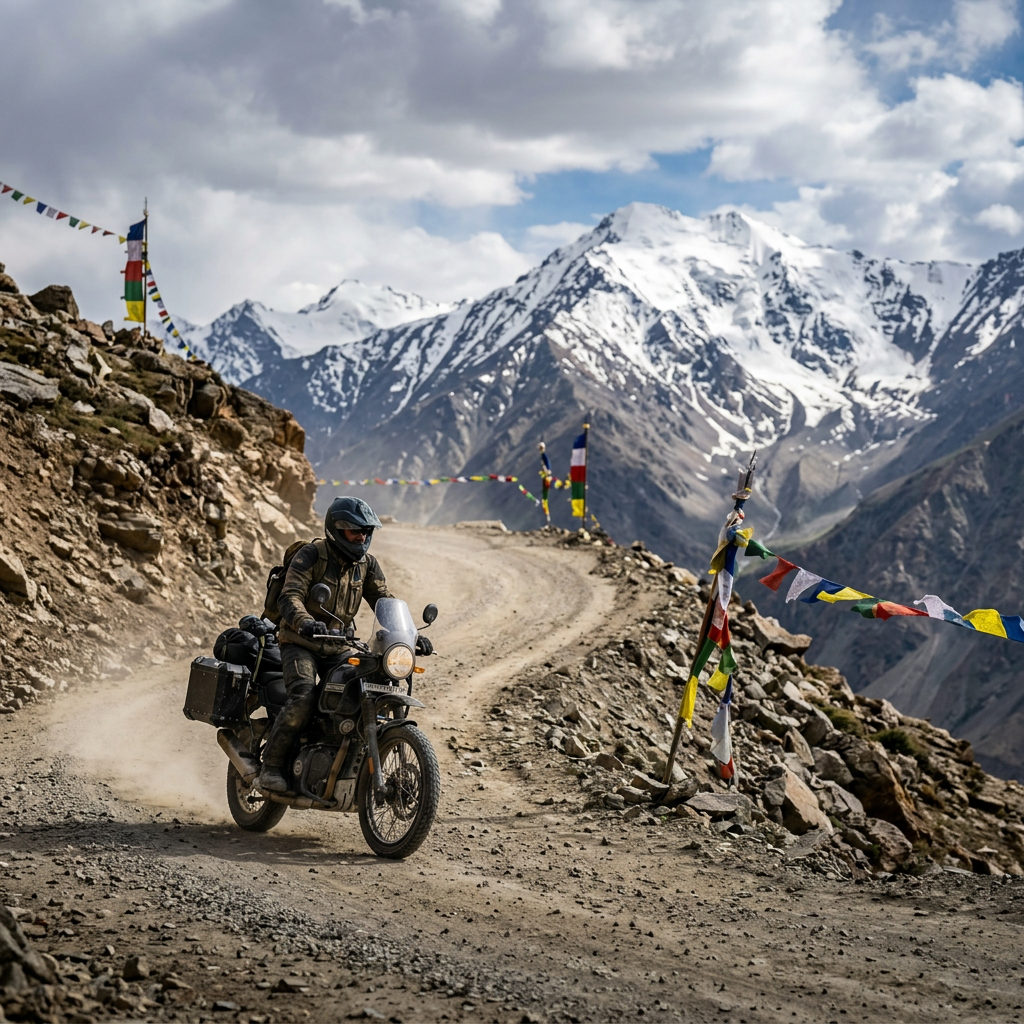
Ladakh Trip 2026: Ultimate Travel Guide & Permit Rules
Planning a Ladakh trip in 2026? Navigate new permit rules, drone bans, and the rise of Hanle's Dark Sky Reserve with our essential travel guide.

Planning a Ladakh trip in 2026? Navigate new permit rules, drone bans, and the rise of Hanle's Dark Sky Reserve with our essential travel guide.
Trending Now
Ladakh Trip 2026: Ultimate Travel Guide & Permit Rules
Key Takeaways
- Ladakh tourism saw a 27.3% decline in domestic arrivals in 2025, making 2026 a strategic year for better crowd management and revised access policies.
- Inner Line Permits (ILP) and Protected Area Permits (PAP) are mandatory for multiple zones — both are now available online.
- Drone usage in restricted and protected zones remains heavily regulated following the 2025 enforcement crackdown.
- A 9-day Ladakh bike trip costs between ₹35,000–₹45,000 per person, depending on route, vehicle type, and accommodation.
- The best time to visit Ladakh for road access is June through September; Chadar Trek season runs January–February.
- Hanle Dark Sky Reserve drew approximately 10,000 visitors in 2024 and is rapidly emerging as a world-class astrotourism destination.
Introduction: The Changing Landscape of Ladakh Tourism in 2026
Planning a Ladakh trip 2026 requires more than enthusiasm — it demands preparation, regulatory awareness, and a clear understanding of the destination's evolving tourism ecosystem. Once a backpacker's secret and now a globally recognized adventure destination, Ladakh has entered a new phase defined by policy reform, environmental concerns, and post-conflict travel advisories.
According to data cited by TravelBiz Monitor, domestic tourist arrivals in Leh dropped by 27.3% in 2025 compared to 2024, largely due to regional security alerts and erratic weather events. The impact was even more pronounced in Kargil, where The Tribune reported a staggering 70% decline in tourist footfall during the same period. Foreign arrivals also reflected the broader downturn — falling from 34,915 in 2024 to 29,049 in 2025, according to the Ministry of Tourism.
"Domestic tourist arrivals in Leh dropped by 27.3% in 2025 compared to 2024 due to security and weather issues." — TravelBiz Monitor
This decline, while concerning for the local economy, presents a nuanced opportunity for travelers in 2026: less crowded trails, more responsive hospitality, and strengthened permit infrastructure. This guide is designed to help you navigate every layer of a Ladakh journey — from acclimatization protocols to stargazing ethics — with accuracy and confidence.
Essential Pre-Trip Planning: Acclimatization and AMS Survival
Acclimatization in Leh is not optional — it is the single most critical factor determining whether your trip will be memorable or medically dangerous. Leh sits at an elevation of approximately 3,524 meters (11,562 feet) above sea level, and many surrounding destinations climb significantly higher.
Acute Mountain Sickness (AMS) affects a substantial percentage of travelers who ascend too quickly. Symptoms include persistent headaches, nausea, dizziness, shortness of breath, and fatigue. In severe cases, it can progress to High-Altitude Pulmonary Edema (HAPE) or High-Altitude Cerebral Edema (HACE), both of which are life-threatening.
Standard acclimatization protocol for Leh:
- Day 1–2: Arrive and rest completely. Avoid physical exertion, alcohol, and sleeping pills. Hydrate with 3–4 liters of water daily.
- Day 3: Take short, flat walks around Leh market and Shanti Stupa. Monitor for AMS symptoms.
- Day 4: Begin gradual altitude gain. Day trips to Magnetic Hill or Sangam (Indus-Zanskar confluence) are appropriate.
- Day 5 onwards: You are generally ready for higher-altitude zones like Khardung La or Pangong Tso.
Medications: Consult a physician before travel regarding Acetazolamide (Diamox), commonly prescribed for AMS prevention. Carry a pulse oximeter to monitor blood oxygen saturation — anything below 90% SpO₂ at rest warrants immediate descent.
Flying directly into Leh (rather than driving from Manali or Srinagar) accelerates altitude gain, making the two-day rest protocol non-negotiable. Many experienced travelers recommend spending one night in Srinagar or Kargil before arrival as a buffer, particularly if coming from low-altitude cities.
Permits Explained: ILP, PAP, and Environmental Fees
Ladakh's permit framework is multi-tiered, and non-compliance can result in fines, deportation from restricted zones, or delays that derail your itinerary. Understanding this system before departure is essential.
Inner Line Permit (ILP) — For Indian Nationals
The Ladakh Inner Line Permit is required for Indian citizens wishing to visit protected border areas. These include:
- Nubra Valley
- Pangong Tso (Lake)
- Tso Moriri
- Dah-Hanu villages
- Hanle
- Nyoma
ILPs can be obtained online via the District Collectorate Leh's official portal or in person at the DC office in Leh. Processing is typically same-day. Cost: ₹20–₹100 per person depending on the zone.
Protected Area Permit (PAP) — For Foreign Nationals
Foreign tourists require a Protected Area Permit to visit the same restricted zones. Unlike ILPs, PAPs must be obtained through a registered travel agency and cannot be self-applied. Foreign nationals must travel in groups of at least two (regulations have fluctuated — verify current requirements closer to your departure). Cost: Approximately USD 50–75 per person, inclusive of agency fees.
Environmental and Green Fees
Since 2023, Ladakh has expanded its eco-tourism levies. Travelers entering Pangong Tso and Nubra Valley pay additional environmental fees at checkpoints. These fees fund waste management, trail maintenance, and conservation programs. Budget ₹200–₹500 per person for these charges at major ecological zones.
| Permit Type | Applicable To | Key Areas | Approx. Cost |
|---|---|---|---|
| Inner Line Permit (ILP) | Indian Nationals | Nubra, Pangong, Hanle, Tso Moriri | ₹20–₹100 |
| Protected Area Permit (PAP) | Foreign Nationals | Same as above | USD 50–75 |
| Environmental Fee | All tourists | Pangong Tso, Nubra Valley | ₹200–₹500 |
| Wildlife Zone Entry | All tourists | Hemis National Park | ₹25–₹50 |
The 2025 Drone Ban: What Content Creators Must Know
For content creators planning a Ladakh trip 2026, drone regulations represent one of the most consequential logistical hurdles. Following heightened security concerns in 2025, the Indian Army and Ladakh Administration jointly enforced a comprehensive drone ban across most of the UT's sensitive zones.
Current restrictions include:
- Complete drone prohibition within 25 km of the Line of Actual Control (LAC) and Line of Control (LoC)
- No drone flights over Pangong Tso, Khardung La, Siachen Base Area, and Daulat Beg Oldie
- Drones are prohibited over military installations, monasteries without written permission, and all national highways in restricted zones
What is permitted (with conditions):
- Drones may be used in approved tourism corridors such as central Leh city, Thiksey Monastery (with monastery permission), and designated sections of the Indus Valley, provided operators carry:
- DGCA-registered drone (certified under the Drone Rules, 2021)
- Remote Pilot Certificate (RPC) issued by DGCA
- Written clearance from the District Magistrate, Leh
- Security clearance from the local police station
Content creators are strongly advised to contact the Leh District Administration at least 3–4 weeks in advance to obtain necessary approvals. Violations result in immediate confiscation of equipment and potential legal proceedings under the Aircraft Act, 1934 and Drone Rules, 2021.
Pro Tip for Creators: B-roll footage from ground level, wide-angle telephoto shots from mountain viewpoints, and time-lapse sequences of star fields at Hanle are all legally permissible alternatives that deliver cinematic quality without regulatory risk.
Detailed Cost Breakdown: Biking vs. Taxis vs. Shared Transport
Budget planning is the backbone of any successful Ladakh trip. Costs vary significantly based on transport mode, accommodation preference, and route selection.
"The average cost for a 9-day Ladakh bike trip is approximately ₹35,000–₹45,000 per person." — JKL Travels
| Category | Bike Trip (9 Days) | Private Taxi | Shared Cab/Minibus |
|---|---|---|---|
| Transport | ₹15,000–₹20,000 (rental + fuel) | ₹25,000–₹35,000 | ₹8,000–₹12,000 |
| Accommodation | ₹700–₹1,500/night (guesthouse) | ₹1,500–₹4,000/night | ₹700–₹1,200/night |
| Food (daily) | ₹500–₹800 | ₹800–₹1,500 | ₹500–₹800 |
| Permits + Fees | ₹500–₹800 | ₹500–₹800 | ₹500–₹800 |
| Contingency | ₹3,000–₹5,000 | ₹3,000–₹5,000 | ₹2,000–₹3,000 |
| Estimated Total | ₹35,000–₹45,000 | ₹50,000–₹70,000 | ₹22,000–₹32,000 |
Royal Enfield Himalayan remains the most popular rental choice — available in Leh for ₹1,500–₹2,500/day. Ensure comprehensive insurance and verify the bike's service history before signing any rental agreement. Fuel stations are sparse beyond Leh; carry an additional 2-liter emergency fuel can on remote stretches.
Top Itineraries: The Classic Circuit vs. The Offbeat Path
The Classic 9-Day Circuit
Day 1–2: Arrive Leh — acclimatization, Shanti Stupa, Leh Palace Day 3: Magnetic Hill, Gurudwara Pathar Sahib, Sangam Confluence Day 4–5: Nubra Valley via Khardung La — Diskit Monastery, Hunder Sand Dunes, Bactrian Camel ride Day 6–7: Pangong Tso — sunrise photography, Chang La crossing Day 8: Return Leh via Hemis Monastery and Thiksey Monastery Day 9: Departure
The Offbeat 14-Day Zanskar Circuit
For travelers seeking solitude, the Zanskar Valley travel route offers one of India's most dramatic and underexplored corridors.
Days 1–3: Leh acclimatization and local sightseeing Days 4–5: Drive to Kargil via Lamayuru Monastery (Moonland Landscape) Days 6–8: Enter Zanskar — Padum village, Phuktal Monastery trek (one of India's most remote monasteries) Days 9–10: Rangdum Monastery, Suru Valley meadows Days 11–12: Return via Srinagar route — Drass (second coldest inhabited place on Earth), Sonamarg Days 13–14: Srinagar sightseeing and departure
Given the 70% drop in Kargil tourism in 2025, the Kargil-Zanskar corridor remains significantly under-visited, offering an authentic, crowd-free experience for discerning travelers in 2026.
Starry Nights: A Guide to Hanle Dark Sky Reserve
Hanle Dark Sky Reserve — located in the Changthang plateau at an elevation exceeding 4,500 meters — is India's first and Asia's largest dark sky reserve. Managed in collaboration with the Indian Astronomical Observatory, the reserve is one of the few places in South Asia where the Milky Way is visible to the naked eye with extraordinary clarity.
"Hanle Dark Sky Reserve attracted approximately 10,000 visitors in 2024." — Department of Science & Technology
Essential information for astrotourists:
- Best months: October–February (clearest skies, lowest atmospheric moisture)
- Access: Requires ILP (Indian nationals) or PAP (foreign nationals)
- Accommodation: Limited homestays in Hanle village — book 2–3 months in advance during peak astrotourism season
- Light pollution restriction: Artificial lights and vehicle headlights are regulated after 9 PM within the reserve perimeter
- Telescope access: The Indian Astronomical Observatory offers limited guided viewing sessions — check availability through DST-approved tour operators
Hanle represents a compelling reason to extend a standard Ladakh itinerary by 2–3 days, particularly for photographers and content creators interested in astrophotography.
Beyond the Bike: Winter Tourism and the Chadar Trek
Ladakh is not exclusively a summer destination. Winter tourism between December and February has grown substantially, centered on the legendary Chadar Trek — a 62-kilometer journey along the frozen Zanskar River.
Chadar Trek essentials:
- Season: Mid-January to mid-February
- Duration: 8–10 days (trek) + 2 days Leh acclimatization
- Difficulty: Strenuous — temperatures drop to -20°C to -30°C at night
- Permit: Forest Department permit required (₹1,500–₹2,000)
- Guide mandate: Solo trekking is prohibited; ALTOA-certified guides are mandatory
- Average cost: ₹25,000–₹40,000 per person (all-inclusive packages from Leh)
Beyond Chadar, Leh in winter offers ice hockey on frozen polo grounds, monastery festivals (Gustor Festival at Spituk, January), and dramatically uncrowded streets — a stark contrast to the summer rush. However, roads to Nubra and Pangong remain closed from November to April due to snow.
Connectivity and Digital Nomad Life in Leh
Internet connectivity in Leh has improved markedly since 2022, though expectations must remain calibrated. BSNL and Jio provide the most reliable mobile coverage within Leh city. Beyond the city limits — including on routes to Nubra, Pangong, and Zanskar — connectivity drops sharply or disappears entirely.
Practical connectivity facts:
- Leh city: 4G available (Jio and BSNL most reliable; Airtel and Vi have limited presence)
- Khardung La to Nubra: Intermittent BSNL signal only
- Pangong Tso: No civilian mobile connectivity (military-controlled zone)
- Zanskar Valley: No cellular connectivity throughout most of the route
For digital nomads and content creators, Leh's main market area supports remote work adequately — several cafés offer Wi-Fi. However, Ladakh should not be treated as a primary remote work base. Plan uploads, client calls, and submissions before leaving Leh for excursions. A portable satellite communicator (e.g., Garmin inReach) is advisable for solo travelers on remote routes.
Responsible Travel: Eco-Tourism and Local Etiquette
Ladakh's fragile ecosystem — the Trans-Himalayan cold desert biome — faces mounting pressure from increasing visitor numbers. Responsible conduct is not merely ethical; it is legally required under the Ladakh UT Environmental Guidelines, 2023.
Key responsible travel practices:
- Carry all non-biodegradable waste out of restricted zones — waste collection infrastructure is minimal beyond Leh
- Single-use plastic is banned across Ladakh — carry a reusable water bottle and purification tablets
- Wild camping near water bodies (including Pangong Tso) is prohibited without Forest Department permission
- Monasteries have dress codes — shoulders and knees must be covered; remove shoes before entering prayer halls
- Photography inside monasteries often requires a fee (₹50–₹200) — always ask before shooting
- Support local homestays and Changpa nomad communities rather than large commercial operators where possible
The Changthang plateau is home to the Snow Leopard (Panthera uncia), an endangered species. Maintain a minimum 200-meter distance from wildlife and report illegal poaching activity to the Wildlife Crime Control Bureau.
Packing List: Essentials for High-Altitude Desert
Ladakh's climate combines extreme UV radiation, low humidity, sub-zero nighttime temperatures, and dust-laden winds — a combination that demands specific gear.
Non-negotiable essentials:
- Layering system: Moisture-wicking base layer, insulating mid-layer (fleece/down), and windproof outer shell
- Sun protection: SPF 50+ sunscreen, UV-protective sunglasses (Category 3 or 4), wide-brim hat
- Medical kit: Diamox (prescribed), Dexamethasone (emergency AMS), oral rehydration salts, blister plasters, antiseptic
- Hydration gear: 2-liter reusable bottle + water purification tablets/filter
- Navigation: Offline maps downloaded (Maps.me or Google Maps offline) — cellular navigation unreliable
- Power: 20,000mAh+ power bank; solar charging panels recommended for extended off-grid stretches
- Bike gear (if riding): Full-face helmet, riding jacket with CE armor, knee guards, waterproof gloves, ankle-support boots
- Documents: Physical copies of all permits, ID proof, medical insurance, emergency contacts
Conclusion: Is Ladakh Safe and Worth It in 2026?
A Ladakh trip 2026 demands more planning than ever before — but for those who invest in proper preparation, it remains one of the most profoundly rewarding travel experiences on Earth. The 2025 tourism decline, while challenging for local stakeholders, has inadvertently created a more sustainable visitor load and driven policy improvements across the permit and environmental framework.
Security conditions in border areas must be monitored continuously — consult the Ministry of External Affairs travel advisory and register on the MADAD portal before departure. Kargil and the Zanskar corridor, despite low footfall numbers, are accessible with the right preparation and local guidance.
From the midnight blue of Pangong's waters to the cosmic silence of Hanle's skies, from the frozen spectacle of the Chadar Trek to the wind-scoured beauty of the Nubra dunes — Ladakh in 2026 is not merely a destination. It is a crucible. Come prepared, travel responsibly, and it will reward you beyond measure.
Sources
| # | Source | URL |
|---|---|---|
| 1 | TravelBiz Monitor — Ladakh Tourism Decline 2025 | travelbizmonitor.com |
| 2 | The Tribune India — Kargil Tourism Dip 2025 | tribuneindia.com |
| 3 | Department of Science & Technology — Hanle Dark Sky Reserve | dst.gov.in |
| 4 | Ministry of Tourism — Ladakh Visitor Statistics | tourism.gov.in |
| 5 | JKL Travels — Ladakh Bike Trip Cost Analysis | jkltravels.com |
| 6 | Hindustan Times — Ladakh Travel & Permit Updates | hindustantimes.com |
Published on Voxora — Premium Publishing for Writers Worldwide
Advertisement
Frequently Asked Questions
What is the best time to visit Ladakh for road trips and photography?
The ideal window is from June to September when the Manali-Leh and Srinagar-Leh highways are open. During this period, daytime temperatures range from 15°C to 25°C, providing clear skies for landscape photography and safe road conditions for travelers.
How do I manage Acute Mountain Sickness (AMS) upon arrival in Leh?
Leh is situated at an altitude of 11,500 feet (3,500 meters). It is mandatory to rest for the first 36 to 48 hours to acclimate. Travelers should stay hydrated, avoid alcohol, and may consider preventative medication like Acetazolamide (Diamox) after consulting a doctor.
What permits are required for restricted areas like Pangong Tso and Nubra Valley?
An Inner Line Permit (ILP) is required for all domestic and international tourists. For Indian nationals, the environment fee is ₹400 plus a wildlife fee of ₹20 per day. These can be obtained online via the LAHDC Leh portal or through local registered travel agents.
Which mobile networks provide the best connectivity for content creators in Ladakh?
Only postpaid SIM cards work in the Union Territory of Ladakh. Airtel and Jio offer the most reliable 4G connectivity in Leh town, but signals are extremely weak or non-existent in remote areas like Tso Moriri. Content creators should download offline maps and pre-load assets before heading to the valleys.
What is the estimated budget for a 7-day trip to Ladakh?
A mid-range 7-day trip typically costs between ₹35,000 and ₹50,000 per person. This includes local transport via private taxis (which cost approximately ₹15,000–₹22,000 for a 3-day circuit), permits, and accommodation ranging from ₹2,500 to ₹5,000 per night.
Sponsored
You Might Also Like


Advertisement
Comments (0)
Sign in to join the conversation
No comments yet. Be the first to share your thoughts!