Beyond the Halo: Why We Are Obsessed With Beautiful Angel Stories | beautiful angel story
Why are we captivated by stories of beautiful angels? This deep dive explores the art history, psychology, and literary trends behind the winged archetype.

Why are we captivated by stories of beautiful angels? This deep dive explores the art history, psychology, and literary trends behind the winged archetype.
Trending Now
Beyond the Halo: Why We Are Obsessed With Beautiful Angel Stories
Key Takeaways
- 69% of U.S. adults still believe in angels, making angelic belief more common than belief in the devil or hell
- The "beautiful angel" archetype has deep roots in Renaissance art, Greek mythology, and Judeo-Christian theology
- YA paranormal romance featuring angels is a multi-million dollar publishing genre with series like Hush, Hush and Fallen leading the charge
- Psychology explains our love for angelic figures as a deep-seated need for protection, transcendence, and moral guidance
- Biblically accurate angels look nothing like the glowing, winged humans we adore — and that tension makes storytelling even richer
- Crafting a compelling beautiful angel story requires balancing the divine with the deeply personal
So, you've probably seen at least one of these stories. Maybe it was a dog-eared paperback passed around your friend group. Maybe it was a late-night Netflix binge. Either way, a gorgeous, slightly brooding supernatural being with wings showed up, and suddenly you were three chapters in at 2 AM wondering if you could fall in love with an immortal.
Welcome to the very human obsession with the beautiful angel story.
There's something irresistible about these tales. They're bigger than romance, bigger than fantasy — they tap into questions we've been asking for thousands of years. What's watching over us? Is there something divine beyond what we can see? And honestly... could that divine something be attractive?
Let's break down why angel stories have captured human imagination since before paper even existed, why they're dominating teen bookshelves today, and what makes a truly great one tick.
1. The Ethereal Aesthetic: Defining the 'Beautiful Angel'
Before we dive into the history and the stats, let's get on the same page about what we actually mean when we talk about a beautiful angel.
In most modern storytelling — whether it's YA fiction, movies, or fan art — the "beautiful angel" follows a pretty recognizable blueprint: luminous skin, impossible eyes, massive feathered wings, and a face that could stop traffic on a highway. They're often described as almost human but slightly too perfect, like someone turned the contrast up on a regular person.
This aesthetic didn't come from nowhere. It's the result of thousands of years of artistic, religious, and literary interpretation layering on top of each other. Every generation added something — a softer wing here, a glowing halo there — until we arrived at the version we know and frankly, kind of obsess over.
Angelology, the formal study of angels, actually categorizes these beings into hierarchies (seraphim, cherubim, archangels, etc.), and most of them in original texts are described as anything but conventionally beautiful. But pop culture had other plans. The beautiful angel story is really a collaboration between theology, art history, human psychology, and good old-fashioned storytelling instinct.
2. Artistic Origins: How Angels Got Their Wings and Beauty
Here's where things get genuinely fascinating. Angels in the earliest biblical texts? No wings mentioned. No golden hair. Just... messengers doing divine errands.
The winged, radiant aesthetic we associate with angels today is largely a product of Greco-Roman artistic influence. Early Christian artists borrowed heavily from figures like Nike (the Greek goddess of victory) and Eros to give angels a visual language that felt familiar and awe-inspiring to their audiences. According to My Modern Met, the first winged angel in Christian art appeared in the 4th century, and from there, the imagery exploded.
By the Renaissance, painters like Raphael, Fra Angelico, and later Gustave Doré had fully committed to the angelic ideal. Gustave Doré angel illustrations, in particular, became iconic — his dramatic, light-saturated engravings for Paradise Lost and the Bible defined what a generation imagined when they heard the word "angel." Those images are so burned into our cultural memory that even people who've never opened a Bible would recognize the style.
Here's a quick look at how the angelic aesthetic evolved across different periods:
| Era | Key Artistic Influence | Angel Aesthetic |
|---|---|---|
| Early Christianity (1st–4th c.) | Jewish texts, Roman art | Wingless, human-like messengers |
| Byzantine (5th–15th c.) | Greek Nike figures | Wings introduced, formal & golden |
| Renaissance (14th–17th c.) | Humanism, Greco-Roman revival | Idealized human beauty, soft wings |
| Romantic/Victorian (18th–19th c.) | Doré, Milton's Paradise Lost | Dramatic, powerful, emotionally intense |
| Modern Pop Culture (20th c.–now) | YA fiction, film, social media | Brooding, romantic, often "fallen" |
The pattern is clear: every era reimagined angels through its own cultural lens, and each reimagining added another layer to what we now consider the quintessential "beautiful angel."
3. The Psychology of the Guardian: Why We Need Benevolent Beings
Okay, so we love the way angels look. But there's something deeper going on here, and psychology actually has a lot to say about it.
According to Eternalised, belief in angels serves a profound psychological function. Angels represent protective figures — benevolent, powerful entities that watch over us when we feel vulnerable. In Jungian psychology, the angel archetype often appears as a manifestation of the higher self or an idealized guide figure. Essentially, we project our deepest wishes for safety, wisdom, and unconditional love onto these beings.
Think about it from a student's perspective. You're stressed about finals, your life feels chaotic, and the idea that something beautiful and powerful is specifically watching over you? That's genuinely comforting. It's not weakness — it's a very normal human response to uncertainty.
There's also the concept of transcendence. Angels exist at the border between the human and the divine, between what we are and what we wish we could be. Stories that feature a beautiful angel don't just give us a love interest or a hero — they give us a window into the possibility of something more. That's incredibly powerful narrative territory.
The literary tropes around angels reinforce this: the fallen angel who chooses humanity over heaven (sacrifice), the guardian angel who bends divine rules for their charge (devotion), the angel who doesn't fully understand human emotions but desperately wants to (relatability). These aren't random — they're deeply psychologically resonant patterns.
4. By the Numbers: Modern Statistics on Angelic Belief
You might think believing in angels is something that's fading out — like, surely we're too internet-brained for that now, right? The data says otherwise.
69% of U.S. adults believe in angels — a number that's higher than those who believe in the devil or hell. Source: Gallup
That's a majority. A clear, unmistakable majority of adults in one of the world's most developed countries still believe in angelic beings. That's not a fringe belief — that's a mainstream one.
72% of Americans believe in the power of prayer, which research consistently links to angel belief as part of a broader spiritual worldview. Source: AP-NORC
And while belief has dipped a bit — down 10 percentage points since 2001 (from 79% to 69%) according to Gallup — it's hardly collapsing. If anything, the fact that it's remained this high in an increasingly secular era says something profound about how deeply the angelic concept is wired into human consciousness.
Here's how belief breaks down across different groups:
| Group | Belief in Angels |
|---|---|
| Religiously affiliated adults | 84% |
| Adults with no religious affiliation | 33% |
| Overall U.S. adult population | 69% |
| Adults who believe in prayer | ~72% |
What this tells us is simple: angel stories aren't niche. When you write about angels, you're writing about something that resonates with the lived belief system of millions of real people. That's not just good storytelling territory — it's sacred territory, in every sense of the word.
5. The 'Fallen' Phenomenon: Angels in Young Adult Literature
Now we're getting to the part that probably hits closest to home if you're in school right now. YA paranormal romance trends over the last two decades have been heavily shaped by angel fiction, and the numbers back that up.
Series like Hush, Hush by Becca Fitzpatrick and Fallen by Lauren Kate have sold millions of copies worldwide, making angel romance one of the dominant sub-genres in teen fiction. Source: Publishers Weekly / The YA Shelf
Why do these stories work so well for a teen and college-age audience specifically? A few reasons:
1. The Power Imbalance Trope — An immortal, incredibly powerful being choosing you, a regular human, is an extreme version of the "chosen one" fantasy that resonates hard during formative years when you're still figuring out your own worth.
2. The Forbidden Love Element — Angels-falling-for-humans is basically the ultimate forbidden romance. Heaven literally has rules against it. That kind of cosmic-level "we shouldn't be together" tension is basically narrative catnip.
3. The Moral Complexity — Fallen angel stories in particular let authors play with ideas of free will, redemption, and sacrifice in ways that feel genuinely meaningful without being preachy. That's a sweet spot for young readers who are actively working through their own moral frameworks.
Here's a quick comparison of popular angel-themed YA books and what makes each one tick:
| Book | Angel Type | Core Theme | What Makes It Work |
|---|---|---|---|
| Hush, Hush (Fitzpatrick) | Fallen Nephilim | Forbidden desire | Dark romance, mystery |
| Fallen (Lauren Kate) | Fallen angel | Reincarnated love | Epic love-across-lifetimes |
| Angelfall (Penman) | Apocalyptic angels | Survival + trust | Subverts the "beautiful" trope |
| City of Bones (Clare) | Nephilim warriors | Identity + belonging | World-building depth |
| Halo (Alexandra Adornetto) | Guardian angel | Purity vs. temptation | Classic romantic tension |
What's interesting is how these books collectively handle the beautiful angel story differently. Some lean hard into the aesthetic. Others, like Angelfall, deliberately complicate it. That variety is a big part of why the genre stays fresh.
6. Biblically Accurate vs. Hollywood: The Clash of Monstrous and Beautiful
Okay, we need to talk about the elephant — or, well, the multi-faced, wheel-covered, terrifying celestial being — in the room.
Biblically accurate angels are having a huge cultural moment right now, largely thanks to social media and a renewed interest in religious texts. And here's the thing: they are nothing like what Hollywood has been selling us.
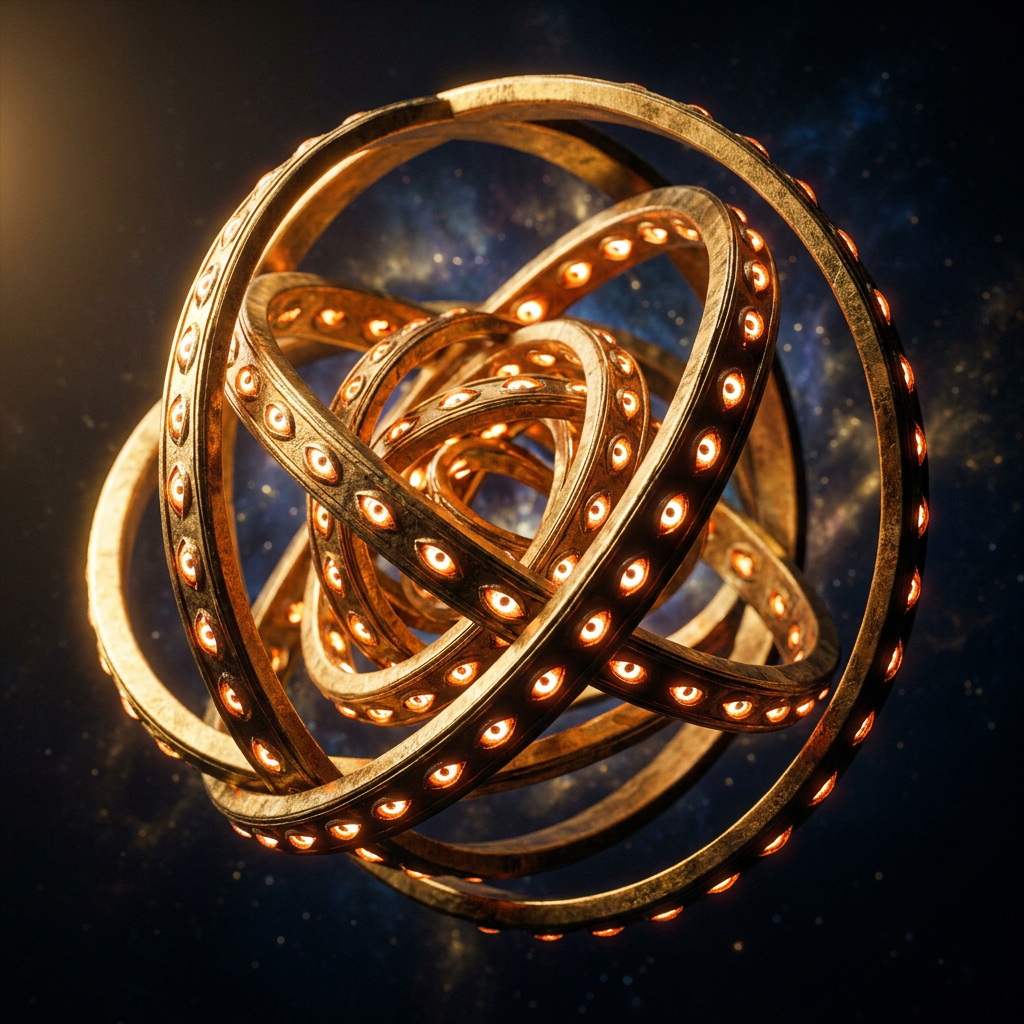
Seraphim? Six wings, covered in eyes, constantly crying "holy, holy, holy." Cherubim? Four faces — human, lion, ox, eagle — with four wings and the legs of a bull. Ophanim? Intersecting wheels made entirely of eyes. These beings aren't beautiful in any conventional sense — they're incomprehensible. The standard human reaction to encountering one in scripture is immediate, paralyzed terror.
The fact that we've taken these beings and turned them into swoony, brooding love interests is a testament to the power of cultural interpretation — and honestly, it's not wrong. It's just one interpretation among many.
The tension between biblically accurate angels and Hollywood's beautiful angel story actually creates incredible storytelling opportunity. What if your angel character knows they're supposed to be terrifying? What if they choose to appear beautiful because it's the only way humans can handle their presence? That kind of meta-awareness can add a whole layer of depth to your narrative.
7. Famous Case Studies: From Paradise Lost to City of Bones
The beautiful angel story has a literary lineage that stretches back centuries, and tracing it gives you a masterclass in how the archetype evolves.
John Milton's Paradise Lost (1667) is arguably the foundation of Western angel fiction as we know it. Milton's Lucifer is one of literature's most compelling characters — a being of extraordinary beauty and intelligence who falls from grace through pride. The Gustave Doré angel illustrations created for later editions of this poem cemented the visual identity of these characters for generations. Milton made angels psychological, not just symbolic.
Jump forward to the Romantic era, and you get poets like William Blake writing about angels as figures of both divine fire and human compassion. Blake's angels are weird, intense, and deeply human — a direct ancestor of modern YA angel protagonists.
By the time Cassandra Clare's The Mortal Instruments series launched in the 2000s, the angel mythology had fully merged with urban fantasy. Clare's Shadowhunters (descendants of angels and humans) operate in a world where divine heritage means power, duty, and trauma — a sophisticated evolution of the angelology fiction genre that treats its source material with genuine respect.
What links all these works across centuries? The literary tropes around angels remain consistent: beauty as a manifestation of power, the cost of connection between divine and human, and the question of whether grace can be earned back once it's lost.
8. Writing the Divine: How to Craft a Compelling Beautiful Angel Story
So you want to write your own beautiful angel story. Here's what actually makes these narratives work, based on everything we've covered:
Ground the divine in the sensory. The reason angel descriptions hit so hard in great fiction is because writers anchor them in specific, physical details — not just "glowing" but how the glow moves, what it smells like, whether it feels warm or cold. Make the supernatural tangible.
Give your angel a real limitation. The most compelling angel characters in literature — from Milton's Lucifer to Clare's Jace — have something they can't do, something they're afraid of, or something they desperately want that their nature won't allow. Limitation creates story.
Engage with the mythology honestly. You don't have to use biblical accuracy as your framework, but knowing it — understanding the hierarchy of seraphim, cherubim, and archangels — will make your world-building feel richer and more coherent. Readers can sense when a writer has done their homework.
Use the beauty purposefully. The physical beauty of your angel should mean something. Is it a tool of manipulation? A divine gift? A mask hiding something terrifying? The moment beauty becomes thematic rather than just descriptive, your story levels up.
Let the human character matter. The best angel stories, like the best paranormal romances, work because the human protagonist is interesting on their own terms. Don't let your angel overshadow the human growth arc — let the two mirror each other.
9. Conclusion: The Eternal Appeal of the Beautiful Angel Story
At the end of the day, our obsession with the beautiful angel story isn't really about wings or glowing skin or forbidden romance (though those don't hurt). It's about something much older and more universal: the human desire to believe that something powerful and good is watching over us, that beauty and divinity can coexist, and that even the most ancient myths have something to say to a college student cramming for midterms at midnight.
From Gustave Doré's sweeping engravings to the dog-eared copies of Hush, Hush passed around high school hallways, from Gallup's data showing 69% of Americans still believe in angels to the psychology of why we need guardian figures in our lives — every thread points to the same truth. Angels aren't going anywhere. They're too deeply woven into how we process beauty, fear, love, and transcendence.
Whether you're a reader, a writer, or just someone who can't stop bingeing paranormal romance, the beautiful angel story is yours. It always has been.
Now go write one that terrifies and dazzles in equal measure.
Sources
Advertisement
Frequently Asked Questions
How are beautiful angels typically described in classical literature?
In literature and art, angels are often depicted using the 'Golden Ratio' (1.618) to represent divine perfection. While modern stories portray them as beautiful humans with wings, historical texts like the 5th-century 'Celestial Hierarchy' classify them into 9 distinct choirs, with the Seraphim described as the most radiant and 'burning' with light.
Are angels always depicted as beautiful in historical religious texts?
Not necessarily. While stories for students often focus on beauty, some biblical descriptions are surreal. For instance, in Ezekiel 1:6, certain angels are described as having 4 faces and 4 wings, a contrast to the human-like beauty popularized during the Renaissance period (14th-17th centuries).
What are some popular young adult book series featuring stories of beautiful angels?
For college and school students, popular series include 'Fallen' by Lauren Kate, which has sold over 10 million copies, and Becca Fitzpatrick’s 'Hush, Hush' saga, which spent more than 30 weeks on the New York Times Best Seller list and helped define the modern 'fallen angel' romance trope.
What does the beauty of an angel symbolize in traditional storytelling?
Angelic beauty often represents the Greek concept of 'Kalos Kagathos,' where outward physical beauty is a reflection of inner moral excellence. In narrative structures, this beauty serves as a visual shorthand for 100% purity and divine authority, distinguishing them from earthly characters.
How many people actually believe in the existence of angels today?
According to various longitudinal studies, belief in angels remains high among students and adults alike; a 2011 AP-GfK poll found that approximately 77% of adults believe these beings exist, which contributes to the massive popularity of angel-themed media in the 21st century.
Sponsored
Curious about technology, mathematics, education, and growth, I write as a learner exploring ideas in innovation, problem-solving, culture, and the questions shaping our world.
You Might Also Like


Advertisement
Comments (0)
Sign in to join the conversation
No comments yet. Be the first to share your thoughts!