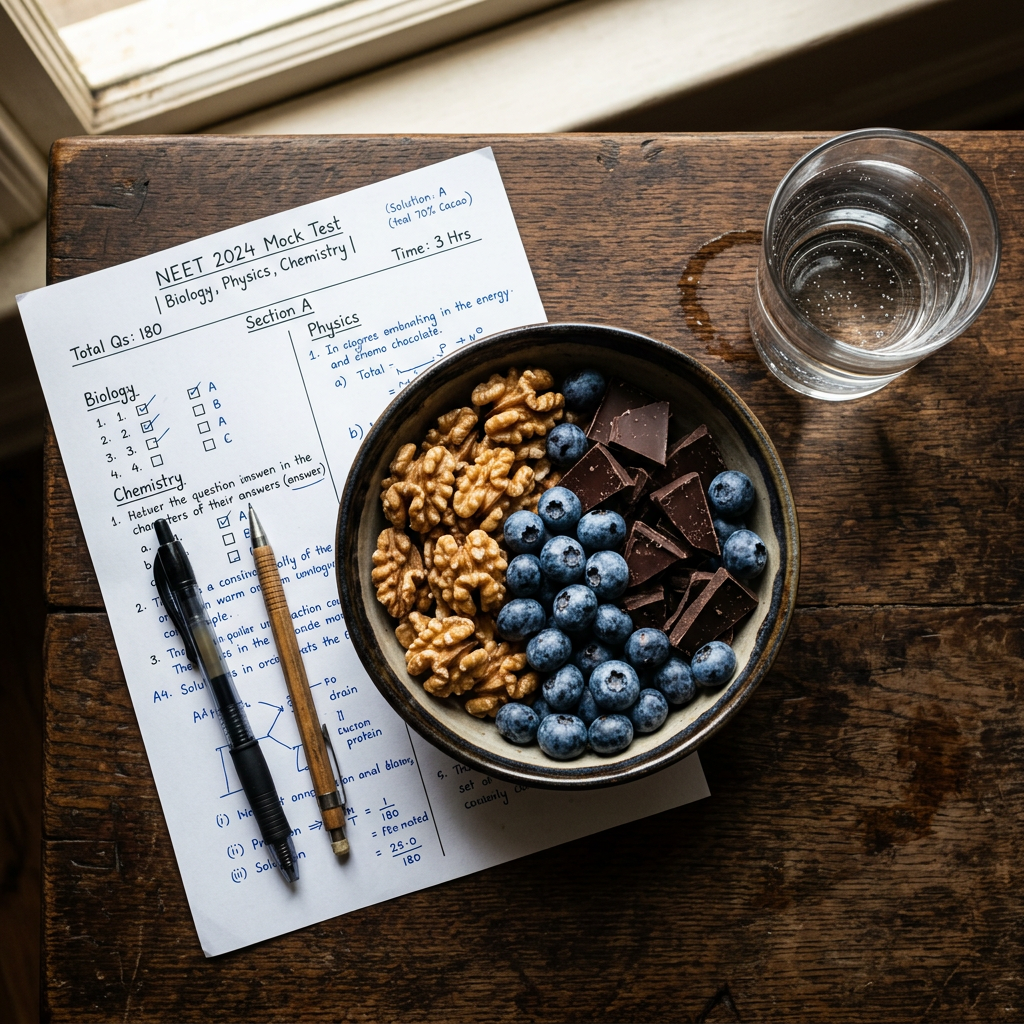
NEET Toppers' Secret: How 30 Minutes of Fitness Improves Retention | Fitness for NEET aspirants
Success in NEET isn't just about IQ; it's about endurance. Discover how tailored fitness, nutrition, and sleep strategies can boost memory, prevent burnout, and maximize your exam performance.

Success in NEET isn't just about IQ; it's about endurance. Discover how tailored fitness, nutrition, and sleep strategies can boost memory, prevent burnout, and maximize your exam performance.
Trending Now
NEET Toppers' Secret: How 30 Minutes of Fitness Improves Retention
Key Takeaways
- Just 30 minutes of daily physical activity can measurably improve memory consolidation, focus, and academic performance in NEET aspirants.
- Over 53% of NEET students report high anxiety levels — a problem fitness, sleep, and mindfulness can directly combat.
- Unsustainable 16-18 hour study schedules are statistically linked to burnout and lower retention compared to structured 8-10 hour focused sessions.
- Strategic yoga, micro-workouts, a brain-fueling diet, and 7-8 hours of sleep are the non-negotiable pillars of a topper's lifestyle.
- Parents and educators play a critical role in creating an environment that supports both academic excellence and physical well-being.
You've memorized the Krebs cycle three times. You've colour-coded every diagram in your anatomy textbook. But somehow, the moment you sit down for a mock test, it all seems to blur together. Sound familiar?
Here's what nobody tells you: the problem isn't your syllabus — it's your body. The most decorated NEET toppers in India share a counterintuitive secret. They don't study more than their peers. They study smarter, and they protect their biology fiercely. Fitness for NEET aspirants isn't a luxury you schedule after cracking the exam — it is the very engine that drives retention, recall, and resilience.
This isn't motivational fluff. This is neuroscience, backed by research, translated into a plan you can begin today.
1. The Biological Link: How Fitness Directly Impacts Your NEET Score
Let's start with the science, because you're going to be a doctor and you deserve to understand why this works.
When you engage in aerobic exercise, your brain releases a protein called Brain-Derived Neurotrophic Factor (BDNF) — often described by neuroscientists as "Miracle-Gro for the brain." BDNF directly stimulates the growth of new neurons in the hippocampus, the region responsible for learning and long-term memory formation. According to research published on PMC (National Institutes of Health), regular physical activity enhances neuroplasticity, reduces cortisol (the stress hormone), and improves prefrontal cortex function — the area governing decision-making and analytical reasoning.
Research Insight: Regular physical activity of just 30 minutes per day is associated with higher academic achievement and significantly lower rates of depression in students. — Youth Futures Foundation / CDC
In simpler terms: when you skip your walk to study an extra chapter, you are biologically reducing your ability to retain that chapter. The 30-minute investment doesn't take time away from your preparation — it multiplies the value of every hour you spend with your books.
2. The 'Sitting Disease': Risks of 12+ Hour Study Marathons
The culture of extreme studying is glorified in competitive exam circles. Aspirants brag about pulling 16 to 18-hour study days as if suffering is a badge of honour. The data disagrees — sharply.
Critical Statistic: Aspirants who attempt 16-18 hour daily study schedules show statistically higher rates of rapid burnout and lower retention compared to those maintaining focused 8-10 hour study days. — SPM & Lalan's Coaching
Prolonged sitting is clinically associated with reduced cerebral blood flow, increased inflammation, chronic back pain, deteriorating posture, and a measurable decline in cognitive performance after 90 minutes of uninterrupted work. Researchers call this the "sitting disease" — and NEET aspirants are among its most vulnerable victims.
| Study Duration (Daily) | Retention Rate | Burnout Risk | Cognitive Performance |
|---|---|---|---|
| 6–8 hours (structured) | High | Low | Optimal |
| 8–10 hours (with breaks) | Moderate-High | Moderate | Good |
| 14–16 hours | Low | High | Declining |
| 16–18 hours | Very Low | Very High | Severely Impaired |
Source: Adapted from SPM Coaching Blog and educational psychology research
The message is unambiguous. If you are grinding 16-hour days, you are not preparing harder — you are preparing worse. Discipline means protecting your study quality, and that requires movement.
3. Micro-Workouts: 10-Minute Routines for Fitness for NEET Aspirants
"I don't have time" is the most expensive lie an aspirant tells themselves. The truth is, you cannot afford not to move. And the barrier is far lower than you think.
Micro-workouts — short, targeted exercise bursts spread across the day — deliver measurable cognitive benefits without demanding significant time. Here is a framework built specifically for the aspirant lifestyle:
Morning Activation (10 minutes):
- 2 minutes jumping jacks to spike heart rate
- 3 minutes sun salutation (Surya Namaskar) to activate the spine
- 3 minutes light jogging in place
- 2 minutes deep breathing to oxygenate the brain
Mid-Study Break (10 minutes, every 90 minutes):
- Neck rolls and shoulder shrugs (2 minutes)
- Standing forward fold — stretches the posterior chain (2 minutes)
- Wall push-ups or bodyweight squats (4 minutes)
- Eye palming and focusing exercises (2 minutes)
Evening Wind-Down (10 minutes):
- Slow walking or gentle yoga stretches
- Progressive muscle relaxation
Three sessions. Thirty minutes total. Zero gym membership required. Science confirms this is enough to trigger the neurochemical cascade that sharpens your memory for the next study session.
4. Yoga for Concentration: Asanas to Sharpen Your Memory
Yoga for concentration is not an ancient myth — it is a clinically validated intervention. Studies indexed on PMC confirm that consistent yoga practice reduces cortisol levels, improves working memory, and enhances sustained attention — three capacities that are everything in a 200-question, 3-hour examination.
Here are the most powerful asanas for NEET aspirants, with specific cognitive benefits:
| Asana (Yoga Pose) | Duration | Primary Benefit for Aspirants |
|---|---|---|
| Padmasana (Lotus Pose) | 5–10 min | Calms nervous system, deepens focus |
| Sarvangasana (Shoulder Stand) | 3–5 min | Increases blood flow to brain |
| Balasana (Child's Pose) | 3–5 min | Relieves anxiety, decompresses spine |
| Vrikshasana (Tree Pose) | 2–3 min each side | Improves balance and neural coordination |
| Bhramari Pranayama (Humming Breath) | 5 min | Reduces exam anxiety, enhances concentration |
| Anulom Vilom (Alternate Nostril Breathing) | 5–10 min | Balances brain hemispheres, reduces stress |
Pranayama (breathwork) deserves special attention. Bhramari and Anulom Vilom directly activate the parasympathetic nervous system, counteracting the chronic fight-or-flight stress response that most NEET aspirants are locked into. Practicing these for just 10 minutes before a study session has been shown to improve information processing speed and reduce pre-study anxiety.
5. Fueling the Brain: The Best NEET Diet Plan for Medical Aspirants
Your brain consumes roughly 20% of your total caloric intake despite being only 2% of your body weight. What you eat is not separate from how well you study — it is the same conversation.
A NEET diet plan built on neuroscience looks nothing like the sugar-and-caffeine cycles most aspirants rely on. Here's what the evidence recommends:
Brain-Boosting Foods to Prioritise:
- Walnuts and almonds — rich in omega-3 fatty acids that support neural membrane integrity
- Blueberries and pomegranates — powerful antioxidants that reduce oxidative brain stress
- Dark leafy greens (spinach, fenugreek) — high in folate, linked to better cognitive function
- Eggs — choline-rich, directly supporting memory formation
- Turmeric (curcumin) — proven anti-inflammatory effects on the brain
- Complex carbohydrates (oats, brown rice, bananas) — steady glucose release for sustained focus
Foods That Actively Harm Your Preparation:
- Excessive caffeine (more than 2 cups/day) — causes cortisol spikes and disrupted sleep
- Ultra-processed snacks and chips — spike blood sugar, followed by focus-crushing crashes
- Skipping meals — drops blood glucose, severely impairing working memory
Pro Tip: Eat a small, protein-rich breakfast (boiled eggs + a banana + warm water with soaked almonds) within 30 minutes of waking. Aspirants who eat breakfast consistently score better on cognitive assessments than those who skip it.
Hydration is non-negotiable. Even 2% dehydration is linked to measurable decline in short-term memory and attention. Keep a water bottle at your study desk and target 2.5–3 litres daily.
6. Sleep Hygiene: Why 'All-Nighters' Are Hurting Your Rank
This section may be the most important thing you read all year. Please pay attention.
Sleep is not rest. Sleep is memory. During the deep stages of sleep, your brain actively transfers information from short-term hippocampal storage into long-term cortical memory — a process called memory consolidation. When you cut your sleep to study more, you are literally erasing the information you studied the night before.
Verified Research: Sleep deprivation impairs the brain's ability to consolidate memory. Research consistently confirms that 7–8 hours of sleep is necessary for optimal cognitive performance in students. — Nature Neuroscience / SPM Coaching
The all-nighter before a mock test doesn't sharpen you — it neurologically lobotomises you for the next 48 hours. The aspirant who slept 8 hours will outperform the one who crammed through the night, every single time.
Evidence-based sleep hygiene rules for competitive exam students:
- Maintain a consistent sleep-wake time (even on weekends)
- Stop all screen exposure 45 minutes before bedtime — blue light suppresses melatonin
- Keep the study room and bedroom separate if possible
- Avoid caffeine after 4:00 PM
- Use the 10-3-2-1 rule: No caffeine 10 hours before bed, no heavy meals 3 hours before, no work 2 hours before, no screens 1 hour before
- Target 10:30 PM to 6:30 AM as your anchor sleep window
A well-slept aspirant doesn't just remember more — they think faster, stay calmer under pressure, and make fewer errors. Sleep is your competitive advantage.
7. Mental Resilience: Coping with Exam Anxiety and Stress
Alarming Reality: 53% of rural NEET aspirants — and a significant proportion of urban students — report high levels of anxiety during their preparation period. — International Journal of Community Medicine and Public Health
Mental health for students is not a topic to be addressed after cracking the exam. It must be protected actively, daily, throughout the journey. Chronic anxiety doesn't just feel terrible — it biologically impairs learning, recall, and decision-making through sustained cortisol exposure.
Practical strategies to build mental resilience:
Meditation for exam stress is among the most evidence-backed interventions available. A 10-minute daily mindfulness practice — simply sitting quietly, focusing on your breath, and observing thoughts without judgment — reduces amygdala reactivity (the brain's fear centre) within 8 weeks of consistent practice, according to research cited by PMC.
Additional resilience tools:
- Journaling — Write down 3 things that went well academically each day. This rewires the brain's negativity bias.
- Deliberate social connection — A 15-minute conversation with a friend or family member is a powerful stress regulator.
- Avoid toxic comparison — Social media performance comparisons are a direct predictor of anxiety escalation. Limit ruthlessly.
- Know when to seek help — If anxiety is persistent, affecting sleep, or causing physical symptoms, speak to a counsellor without shame.
8. Ergonomics 101: Preventing Back Pain and Eye Strain
Nobody discusses exercises for back pain while studying, but almost every serious aspirant develops it. Sitting in a flexed, head-forward posture for hours compresses lumbar discs, shortens hip flexors, and creates muscular imbalances that accumulate into chronic pain — often by age 20.
Desk and posture checklist:
- Screen at eye level — not below (which forces neck flexion)
- Chair height: feet flat on the floor, knees at 90 degrees
- Lower back supported — use a lumbar cushion if needed
- Arms resting comfortably, elbows at 90 degrees
- Avoid studying on a bed or couch for extended periods
Exercises for back pain while studying (do these every 90 minutes):
- Cat-Cow stretch — 10 repetitions, mobilises the entire spine
- Hip flexor lunge stretch — 30 seconds each side, reverses prolonged sitting compression
- Thoracic rotation — seated, arms crossed, rotate slowly left and right (10 reps)
- Chin tucks — counteracts "text neck", 10 reps
Eye care for students follows the 20-20-20 rule: Every 20 minutes, look at something 20 feet away for 20 seconds. This prevents ciliary muscle fatigue and reduces digital eye strain. Additionally, ensure your study room has adequate ambient lighting (not just a single desk lamp), and consider blue-light filtering glasses during long device-based study sessions.
9. The Parents' Role: Creating a Healthy Home Environment
Parents — this section is for you, and it may be the most valuable thing you read.
Your child's NEET journey is not just their test of resilience — it is yours. How to avoid NEET burnout is not solely the aspirant's responsibility. The home environment you create is either a recovery sanctuary or a pressure cooker. Research is unambiguous: students with supportive family environments demonstrate significantly better mental health outcomes and academic performance during high-stakes exam preparation.
What supportive parents do differently:
- Stop asking "How many hours did you study today?" and start asking "How are you feeling today?"
- Ensure your child eats balanced, home-cooked meals — don't leave nutrition to their discretion alone
- Protect their sleep schedule as fiercely as you protect their study schedule
- Create a quiet, ergonomic study space — eliminate avoidable noise and disruptions
- Normalise conversations about stress, anxiety, and mental health without stigma
- Schedule one weekly family activity that has nothing to do with studies — a walk, a meal out, a movie
- Connect with the Allen Career Institute Blog and similar resources to stay informed about healthy preparation strategies
Your belief in your child's worth — independent of their NEET rank — is the most protective psychological factor available to them. Let them feel that clearly.
10. Sample Daily Routine: Balancing Study, Sleep, and Sweat
Here is a research-aligned daily schedule that integrates fitness for NEET aspirants without sacrificing study time. This is the blueprint toppers actually follow:
| Time | Activity | Purpose |
|---|---|---|
| 6:00 AM | Wake up + warm water + almonds | Activate metabolism, brain fuel |
| 6:15–6:45 AM | Morning micro-workout + yoga/pranayama | BDNF release, focus activation |
| 7:00–7:30 AM | Nutritious breakfast | Stable glucose for morning study |
| 7:30–9:30 AM | High-focus study block (new topics) | Peak morning cognitive window |
| 9:30–9:40 AM | Movement break + eye exercises | Reset focus, prevent fatigue |
| 9:40–11:40 AM | Study block (revision + MCQ practice) | Consolidation of new learning |
| 11:40 AM–12:00 PM | Walk + light snack | Midday energy reset |
| 12:00–2:00 PM | Study block (weak areas) | Targeted improvement |
| 2:00–2:45 PM | Lunch + short rest (no screen) | Digestion, mental recharge |
| 3:00–5:00 PM | Study block (previous year papers) | Exam application practice |
| 5:00–5:30 PM | Evening walk or light sport | Stress decompression, vitamin D |
| 5:30–7:30 PM | Study block (notes review) | Reinforcement before dinner |
| 7:30–8:00 PM | Dinner (light, balanced) | Avoid heavy pre-sleep eating |
| 8:00–9:30 PM | Light revision or reading | Wind-down study |
| 9:30–10:00 PM | Journaling + screen-free wind-down | Mental closure, anxiety reduction |
| 10:00–10:30 PM | Meditation / Bhramari pranayama | Sleep preparation |
| 10:30 PM | Sleep | Memory consolidation begins |
Total study: ~10 structured hours. Total fitness: ~45 minutes. Sleep: 7.5 hours. This is not a compromise — this is the architecture of a top rank.
Conclusion
The NEET examination demands the best of your intellect, your discipline, and your endurance. But here's the truth that transforms aspirants into toppers: your body is not separate from your preparation — it is the medium through which your preparation happens.
Fitness for NEET aspirants is the multiplier that makes every study hour more effective, every revision session more sticky, and every exam day more manageable. The 30 minutes you invest in movement, yoga, and mindful recovery don't subtract from your preparation — they are the reason your preparation works.
You are training to become a doctor. Begin by treating your own body and mind with the same scientific respect you are learning to give your future patients. Build the routine. Protect your sleep. Move every day. Eat for your brain. And remind yourself — and your family — that your worth is not measured by a rank, but the rank will reflect how wisely you lived this year.
Start today. Not Monday. Today.
Sources
- PMC – National Institutes of Health — Research on BDNF, neuroplasticity, exercise, and memory consolidation.
- International Journal of Community Medicine and Public Health (ResearchGate) — Mental health status of NEET aspirants in rural Tamil Nadu.
- SPM & Lalan's Coaching Blog — Study schedule data, sleep research, and burnout statistics for NEET aspirants.
- Youth Futures Foundation / CDC — Physical activity linked to academic achievement and depression reduction in students.
- Nature Neuroscience — Sleep and memory consolidation research.
- Allen Career Institute Blog — Best practices and wellness guidance for competitive exam aspirants.
Advertisement
Frequently Asked Questions
Why is daily physical activity crucial for NEET preparation and brain function?
Physical activity increases the production of Brain-Derived Neurotrophic Factor (BDNF), a protein that supports neuron growth. Research indicates that just 20 minutes of moderate aerobic exercise can improve memory retention and cognitive processing speed by up to 15-20%, which is vital for memorizing vast Biology and Chemistry syllabi.
How much time should a NEET aspirant realistically dedicate to fitness daily?
While the WHO recommends 150 minutes of moderate activity per week, NEET aspirants should aim for 20 to 30 minutes of daily exercise. This minimal time investment acts as a 'mental reset,' reducing the 10-12 hours of sedentary study time and preventing burnout without significantly impacting the study schedule.
What are the most effective 'brain foods' and hydration levels for competitive exam students?
The human brain is approximately 75% water; even 2% dehydration can lead to a 10% decline in short-term memory. Aspirants should consume 2.5 to 3 liters of water daily. Incorporating Omega-3 fatty acids (found in walnuts or flaxseeds) and antioxidants can improve mental alertness and shield the brain from oxidative stress during intense study periods.
Can regular exercise help in managing the high stress and anxiety levels of NEET?
Yes, physical activity is a natural stress-buster that lowers cortisol levels and triggers the release of endorphins. Studies show that students who engage in regular physical activity report a 40% reduction in perceived stress and anxiety levels compared to sedentary peers, which is critical for maintaining composure during the actual 3-hour 20-minute exam.
What specific exercises help prevent back and neck pain during long study hours?
Extended sitting for 8-10 hours leads to 'Tech Neck' and lower back strain. Experts recommend the 50-10 rule: study for 50 minutes and move for 10. Simple stretches like shoulder rolls, chin tucks, and the 'Cat-Cow' pose can reduce musculoskeletal discomfort by up to 50%, ensuring physical pain does not distract from focused learning.
Sponsored
You Might Also Like


Advertisement
Comments (0)
Sign in to join the conversation
No comments yet. Be the first to share your thoughts!