IBRAIN Kantabania Hostel: A Home Away From Home for Students
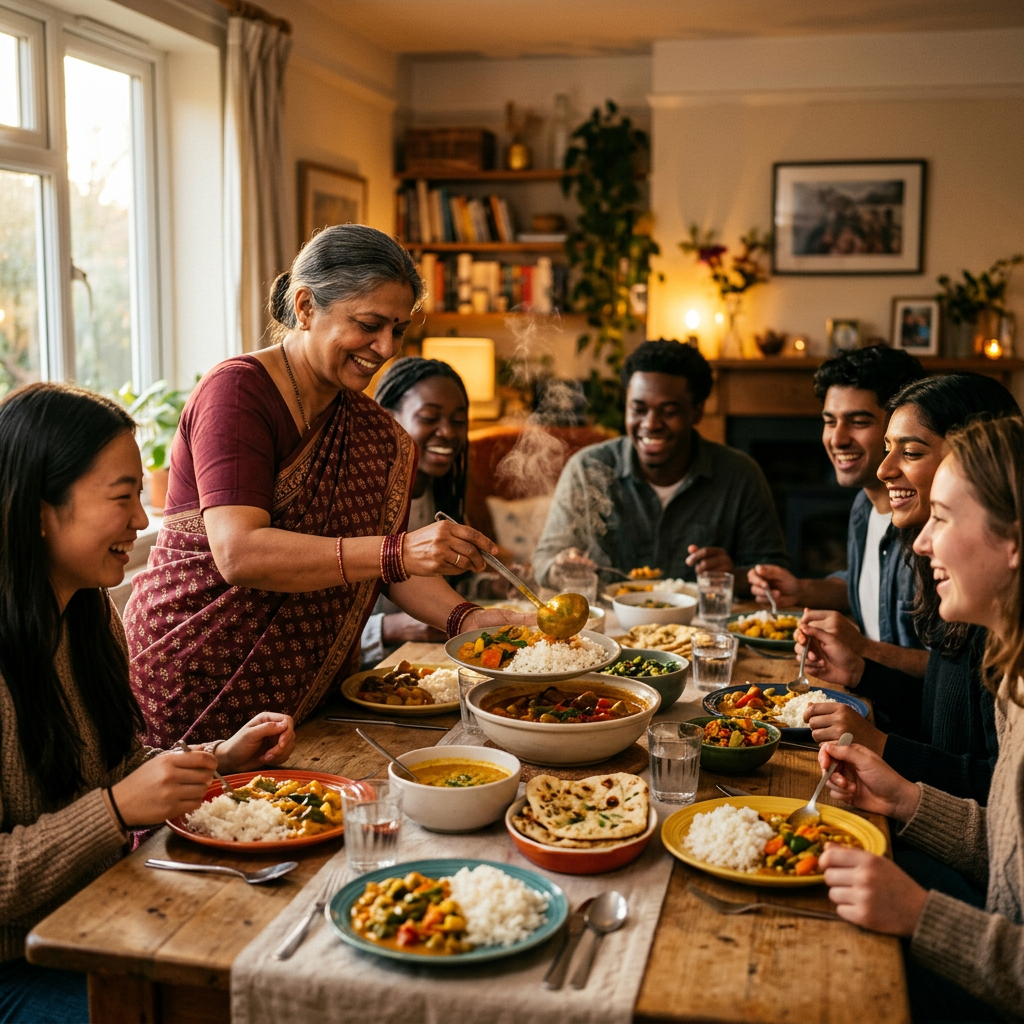
Experience the heartwarming story of the IBRAIN Kantabania hostel, where a dedicated 'Uncle and Aunty' create a supportive, SOS Village-style family for students.

Experience the heartwarming story of the IBRAIN Kantabania hostel, where a dedicated 'Uncle and Aunty' create a supportive, SOS Village-style family for students.
Trending Now
IBRAIN Kantabania Hostel: A Home Away From Home for Students
Key Takeaways
- The IBRAIN Kantabania hostel offers a rare, emotionally nurturing environment that goes far beyond typical student accommodation
- A resident couple — affectionately called "Uncle" and "Aunty" — serve as surrogate parents, providing home-cooked food and genuine emotional care
- The hostel model closely mirrors the globally respected SOS Village concept, where community and family bonds replace institutional coldness
- Research shows that emotionally supported students are 12% more likely to maintain higher GPAs
- Students from different hostels around IBRAIN often choose to stay here because it genuinely feels like home
- This is not just a place to sleep — it's a place where students grow, bond, and belong
The Struggle of Leaving Home for Studies
Let's be honest for a second.
No matter how excited you are about starting college or joining a coaching institute, the moment you actually leave home — bag packed, parents waving goodbye — something heavy settles in your chest. It's a mix of anxiety, anticipation, and a quiet fear: Will I be okay out there?
For thousands of students across Odisha and the rest of India, that question doesn't always get a reassuring answer. Many end up in hostels that feel more like budget hotels than places of learning and living. Cold walls. Noisy corridors. Canteen food that makes you miss your mother's cooking immediately. And if you're having a rough day academically or emotionally? You deal with it alone.
This is the reality that makes student mental health such a serious conversation in India today.
"37% of college students in India report moderate to severe depressive symptoms due to academic and housing stress." — MHFA India, Student Mental Health Report
That statistic isn't just a number. It represents real students sitting alone in their hostel rooms, wondering if they made the right choice.
And that's exactly why a place like the IBRAIN Kantabania hostel stands out so powerfully. Because someone there actually thought about the student, not just the building.
The IBRAIN Kantabania Context: An Educational Hub in Odisha
Before we dive into the hostel experience itself, let's set the scene.
Kantabania is a growing educational hub in the Jajpur district of Odisha. It's the kind of place where academic ambition runs high — students travel from different districts, sometimes even different states, to access quality coaching, competitive exam preparation, and structured learning programs.
IBRAIN — which stands as one of the most recognized names in the region — has built its reputation on serious academic mentoring. Students come here with goals: crack entrance exams, build foundations in science and mathematics, prepare for competitive futures. The institute takes academics seriously, and students know it.
But here's what makes IBRAIN different from just another coaching center: they recognized early on that academic success doesn't happen in an emotional vacuum.
According to Justdial's listings for Kantabania schools and institutes, the region has seen growing educational infrastructure. But infrastructure alone doesn't build great students. People do.
And that's where the IBRAIN Kantabania hostel enters the story.
The Unique Hostel Model: More Than Just a Bed and Desk
Most student hostels follow a simple formula: rooms, beds, a shared bathroom, maybe a common room with a TV, and a mess that serves the same dal-rice combination five days a week. It's functional. It's fine. But it's far from fulfilling.
The IBRAIN Kantabania hostel throws that playbook out the window entirely.
What they've created isn't really a hostel in the traditional sense. It's something closer to a living community — a space where every student is seen, known, and genuinely cared for. Think less "student accommodation" and more "extended family compound."
Here's how the IBRAIN hostel model compares to a typical Indian student hostel:
| Feature | Typical Indian Hostel | IBRAIN Kantabania Hostel |
|---|---|---|
| Food Quality | Standard mess food, fixed menu | Home-cooked meals, made with care |
| Emotional Support | None / Self-managed | Daily care from resident Uncle & Aunty |
| Outings & Bonding | Rare or nonexistent | Regular outings and group feasts |
| Feeling of Belonging | Often transactional | Students forget homesickness entirely |
| Academic Integration | Separate from hostel life | Deeply connected — IBRAIN supports both |
| Atmosphere | Institutional | Familial, warm, personal |
It's not a small difference. It's a completely different philosophy of what student housing should be.
"88% of students rate 'living with people they like' and a supportive social environment as more important than accommodation luxury." — Unite Students Resilience Report
The students at IBRAIN Kantabania hostel aren't living in luxury. They're living in community. And clearly, that matters far more.
Meet the 'Parents': The Role of Uncle and Aunty
Now here's the part that every current and former IBRAIN hostel student will immediately smile at.
There is a couple — lovingly called "Uncle" and "Aunty" by every student — who manage the hostel and have, in every sense that matters, become surrogate parents to hundreds of young students over the years.
Aunty is the kind of person who notices when you're quiet at dinner. She's the one who'll serve you an extra helping without you asking, who'll check in if you seem tired, and who — and this is the part students always talk about — makes you feel seen. Not like a room number or a fee receipt. Like a child she's responsible for.
She doesn't just cook food. She serves it. Warmly. Personally. The way only a mother really does.
Uncle, on the other hand, is the one who makes sure students get a break from the grind. He's known for organizing outings — taking students to different places, treating them to feasts, creating those unforgettable moments that students carry with them long after they've graduated and moved on. He makes sure that life at the hostel isn't just about studying hard. It's also about living well.
This kind of emotional infrastructure is not accidental. It's intentional, and it changes everything.
According to research by the Journal of Student Affairs on ResearchGate, loneliness and homesickness are the primary non-academic reasons for student dropout in the first 3 months of higher education. Uncle and Aunty — without any formal psychology training — are essentially solving one of India's most significant student retention problems just by being present and being caring.
A Culinary Hug: Why Homely Food Matters for Mental Health
Let's talk about food for a moment. Because this is serious.
When students move away from home, one of the first things they lose — emotionally, not just nutritionally — is home-cooked food. It sounds small. It isn't.
Food is memory. Food is comfort. Food is the most primal form of care. And when you're nineteen years old, studying hard, missing your family, and navigating a completely new environment, sitting down to a plate of food that tastes like home is genuinely healing.
Aunty's cooking at the IBRAIN Kantabania hostel is legendary among students — not because it's fancy, but because it's real. It's the kind of food cooked with attention and love, where you can actually taste that someone thought about what you'd enjoy eating today. Students often describe it as the reason the hostel starts to feel like home faster than they expected.
Here's a quick look at how food quality in student accommodation impacts wellbeing:
| Food Environment | Student Outcome |
|---|---|
| Standard mess food (bulk-cooked) | Higher rates of homesickness, dissatisfaction |
| Canteen or cafeteria model | Moderate satisfaction, low emotional connection |
| Home-cooked, personally served meals | Stronger sense of belonging, lower anxiety |
| Meals shared in community settings | Improved social bonding, reduced isolation |
This isn't just anecdotal. Nutrition and the social experience of eating are deeply tied to mental wellbeing and academic performance. When students feel physically nourished and emotionally acknowledged at mealtimes, they show up differently — in class, in study sessions, and in life.
Beyond the Walls: Outings, Feasts, and Social Bonding
Here's something you don't often hear about in the context of student hostels: planned fun.
Uncle doesn't just manage the hostel. He invests in joy. Students talk about the outings he organizes — trips to different places around Kantabania and beyond, group feasts at local restaurants or outdoor settings, gatherings that become stories students still tell each other years later.
This matters more than it might seem at first glance.
Academic pressure is real at IBRAIN. Students are there to study, and the institute takes that seriously. But mental reset is part of academic success. Students who never decompress, never laugh, never experience something beyond their textbooks — they burn out. They get anxious. They start counting days until they can go home.
The students at IBRAIN Kantabania hostel? Many of them forget to count those days.
And that's the most beautiful feedback any hostel could possibly receive.
"Students with strong social support in housing are 12% more likely to maintain higher GPAs during their initial academic years." — Student Housing & Academic Success Data, StudentHousingBusiness.com
Those outings and feasts aren't distractions from academic success. They are part of academic success. Uncle seemed to understand that intuitively long before the research caught up.
The SOS Village Comparison: Creating a Surrogate Family
This is perhaps the most insightful way to understand what IBRAIN Kantabania hostel has built.
SOS Children's Villages is a globally recognized model where children without parental care are placed in small family units — each led by an "SOS mother" who lives with them, cooks for them, and raises them as her own. The premise is simple but profound: every child needs a family, not just a facility.
The parallels with the IBRAIN hostel model are striking.
| Element | SOS Village Model | IBRAIN Kantabania Hostel |
|---|---|---|
| Central caregivers | Dedicated SOS mother figure | Uncle and Aunty as resident caregivers |
| Community structure | Small family units | Tight-knit student community |
| Emotional philosophy | Every child needs belonging | Every student needs emotional security |
| Food & nurturing | Home-cooked, family-style meals | Aunty's personally prepared meals |
| Social activities | Structured play and outings | Uncle's organized trips and feasts |
| Outcome goal | Holistic child development | Holistic student development |
Now, IBRAIN is obviously not an SOS Village — the students here have families and homes they come from. But the philosophy is remarkably aligned: you cannot separate a person's emotional wellbeing from their ability to grow, learn, and thrive.
In a world where student housing is increasingly being reduced to a commodity — apps, algorithms, and amenity checklists — the IBRAIN hostel model is a quiet, powerful reminder that people need people. Especially young people, far from home, trying to build a future.
Academic Impact: How Emotional Security Boosts Performance at IBRAIN
Let's connect the dots clearly.
IBRAIN as an institution is known for its academic rigor. Students come with specific goals — entrance exam preparation, foundational academic strengthening, competitive mentoring. The institute delivers on those promises through structured learning.
But the hostel environment amplifies that academic work in ways that often go unrecognized.
Think about it: a student who wakes up to a warm meal, feels cared for by people around them, doesn't carry the crushing weight of loneliness into the classroom — that student learns better. Their brain isn't splitting its energy between academics and emotional survival. They can focus.
This is what researchers call psychological safety — the sense that your environment supports rather than threatens you. And it is, without exaggeration, one of the most important variables in learning outcomes.
"Loneliness and homesickness are cited as the primary non-academic reasons for student dropout in the first 3 months of higher education." — Journal of Student Affairs, ResearchGate
The IBRAIN Kantabania hostel tackles that dropout risk head-on — not through a formal student wellness program or a counseling department, but through something far more human: an uncle who takes you out for dinner and an aunty who makes sure you've eaten well.
That's real intervention. That's real impact.
Student Testimonials: 'We Forget About Our Own Home'
The best thing you can say about any place is that you forgot to miss what you left behind. And that's exactly what students who have stayed at the IBRAIN Kantabania hostel often say.
"We came from different hostels around IBRAIN, but once we moved here, we never wanted to leave. We actually forgot about our own home — not because we stopped loving our families, but because this place gave us another family."
"Aunty serves food like her own son. You don't feel like a boarder. You feel like you belong there."
"Uncle took us out to so many places. Those are some of the best memories of my student life. We had so much fun that the stress of studying just... disappeared for a while."
"The hostel isn't just a building. It's a feeling. You walk in after a long day of classes and something just relaxes inside you. That's not normal for a hostel. That's home."
These testimonials aren't just heartwarming — they're evidence. Evidence that when you invest in the emotional environment of student housing, you get students who are happier, more engaged, and more loyal to the institution that supported them.
Students who feel at home stay. Students who stay succeed. It really is that simple.
Conclusion: The Future of Student Housing Should Be Emotional
As India continues to build more coaching centers, more institutes, and more student accommodation facilities, there's a critical lesson sitting quietly in Kantabania, Odisha.
It's not about how many rooms you have. It's not about the Wi-Fi speed or the gymnasium or the air-conditioned study halls. Those things are fine. They're useful. But they are not what students remember.
What students remember is Aunty's food on a cold evening. They remember Uncle loading everyone into a vehicle and heading out for a feast because why not, you've worked hard this week. They remember feeling like someone noticed when they were stressed, and did something about it.
The IBRAIN Kantabania hostel has quietly built something that educational institutions spend millions trying to design through formal programs and wellness initiatives. They built it through two people who simply decided to care.
That's the model India's student housing sector needs to study. Not the architecture. The attitude.
If you are a student considering IBRAIN, a parent wondering where to send your child, or an educator thinking about what student support really means — the answer might be simpler than you think.
Find them an Aunty who serves food like a mother. Find them an Uncle who takes them out and makes them laugh. Find them a community that makes them forget to be homesick.
That's not just good hospitality. That's good education.
Sources
- MHFA India – Student Mental Health Report — 37% of college students in India report moderate to severe depressive symptoms
- Unite Students – Resilience & Accommodation Report — 88% of students prioritize supportive social environments over luxury
- StudentHousingBusiness.com – Housing & Academic Success Data — Students with social support are 12% more likely to maintain higher GPAs
- ResearchGate – Journal of Student Affairs — Loneliness and homesickness as primary non-academic dropout causes
- IBRAIN E-School YouTube Channel — IBRAIN's academic mentoring and student engagement content
- Justdial – Kantabania Schools & Institutes — Kantabania educational infrastructure reference
Published on Voxora | Written for students, parents, and educators who believe that where you live shapes who you become.
Advertisement
Frequently Asked Questions
What distinguishes the IBRAIN Kantabania hostel from typical student accommodations?
Unlike traditional hostels, the IBRAIN Kantabania hostel operates on a family-centric model where resident guardians, affectionately known as 'Uncle and Aunty,' provide 24/7 emotional support and maternal care. This unique structure is inspired by the SOS Village model, which prioritizes a nurturing family environment over institutionalized living.
How does the food at the Kantabania hostel compare to standard mess meals?
The hostel provides 'homely' food prepared and served with personal attention, specifically avoiding the mass-produced quality of typical hostels. The resident 'Aunty' serves students personally to ensure a nutritious and comforting dining experience that helps students feel at home.
What role does IBRAIN play in the academic development of hostel residents?
While the hostel provides a supportive living environment, IBRAIN remains strictly focused on academic excellence. The institution takes full responsibility for the students' educational progress, providing a structured study environment that complements the emotional stability found in the Kantabania residence.
What kind of extracurricular and recreational activities are provided for students?
To foster community and reduce homesickness, the resident 'Uncle' organizes frequent outings and communal feasts. These social events are designed to give students a break from their rigorous academic schedules and create a bond similar to that of a real family.
Who is the primary audience for the IBRAIN Kantabania hostel model?
The model is designed for parents and educators seeking a holistic boarding experience. It targets students who require both high-level academic guidance from IBRAIN and a stable, maternal support system to thrive emotionally while living away from home.
Sponsored
You Might Also Like


Advertisement
Comments (0)
Sign in to join the conversation
No comments yet. Be the first to share your thoughts!