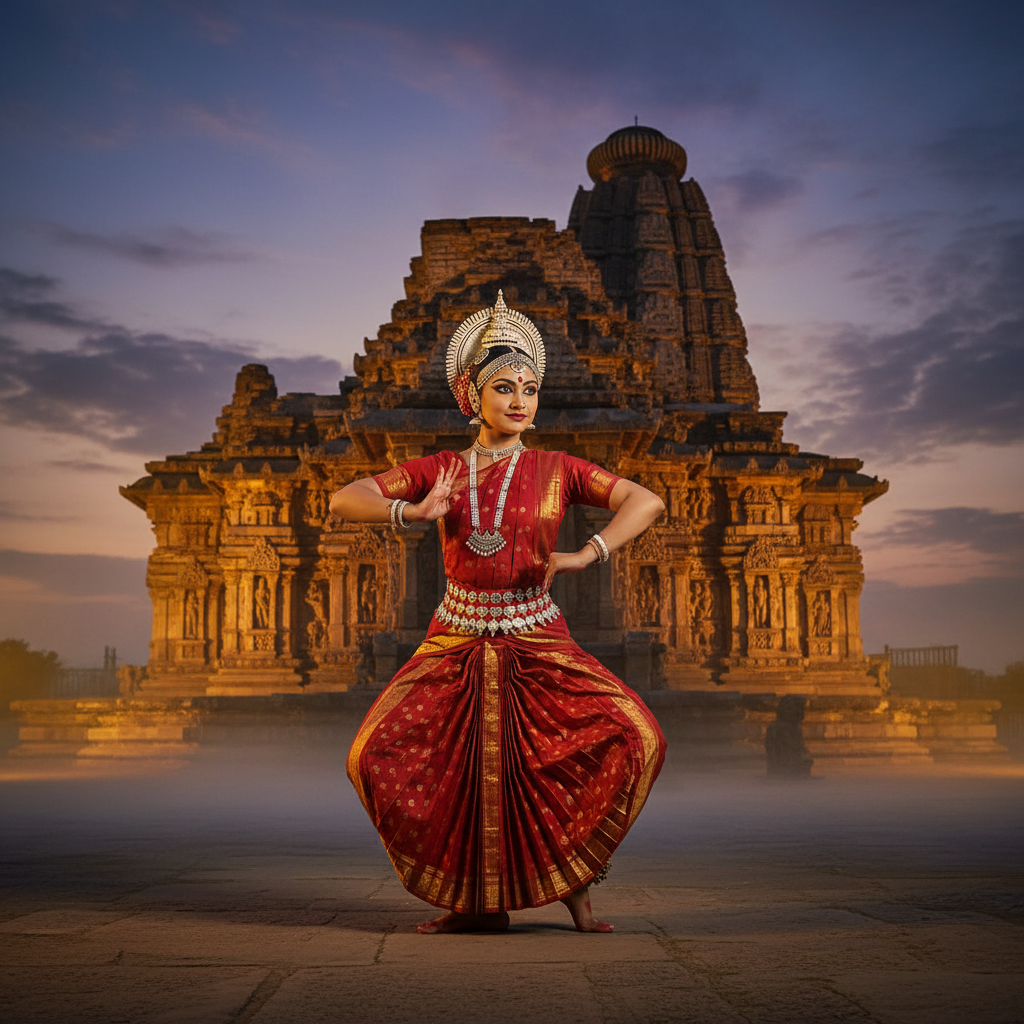
Traveling to Konark: History, Mystery, and the Eco Retreat Experience
Discover the secrets of the Konark Sun Temple, a 13th-century architectural marvel. From the 24 time-telling wheels to the luxury Eco Retreat, here is your ultimate 2025 travel guide.

Discover the secrets of the Konark Sun Temple, a 13th-century architectural marvel. From the 24 time-telling wheels to the luxury Eco Retreat, here is your ultimate 2025 travel guide.
Trending Now
Traveling to Konark: History, Mystery, and the Eco Retreat Experience
Key Takeaways
- The Konark Sun Temple is a UNESCO World Heritage Site that drew 3.57 million domestic visitors in 2024–25, making it one of India's most visited heritage monuments.
- Built in the 13th century by King Narasimhadeva I, the temple was engineered as a colossal stone chariot with 24 intricately carved wheels, each nearly 12 feet in diameter.
- The Konark Eco Retreat offers glamping-style accommodation just minutes from the temple, blending heritage tourism with sustainable living.
- December is the best time to visit — coinciding with the Konark Dance Festival 2025 — though the temple is open year-round.
- The Odisha Golden Triangle (Bhubaneswar–Puri–Konark) is one of India's most rewarding short cultural circuits, completable in 3–4 days.
The Black Pagoda Rising from the Sea
Picture this: you are a 15th-century Portuguese sailor, navigating the treacherous Bay of Bengal. Your ship is off course. The currents are deceptive, the coastline unfamiliar. Then, through salt-heavy air, a tower rises on the horizon — so massive, so otherworldly, that it looks less like a building and more like a mountain someone carved into a god.
The sailors called it the Black Pagoda. Not because it was built from dark stone, but because it appeared black from the sea — a silhouette of impossible ambition against the Odisha sky. For centuries, it served as a navigational landmark and a warning to mariners that the shore was near. Today, it is known by another name, one that reverberates through the corridors of UNESCO's World Heritage list and across the Instagram feeds of millions: the Konark Sun Temple.
Traveling to Konark is not merely a sightseeing trip. It is an act of time travel. The moment you arrive at this sunlit corner of Odisha, something shifts — the air thickens with history, the stone whispers stories, and the horizon seems to carry the weight of twelve centuries. Whether you are a history enthusiast, a spiritual seeker, a beach lover, or a curious wanderer chasing India's lesser-told stories, Konark will meet you exactly where you are.
This guide will take you through everything — the legends, the architecture, the mysteries, the festivals, the eco retreats, and the practical wisdom you need to make your 2025 journey unforgettable.
History & Legend: King Narasimhadeva I and the 1200 Artisans
Every great monument has a founding myth, and Konark's is appropriately dramatic.
The year was approximately 1250 CE. King Narasimhadeva I of the Eastern Ganga dynasty sat on the throne of Odisha — a ruler known as much for his military victories as for his devotion to Surya, the Hindu sun god. Having defeated the powerful Muslim armies of Bengal, the king allegedly vowed to build the grandest temple the world had ever seen as an offering of gratitude.
What followed was one of ancient India's most remarkable construction projects. According to legend, 1,200 artisans — sculptors, architects, and laborers — were assembled and tasked with building a temple so large, so detailed, and so structurally daring that it would take 12 years to complete. The lead architect, Bishu Moharana, is celebrated in Odishan folklore, and his young son Dharmapada is said to have sacrificed himself to ensure the temple's completion when no one could solve the final engineering challenge of placing the capstone.
Whether legend or history, the story captures something real about Konark: it was built by people who believed they were doing something sacred. And that belief is still embedded in every carved surface, every dancing apsara, every erotic panel that has survived the centuries.
Architectural Marvels: The Chariot, The Horses, and The Sun Temple Wheels
Stand before the Konark Sun Temple for the first time and your brain will take a moment to catch up with your eyes.
The temple was designed as a colossal chariot of the sun god Surya — the vehicle that pulls the sun across the sky each day. According to UNESCO, the original temple complex covered 12 acres, with the main tower (the shikhara) once soaring over 200 feet high before it collapsed, likely due to a combination of structural failure, coastal erosion, and the removal of the legendary magnet that once supposedly held the capstone in place.
But what truly steals your breath are the wheels.
The 24 stone wheels of the Konark Sun Temple are nearly 12 feet (3.7 meters) in diameter — each one a masterpiece of astronomical precision. (Source: Archaeological Survey of India)
These are not decorative wheels. Each of the 24 wheels represents one hour of the day, transforming the entire temple into a functioning sundial. Position yourself at the right angle during golden hour, and the spoke shadows will tell you the exact time — accurate to within minutes. The 12 pairs of wheels also represent the 12 months of the Hindu calendar, and the 7 galloping horses that pull the chariot represent the 7 days of the week.
| Architectural Element | Symbolic Meaning | Scale |
|---|---|---|
| 24 Stone Wheels | 24 hours of the day | ~12 feet (3.7m) in diameter |
| 7 Horses | 7 days of the week | Life-sized stone sculptures |
| 12 Wheel Pairs | 12 months of the year | Flanking both sides of the platform |
| Main Tower (Shikhara) | The chariot of Surya | Originally 200+ feet tall |
| Temple Complex | Complete solar chariot | Spread over 12 acres |
The walls themselves are a textbook of medieval Indian life — erotic carvings (maithunas) that celebrate human desire as part of cosmic creation, war scenes, hunting tableaux, elephants, celestial musicians, and dancers frozen mid-performance. Every inch of the exterior seems to breathe.
The Mystery of the Magnets and the Collapsed Tower
Here is where Konark's story takes a turn into shadow.
For centuries, travelers and historians have spoken of a massive lodestone — a magnetic stone — that was allegedly placed at the apex of the main tower. According to legend, this magnet was so powerful that it kept an iron idol of Surya suspended in mid-air inside the sanctum sanctorum, with no visible support. Ships passing the coast reportedly had their compasses thrown off by the magnetic field emanating from the temple.
Whether this is fact or folklore, no one can say definitively. What is known is that the main shikhara collapsed sometime between the 17th and 18th centuries — a fact confirmed by ASI records. The leading theories range from structural instability caused by the tower's sheer height to deliberate dismantling by enemies who removed the lodestone, which then caused the engineering equilibrium to fail.
The British colonial administration filled the Jagamohana (audience hall) with sand in the late 19th century to prevent its collapse — a controversial preservation technique that essentially sealed the structure from the inside. Today, that hall remains closed to visitors, its interior inaccessible, its secrets buried under tons of sand and stone.
The mystery of Konark is inseparable from its appeal. It is a monument that answers some questions while swallowing others whole.
Visitor Essentials 2025: Timings, Tickets, and Best Time to Visit Konark
Before you arrive, know your logistics. The Konark Sun Temple is one of India's busiest heritage sites — and for good reason.
The temple generated a record ₹1.48 crore in ticket revenue in December 2024 alone. (Source: Times of India)
| Category | Konark Entry Fee 2025 | Notes |
|---|---|---|
| Indian Nationals (Adult) | ₹40 | As per ASI standard pricing |
| Foreign Nationals | ₹600 | Subject to revision; check ASI |
| Children (under 15) | Free | Applies to all nationalities |
| SAARC/BIMSTEC Nationals | ₹40 | Same as Indian nationals |
| Photography (still) | Included | No extra charge |
| Video (professional) | ₹25 | Commercial shoots need prior permission |
Temple Timings: Open daily from sunrise to sunset (approximately 6:00 AM – 8:00 PM). The monument is closed for maintenance on specific days — always confirm with ASI before visiting.
Best Time to Visit Konark:
- October to February is ideal — cool weather, clear skies, and the magic of the Konark Dance Festival in December.
- March to May brings heat that can make outdoor exploration exhausting.
- June to September (Monsoon) is dramatic and beautiful but expect rain and humidity; the surrounding greenery is lush and the crowds are thin.
Pro tip: Arrive at sunrise — the temple faces east deliberately, and the morning light turns the oxidized stone from gray to gold. This is the temple as the ancient architects intended you to see it.
Beyond the Temple: Chandrabhaga Beach and Marine Drive
Most visitors make the mistake of treating Konark as a half-day stop. It deserves far more.
Just 3 kilometers east of the Sun Temple lies Chandrabhaga Beach — one of Odisha's most sacred and scenic stretches of coastline. Named after the mythological river Chandrabhaga, this beach holds religious significance for devotees of Surya and is the site of the Chandrabhaga Mela, a Hindu fair held during the festival of Magha Saptami (usually in January or February), when pilgrims take a holy dip in the sea.
But Chandrabhaga is not just for pilgrims. Its wide, clean sands, turquoise waters, and relative seclusion make it a genuinely lovely beach in its own right — far quieter than the more tourist-heavy Puri Beach. The Chandrabhaga Beach Festival, held concurrently with the Konark Dance Festival, brings sand art competitions (featuring some of India's most celebrated sand artists), food stalls, and cultural performances to the shoreline.
The Marine Drive connecting Konark to Puri — a 35-kilometer coastal road — is arguably one of the most beautiful drives in eastern India. The road hugs the Bay of Bengal on one side and casuarina forests on the other. If you can, do this drive at dusk. You will understand why Odisha tourism chose this route as the crown jewel of its coastal circuit.
Where to Stay: The Rise of Konark Eco Retreat & Glamping
Once, staying near Konark meant choosing between basic lodges and making a day trip from Puri or Bhubaneswar. That calculus has changed dramatically with the rise of the Konark Eco Retreat model — a government-supported initiative by Odisha Tourism that has transformed the overnight experience near the heritage site.
The Konark Eco Retreat is a seasonal glamping village set up in proximity to the temple and Chandrabhaga Beach, typically operational from November to February. Think Swiss-style tents with proper beds, attached bathrooms, electricity, and curated Odishan cuisine — luxury camping that doesn't compromise on comfort or authenticity.
What makes the Konark Eco Retreat special is its philosophy: stay close to nature, respect the heritage, leave no trace. Solar lighting, locally sourced food, waste management systems, and cultural programming are woven into the guest experience. Waking up to the sound of the sea breeze rustling through coastal palms, with the knowledge that the Sun Temple is minutes away, is a genuinely different kind of travel experience.
| Accommodation Type | Approx. Cost (per night) | Best For |
|---|---|---|
| Konark Eco Retreat (Glamping Tent) | ₹4,000–₹8,000 | Couples, solo travellers, experience seekers |
| Budget Guesthouses (Konark town) | ₹500–₹1,500 | Backpackers, pilgrims |
| Mid-range Hotels (Puri, 35 km) | ₹1,500–₹4,000 | Families, comfort travellers |
| Heritage Hotels (Bhubaneswar, 65 km) | ₹5,000–₹15,000+ | Business travellers, luxury seekers |
Booking the Eco Retreat early is essential — availability fills up fast during the December festival season. Visit Odisha Tourism for official bookings.
Cultural Extravaganza: The Konark Dance Festival 2025
If the temple is Konark's soul, the Konark Dance Festival is its heartbeat.
Held annually in the first week of December — typically from December 1 to 5 — this five-day festival transforms the open-air auditorium built against the backdrop of the Sun Temple into one of India's most spectacular cultural stages. Classical Indian dance forms — Odissi, Bharatanatyam, Kathak, Kuchipudi, Manipuri, and Mohiniyattam — are performed by the country's most celebrated dancers as the ancient stone watches in silence.
The Konark Dance Festival 2025 is expected to follow this same format, organized by the Odisha government's Department of Tourism in collaboration with cultural institutions. Admission is typically free for evening performances, though some premium shows may require passes. The combination of flickering stage lights, classical music, and the dark silhouette of the temple in the background is — by many accounts — one of the most visually arresting experiences India has to offer.
Plan your entire trip around this festival. It is that good.
How to Reach: Navigating the Odisha Golden Triangle
The Odisha Golden Triangle — connecting Bhubaneswar, Puri, and Konark — is one of India's most rewarding short circuits for cultural tourism. The three cities form an almost perfect triangle, each one layered with history, spirituality, and architectural wonder.
Getting to Konark:
- By Air: The nearest airport is Biju Patnaik International Airport, Bhubaneswar (~65 km from Konark). Direct flights connect Bhubaneswar to Delhi, Mumbai, Kolkata, Chennai, and Hyderabad.
- By Train: The nearest major railway station is Puri (~35 km) or Bhubaneswar (~65 km). Both have frequent connections across India. No direct train service to Konark village itself.
- By Road: State buses, private taxis, and app-based cabs ply the Bhubaneswar–Konark and Puri–Konark routes. The Marine Drive route from Puri is strongly recommended. Hiring a car for 2–3 days to cover the full Golden Triangle circuit costs approximately ₹3,000–₹5,000 depending on vehicle type.
The ideal circuit runs: Bhubaneswar (Day 1) → Konark (Day 2) → Puri (Day 3), though many travellers reverse this based on their entry point.
Travel Tips: Guides, Scams, and Photography Rules at the Konark Sun Temple
Knowing these before you arrive will save you time, money, and frustration.
Hire an ASI-approved guide. The Konark Sun Temple rewards those who understand what they are looking at. Official guides stationed at the entry gate are government-certified and knowledgeable — their fees are standardized (approximately ₹200–₹400 for a 45-minute tour). Avoid unofficial touts who approach you near the parking lot with suspiciously cheap offers.
Photography is permitted within the complex for personal use at no extra charge. Professional video shoots and drone photography require prior permissions from ASI. Do not attempt drone flights without clearance — the area has heritage zone restrictions.
Watch for the "closed temple" scam. Some auto-rickshaw drivers near the bus stand have been known to tell arriving tourists that the temple is "closed today" and offer to take them to an alternative site for a fee. The temple has very few actual closure days. Always verify directly.
Dress modestly. While there is no strict dress code, as a place of cultural and spiritual significance, covering your shoulders and knees is a sign of respect and will also protect you from the sun.
Carry cash. ATMs exist in Konark town but are often out of service. Carry enough cash for entry fees, food, guide charges, and local shopping.
Local shopping note: The small market near the temple sells Pattachitra paintings, Konark wheel replicas, stone carvings, and Odisha handicrafts. Prices are negotiable, but the quality is often genuinely excellent. Support local artisans — many of them are descendants of the original sculptor communities who built the temple.
Conclusion: Why the Konark Sun Temple Belongs on Every Traveler's List
There are monuments that impress you. And then there are monuments that change you.
The Konark Sun Temple belongs to the second category. It is a place that carries within its stones the ambition of a medieval king, the genius of forgotten architects, the devotion of 1,200 artisans, the mystery of a collapsed tower, and the daily miracle of sunlight falling exactly where it was designed to fall — eight centuries later.
3.57 million domestic visitors came to see it in 2024–25 alone. (Source: OrissaPOST) They did not come for selfies. They came — consciously or not — because great architecture reminds us of what human beings are capable of when they build for something larger than themselves.
Come for the Konark Sun Temple. Stay for the beach at Chandrabhaga, the drive along Marine Drive, the classical dancers performing under a winter moon at the Konark Dance Festival, the glamping tents of the Konark Eco Retreat, and the slow, unhurried joy of discovering one of India's most underrated corners.
Come before the December crowds. Come during them. Come in the monsoon when you'll have the temple almost to yourself. Just come.
The Black Pagoda has been waiting for you since 1250 CE. A little longer won't hurt it. But your missing this — that would be the real tragedy.
Sources
- OrissaPOST – Sun Temple Attracts 3.57 Mn Domestic Visitors in 2024–25
- Times of India – ASI Earns ₹1.48 Crore from Tourist Visits to Sun Temple in December
- UNESCO World Heritage Centre – Konark Sun Temple (Site 246)
- Odisha Tourism – Official Travel Information
- Archaeological Survey of India – Monument Information
- Wikipedia – Konark Sun Temple (for wheel dimensions reference)
Published on Voxora | Written for travelers who believe that the best journeys leave you knowing something you didn't when you arrived.
Advertisement
Frequently Asked Questions
When is the best time to visit Konark?
The ideal time is from September to March when temperatures range between 15°C and 30°C. This period avoids the intense summer heat, which can exceed 40°C, and the heavy monsoon rainfall.
What are the entry fees for the Konark Sun Temple?
As of 2024, the entry fee is ₹40 for Indian citizens and visitors from SAARC and BIMSTEC countries. For foreign nationals, the fee is ₹600. Children under the age of 15 can enter for free.
How do I reach Konark from Bhubaneswar?
Konark is located approximately 65 km from Bhubaneswar. Travelers can take a taxi or a state-run OSRTC bus, which typically takes 1.5 to 2 hours. The nearest airport is Biju Patnaik International Airport (BBI) in Bhubaneswar.
When is the Konark Dance Festival held?
The Konark Dance Festival is held annually from December 1st to December 5th. It takes place at an open-air auditorium with the Sun Temple as a backdrop and showcases various Indian classical dance forms like Odissi and Kathak.
What are the opening hours for the Konark Sun Temple?
The temple is open to visitors daily from 6:00 AM to 8:00 PM. Many tourists prefer to arrive early to witness the sunrise, as the temple was architecturally designed to catch the first rays of the sun.
Sponsored
You Might Also Like


Advertisement
Comments (0)
Sign in to join the conversation
No comments yet. Be the first to share your thoughts!