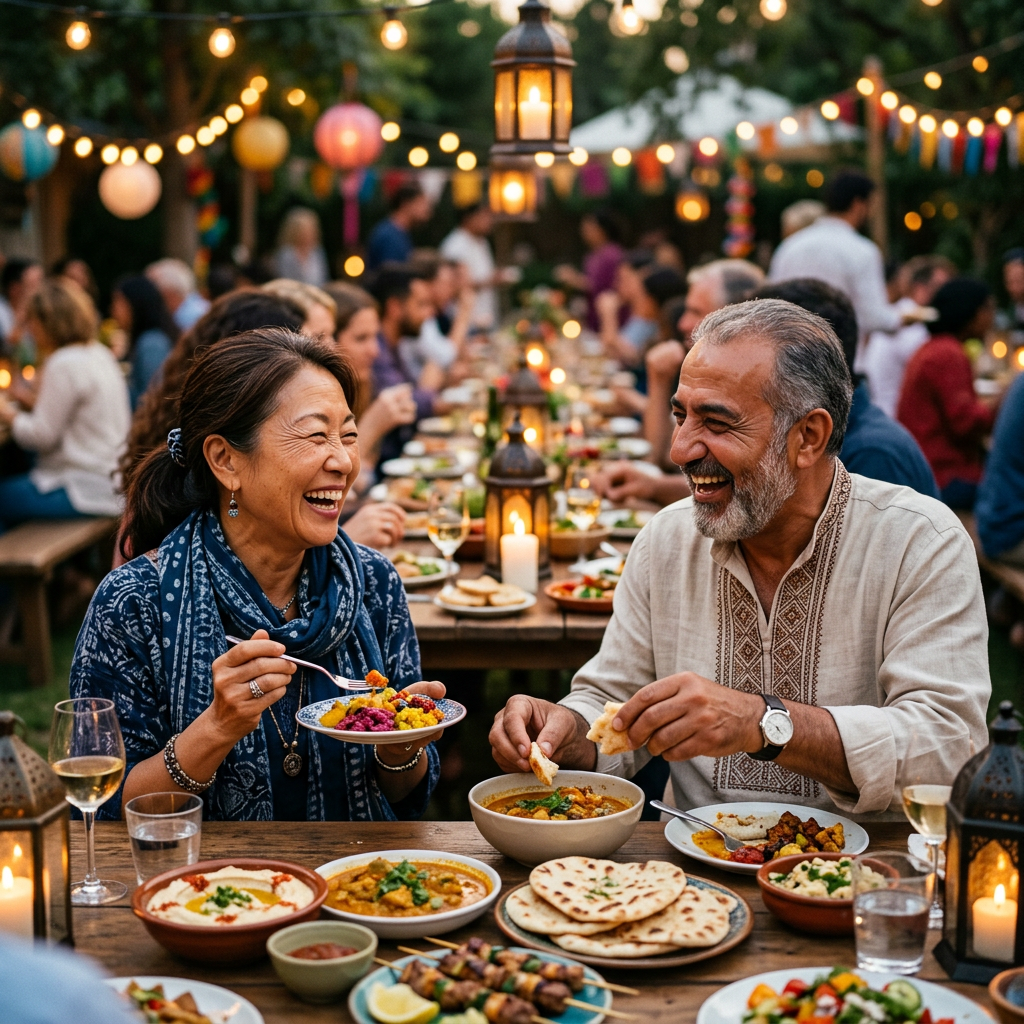
The Psychology of Celebration: How Mass Gatherings Heal Society | how | how festivals bring people together
Festivals are more than just parties; they are vital engines of social cohesion. Explore the science of 'collective effervescence' and how shared joy fosters lasting human connection.

Festivals are more than just parties; they are vital engines of social cohesion. Explore the science of 'collective effervescence' and how shared joy fosters lasting human connection.
Trending Now
📌 Key Takeaways
- Festivals trigger a psychological phenomenon called collective effervescence — a real, measurable sense of unity that outlasts the event itself.
- Research shows that attending a mass gathering can boost your connection to humanity for at least 6 months afterward.
- A festival's social value is nearly 1.46x greater than its economic impact — meaning the benefits go way beyond ticket sales.
- Shared values like sustainability and wellness are becoming powerful new bonding forces at modern festivals.
- The festival landscape in 2026 is shifting toward intimacy, digital integration, and purpose-driven community experiences.
Why We're Wired to Celebrate Together
Think back to the last time you were part of a huge crowd — maybe a music festival, a cultural street fair, or a neighborhood block party. Remember that weird, warm feeling of being surrounded by thousands of strangers who suddenly didn't feel like strangers at all?
That's not just nostalgia talking. That's your brain doing something pretty remarkable.
Understanding how festivals bring people together goes way deeper than "it's fun to hang out." There's decades of psychology, sociology, and neuroscience backing up what humans have intuitively known for centuries: celebrating in groups is genuinely good for us — individually and as a society.
So let's dig into why that happens, what the research actually says, and where this whole thing is headed as we move into 2026 and beyond.
1. The Science of 'Collective Effervescence'
Here's a term worth knowing: collective effervescence.
French sociologist Émile Durkheim coined it back in the early 1900s to describe that electric feeling of energy, unity, and shared emotion that happens when people gather around a common purpose. He noticed it in religious ceremonies, but the concept applies just as well to a packed music stage or a lantern festival.
Modern researchers have taken Durkheim's idea and run with it — and the data is genuinely fascinating. When we're physically present with others who share our excitement, our brains sync up. We mirror each other's body language. We breathe at similar rates. Our emotional states converge in ways that feel almost involuntary.
This isn't just poetic language. Studies in embodied cognition show that shared physical experiences — clapping together, dancing in sync, even just facing the same direction — create measurable feelings of closeness and trust between people who've never met before.
"Collective effervescence — the sense of energy and connection people feel when they participate in group rituals — is a real, measurable psychological state that can reshape how we see each other."
The cool part? You don't even need to know the people around you. The shared context does most of the work.
2. Psychological Impacts: Expanding the Moral Circle
Here's where things get genuinely surprising.
Researchers at Yale University followed participants before and after they attended mass gatherings and found something pretty extraordinary. The effects weren't just temporary mood boosts — they were lasting changes in how people thought about other human beings.
According to Yale News, 6 months after attending a mass gathering, participants still reported a higher sense of connection to humanity and a greater willingness to help strangers.
Let that sink in. A single festival experience was still shaping people's sense of empathy and social responsibility half a year later.
Psychologists describe this as "expanding the moral circle" — the idea that our sense of obligation and care naturally extends to more people when we've experienced shared humanity up close. Festivals essentially fast-track that process by putting you in a crowd of diverse strangers and giving you a reason to care about the same thing, at the same time.
This is one of the most underrated benefits of cultural festivals: they don't just give you a good weekend. They quietly rewire how generous and open you are to the world around you.
3. Breaking Barriers: How Festivals Dissolve Social Hierarchies
One of the most powerful things about a great festival is the way it flattens the usual social pecking order. For a few days, it genuinely doesn't matter what you do for a living or what neighborhood you're from.
This phenomenon has a name in sociology: liminality — a state of being "in between," where normal social roles are temporarily suspended. Festivals create these liminal spaces almost by design. Everybody's wearing face paint, eating with their hands, sleeping in tents. The usual markers of status fade out.
Research supports this. Participants in community-based cultural programs have shown measurable shifts in how they relate to their neighbors:
According to CARI Journals, participants in community-based cultural programs reported a 40% increase in their sense of belonging and a 30% increase in trust towards neighbors.
That's not a small number. A 30% jump in trust is the kind of thing urban planners and public health officials dream about. And it happened because people showed up, shared a space, and celebrated something together.
These kinds of social cohesion activities — whether it's a local harvest festival or a massive international event — have a genuine, documented ability to make communities more resilient, more cooperative, and more connected.
4. The Economic vs. Social Value of Gathering
Let's talk about something that often gets overlooked in the conversation about why we should fund and support festivals: the social return on investment.
When people discuss festival tourism economy, they usually focus on the numbers: hotel bookings, food stall revenue, local business foot traffic. And yeah, that stuff matters. But research suggests we've been dramatically undervaluing what festivals actually do.
A Spirit of 2012 study found that a festival's calculated 'social worth' is nearly 1.46 times greater than its economic impact.
In other words, for every dollar of economic value a festival generates, it's producing almost $1.46 worth of social good — things like stronger community bonds, improved mental health, reduced loneliness, and increased civic participation.
Here's a quick comparison to put that in perspective:
| Value Type | Festival Impact | Typical Urban Investment |
|---|---|---|
| Economic Value | High (tourism, revenue) | Measured in GDP/jobs |
| Social Value | 1.46x economic value | Often unmeasured |
| Mental Health Impact | Significant | Rarely quantified |
| Long-term Community Trust | High (up to 6 months) | Varies widely |
This reframes the whole conversation. Investing in community building events isn't a "nice to have" — it's one of the most cost-effective ways to build healthier, more cohesive societies.
5. Case Study: The Lasting Effects of Transformative Events
The 2012 London Olympics and its cultural program is a well-studied example of how large-scale gatherings can shift a city's social fabric. The Spirit of 2012 Trust, which was set up following the Games, spent years tracking the long-term effects of that collective experience on British communities.
What they found aligns with the broader research: the feeling of "we" generated by shared public events creates social capital that persists long after the bunting comes down. People who participated in community festivals linked to the Games reported higher levels of volunteering, stronger neighborhood relationships, and greater optimism about their communities.
Similar patterns have been documented at events as different as Burning Man, the Kumbh Mela in India (the world's largest human gathering), and small-town harvest festivals in rural America. The scale differs dramatically, but the psychological mechanics are remarkably similar.
What makes these events transformative — rather than just entertaining — is the combination of:
- Shared physical presence (you're there, in the same space)
- Common purpose or theme (something to celebrate together)
- Rituals and participation (you're not just watching, you're doing)
- Temporary suspension of normal life (the liminal space effect)
When all four elements are in play, something shifts. And apparently, that shift sticks around.
6. The Role of Music and Synchrony in Bonding
You've probably noticed that music festivals hit differently than, say, a trade conference. Part of that is obvious — music is just more fun. But there's real neuroscience behind why communal music experiences are so uniquely powerful at creating human connection.
The psychology of music festivals comes down to a concept called emotional synchrony — when a group of people's emotional and physiological states align in real time. Music is one of the most reliable triggers for this.
When thousands of people hear the same beat, their heart rates and breathing patterns actually begin to sync. Their brains release oxytocin — the so-called "bonding hormone." Their sense of individual self temporarily loosens, and their sense of connection to the group strengthens.
This is why you can be standing next to a complete stranger at a festival, hear a song you both love, turn to each other and just know — no words needed. That moment of shared feeling is neurologically real.
| Festival Type | Primary Bonding Mechanism | Key Psychological Effect |
|---|---|---|
| Music Festivals | Emotional synchrony via rhythm | Oxytocin release, reduced social anxiety |
| Cultural/Heritage Festivals | Shared identity and narrative | Pride, belonging, intergenerational connection |
| Food Festivals | Communal eating and sensory sharing | Trust-building, relaxed social norms |
| Religious/Spiritual Gatherings | Ritual and collective belief | Profound unity, moral elevation |
| Community Sports Events | Shared goal and outcome | Team identity, local pride |
Each type of festival pulls different psychological levers, but they all lead to the same place: a genuine sense of being connected to something bigger than yourself.
7. Micro-Festivals and the Shift to Intimacy
One of the most interesting festival trends heading into 2026 is the rise of the micro-festival — smaller, more curated, more intentional gatherings that prioritize depth of connection over sheer scale.
After years of mega-festivals that can feel more like crowded shopping malls than communal experiences, a lot of people are craving something more real. Think 200-person weekend retreats in a forest, neighborhood block parties with a proper lineup, or city-specific cultural immersion events that cap attendance deliberately.
This isn't a rejection of how festivals bring people together — it's an evolution of it. The research on collective experiences actually suggests that smaller, more participatory formats can generate deeper bonds than massive passive crowds.
According to Eventbrite, 18-34 year olds represent approximately 60% of festival attendees, and this demographic is increasingly driving demand for digital engagement and community-focused experiences over purely entertainment-driven events.
Younger audiences aren't just showing up to watch. They want to co-create, contribute, and feel genuinely part of something. That's reshaping what festival organizers build — and honestly, it's making the experiences richer for everyone.
8. Wellness and Sustainability as Unifying Values
Here's something that might surprise you: one of the biggest new bonding forces at modern festivals isn't a headliner or a theme — it's shared values.
When you and a thousand other people care about the same things — the planet, mental health, community — that shared value system becomes its own form of connection. It turns out caring about the same things is almost as powerful as dancing to the same song.
According to Vision 2025, 62% of music festival-goers state that waste reduction and sustainability are 'very important' to them — indicating a remarkably cohesive value system among attendees.
Festivals are increasingly building their identities around these shared commitments. Zero-waste pledges, mental health support zones, community-led programming, plant-based food options — these aren't just PR moves. They're signals that say "this is a community that stands for something," and they attract people who want to stand for it too.
This is a relatively new but powerful dimension of how festivals bring people together: alignment around purpose, not just entertainment.
9. Technology's Role: Enhancing or Diluting Connection?
Okay, real talk — technology at festivals is a complicated one.
On one hand, digital tools have genuinely expanded who can participate in communal experiences. Live streams, social media communities, digital art installations, AR experiences — these bring people in who couldn't otherwise be there, and they create layers of shared experience that extend beyond physical space.
On the other hand, there's a real tension between being present and documenting the moment. Anyone who's been stuck behind a sea of smartphones at a concert knows the frustration.
Here's a quick look at how technology stacks up in the festival context:
| Technology Feature | Potential Benefit | Potential Drawback |
|---|---|---|
| Live streaming | Broader access, global community | Passive consumption, reduced physical presence |
| Social media sharing | Extended connection, community recall | Performative experience, distraction |
| AR/VR experiences | Novel shared experiences | Isolating if poorly designed |
| Festival apps/digital maps | Smoother logistics, personalization | Screen dependency during live moments |
| Online fan communities | Year-round connection | Can substitute for real-world attendance |
The festivals that seem to be getting this right are the ones using technology to enhance physical connection rather than replace it — think app-based group games, real-time participatory art, or digital tools that bring strangers together in person.
Technology works best at festivals when it gets you off your phone and into someone else's orbit.
10. Future Outlook: The Festival Landscape in 2026 and Beyond
So where's all of this heading?
A few things seem pretty clear. The demand for genuine connection isn't going anywhere — if anything, it's intensifying in a world that often feels increasingly fragmented and digital. Festivals, in all their messy, joyful, communal glory, remain one of the most powerful antidotes to social isolation that human culture has ever produced.
Here's what the trajectory looks like:
- Hyper-local and micro-format events will grow alongside mega-festivals, not replace them
- Values-based programming (sustainability, wellness, justice) will become central, not supplemental
- Digital-physical hybrid experiences will mature — less gimmicky, more genuinely connective
- Inclusive design will be a baseline expectation, not a bonus feature
- Community co-creation will define the most beloved events — people want a role, not just a seat
The data makes one thing unmistakably clear: understanding how festivals bring people together isn't just an academic exercise. It's a roadmap for building healthier, more resilient, more compassionate communities — one celebration at a time.
Because when we gather, something happens to us. Something good. Something lasting.
And after everything the past few years have thrown at society, that feels worth protecting.
Sources
Advertisement
Frequently Asked Questions
How do festivals foster a sense of community belonging?
Festivals create "social capital" by providing shared emotional experiences. According to research by the Association of Independent Festivals, approximately 80% of attendees report feeling a stronger sense of connection to others during these events, facilitated by the release of oxytocin, a hormone associated with social bonding.
What is the economic impact of festivals on local communities?
Beyond social ties, festivals provide a financial foundation for community growth. For instance, the SXSW festival in 2023 contributed over $380 million to the Austin economy, supporting local vendors and infrastructure that benefits residents long after the event ends.
Which global festival attracts the largest number of people together?
The Kumbh Mela in India is recognized as the world's largest human gathering. In 2019, an estimated 150 million pilgrims from various backgrounds converged over 50 days, demonstrating how spiritual and cultural traditions can unite massive populations under a common identity.
Do festivals help reduce social isolation and loneliness?
Yes, festivals act as a catalyst for social interaction. Studies on cultural events have shown that collective celebration can reduce feelings of loneliness by up to 25%, as the "communitas"—a term for the spirit of community—breaks down social barriers and encourages interaction between strangers.
How do cultural festivals promote diversity and cross-cultural understanding?
Festivals like the Rio Carnival, which attracts over 2 million people per day to the streets, serve as a "Great Equalizer." By showcasing diverse traditions, music, and food, these events allow 92% of attendees to gain a deeper appreciation for cultures other than their own, fostering empathy and reducing social prejudice.
Sponsored
Curious about technology, mathematics, education, and growth, I write as a learner exploring ideas in innovation, problem-solving, culture, and the questions shaping our world.
You Might Also Like


Advertisement
Comments (0)
Sign in to join the conversation
No comments yet. Be the first to share your thoughts!