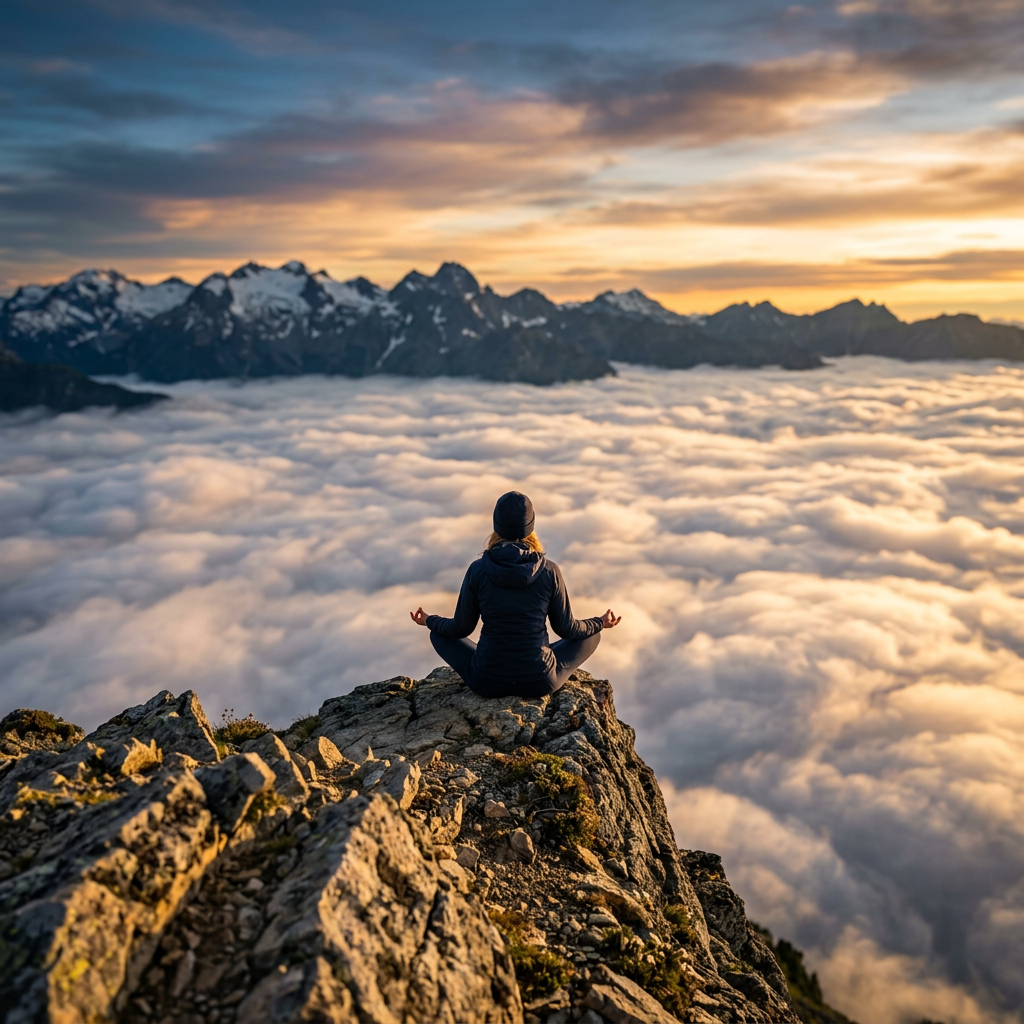
How to Start Meditating: A Beginner's Guide to Inner Peace (2026)
Discover how to start meditating with our 2026 beginner's guide. Learn simple techniques, science-backed benefits, and tips to find calm in chaos.

Discover how to start meditating with our 2026 beginner's guide. Learn simple techniques, science-backed benefits, and tips to find calm in chaos.
Trending Now
How to Start Meditating: A Beginner's Guide to Inner Peace (2026)
Key Takeaways
- Meditation requires no special equipment, background, or prior experience to begin
- Just 10 minutes of daily practice can reduce anxiety by 12.6% and depression scores by 19.2%
- There are multiple proven techniques — mindfulness, breathwork, body scan, and transcendental meditation — and beginners should experiment to find their fit
- Consistency beats duration: short daily sessions outperform occasional long ones
- Dedicated apps like Calm and Headspace can significantly ease the learning curve for new practitioners
1. Introduction: Why Meditation Matters in 2026
If you have ever typed "how to start meditating" into a search bar at 11 p.m. because your brain simply would not quiet down, you are not alone. Stress, digital overload, and an always-on culture have pushed millions of people toward meditation as a practical, evidence-based solution — not a mystical escape.
Today, approximately 275 million people practice meditation globally, with more than 37 million practitioners in the United States alone, according to Mindfulness Box. The global meditation market is on track to reach $11.88 billion in 2026, growing at a staggering CAGR of 23.3%, per The Business Research Company. These are not the numbers of a passing wellness trend — they reflect a global, measurable shift in how people manage their mental and physical health.
This guide will walk you through everything you need to know to start meditating today: the science behind it, the techniques that work, common beginner pitfalls, and the tools that make consistency easy. No incense required.
2. The Science of Silence: Proven Benefits for Brain and Body
Before you commit even 10 minutes to sitting quietly, it helps to understand exactly what meditation does inside your body. The research is compelling.
📊 "Just 10 minutes of daily mindfulness can reduce depression scores by 19.2% and anxiety by 12.6% compared to control groups." — University of Southampton
That is a clinically meaningful reduction achievable during a single coffee break.
Beyond mood, meditation has measurable effects on pain processing. Research highlighted by National Geographic and UC San Diego found that meditation can reduce pain intensity by up to 33% by deactivating the neural networks associated with self-referential thinking and pain perception. You are not imagining less pain — your brain is literally processing it differently.
The Mayo Clinic further confirms that regular meditation practice can:
- Lower cortisol levels, reducing the physiological stress response
- Improve sleep quality by calming the hyperactive default mode network
- Decrease blood pressure in people with hypertension
- Strengthen focus and attention span, even in as little as two weeks of practice
- Build emotional resilience, making you less reactive to external triggers
| Benefit | Evidence Level | Time to Notice Effects |
|---|---|---|
| Reduced anxiety | Strong (RCT-backed) | 2–4 weeks |
| Improved focus | Moderate–Strong | 2 weeks |
| Lower blood pressure | Moderate | 4–8 weeks |
| Pain reduction | Strong | 1–3 sessions |
| Better sleep | Moderate | 1–2 weeks |
| Reduced depression symptoms | Strong | 4 weeks |
Understanding why meditation works makes it far easier to stay consistent when motivation dips.
3. Debunking Common Myths: You Don't Need to Stop Thinking
One of the most damaging myths in beginner meditation is this: "I tried it and couldn't stop thinking, so I must be doing it wrong."
Here is the truth — you are not supposed to stop thinking. Thoughts will arise. That is what minds do. The practice is not about achieving a blank mental state; it is about noticing thoughts without becoming entangled in them and gently returning your attention to your chosen anchor, whether that is your breath, a sound, or a body sensation.
Here are the most common myths, corrected:
| Myth | Reality |
|---|---|
| You must empty your mind completely | Noticing and releasing thoughts is the practice |
| Meditation takes hours to be effective | 10 minutes daily produces measurable results |
| You need to sit cross-legged on the floor | Any comfortable, upright position works |
| Meditation is religious or spiritual | It is also a fully secular, clinical practice |
| Only calm people can meditate | Anxious, restless people benefit the most |
| It takes years to feel results | Many beginners report feeling calmer after their first session |
Letting go of these misconceptions is the first real step toward a sustainable practice.
4. Preparing Your Space: Creating a Sanctuary for Calm
Your environment has a measurable impact on how easily you settle into meditation, especially as a beginner. You do not need a dedicated room, but you do need to be intentional.
Follow these steps to set up your meditation space:
Step 1 — Choose a consistent location. Pick a corner, chair, or spot on the floor that you use only for meditation. Consistency trains your brain to associate the space with calm. Over time, simply sitting there begins to trigger a relaxation response.
Step 2 — Minimize sensory distractions. Silence your phone or switch it to airplane mode. If you live in a noisy environment, consider low-volume white noise or brown noise in the background — research suggests these can reduce cognitive distraction without creating new mental stimulation.
Step 3 — Set the physical conditions. Sit in a position where your spine is naturally upright but not rigid. Your back should support itself without tension. Use a cushion, a folded blanket, or a firm chair — whatever keeps you alert without causing discomfort.
Step 4 — Control the light and temperature. Dim, warm lighting signals to your nervous system that it is safe to relax. Avoid meditating in excessively cold or warm rooms, as temperature discomfort pulls attention away from your practice.
Step 5 — Use a timer. Set a gentle alarm — most meditation apps include soft chime timers — so that you are not clock-watching during your session. Knowing you will be signaled when the time is up removes a significant cognitive distraction.
A well-prepared space lowers the activation energy required to sit down and begin. That friction reduction is crucial for building a daily habit.
5. Step-by-Step Guide: How to Meditate for the First Time
If you are learning how to start meditating with zero prior experience, use this foundational breathwork practice. It is the most accessible entry point and the backbone of most guided meditation for anxiety programs.
Total time required: 10 minutes
Step 1 — Sit and settle (1 minute) Find your prepared space and sit comfortably. Place your hands on your thighs, palms facing down for grounding or up for openness — either works. Close your eyes gently, or soften your gaze toward the floor at a 45-degree angle.
Step 2 — Take three deliberate breaths (1 minute) Inhale slowly through your nose for a count of 4, hold for 2, then exhale through your mouth for a count of 6. This extended exhale activates your parasympathetic nervous system, signaling the body to downshift from fight-or-flight mode. Repeat three times.
Step 3 — Return to natural breathing (2 minutes) Stop controlling your breath. Let it find its own rhythm. Simply observe: Is it shallow? Deep? Quick? Your only job is to notice without judgment.
Step 4 — Anchor your attention to the breath (4 minutes) Choose one physical sensation to focus on — the feeling of air entering your nostrils, the rise of your chest, or the expansion of your belly. When your mind wanders (and it will), gently label the thought: "thinking" or "planning", then return your attention to your anchor. Each return is not a failure — it is a mental repetition, the equivalent of a bicep curl for your prefrontal cortex.
Step 5 — Expand awareness and close (2 minutes) In the final two minutes, let your attention widen beyond the breath. Notice sounds in the room, physical sensations across your body, the weight of your hands on your legs. Take one final deep breath, exhale completely, and open your eyes slowly.
You have just completed your first meditation session. That is the entire foundation.
6. Key Techniques Explained: Mindfulness, Body Scan, and Breathwork
Once you are comfortable with basic breath meditation, you can explore other meditation techniques to suit different needs and moments in your day.
Mindfulness Meditation
Mindfulness exercises train you to observe the present moment — thoughts, emotions, physical sensations — without reacting to them. It is the most widely studied form of meditation and the basis of Mindfulness-Based Stress Reduction (MBSR), an 8-week clinical program developed at the University of Massachusetts with decades of peer-reviewed evidence behind it. Practice this by expanding your awareness beyond the breath to include all present-moment experience, observing without commentary.
Body Scan Meditation
This technique involves systematically directing attention from the top of your head to the tips of your toes, noticing tension, discomfort, or sensation in each region without trying to change it. It is particularly effective for stress reduction and sleep onset. A typical body scan takes 20–45 minutes but can be shortened to 10 minutes for daily use.
Breathwork (Pranayama)
Specific breathing patterns can rapidly shift your physiological state. The 4-7-8 technique (inhale 4, hold 7, exhale 8) is widely recommended for acute anxiety. Box breathing (inhale 4, hold 4, exhale 4, hold 4) is used by Navy SEALs and athletes for focus and stress management under pressure.
Transcendental Meditation (TM)
Transcendental meditation involves silently repeating a personally assigned mantra for 20 minutes, twice daily. It is one of the most studied forms of meditation, with research linking it to reductions in blood pressure, PTSD symptoms, and cardiovascular risk. Note that formal TM instruction requires a certified teacher and involves a fee, making it a more structured commitment than app-based practices.
| Technique | Best For | Session Length | Difficulty for Beginners |
|---|---|---|---|
| Breath Awareness | General stress, focus | 5–20 min | ⭐ Easy |
| Mindfulness Meditation | Anxiety, emotional regulation | 10–30 min | ⭐⭐ Moderate |
| Body Scan | Sleep, chronic tension | 10–45 min | ⭐ Easy |
| Breathwork (4-7-8, Box) | Acute anxiety, energy | 3–10 min | ⭐ Easy |
| Transcendental Meditation | Deep relaxation, blood pressure | 20 min × 2/day | ⭐⭐⭐ Structured |
| Guided Meditation | Beginners, anxiety | 10–20 min | ⭐ Easy |
7. Overcoming Obstacles: What to Do When Your Mind Wanders
Every meditator — beginner and experienced alike — faces the same core challenge: the wandering mind. Here is how to handle the most common obstacles without abandoning your practice.
"My mind won't stop racing." This is normal and does not mean you are meditating wrong. Each time you notice your mind has wandered and bring it back, you are successfully practicing. The noticing is the practice. Try labeling your thoughts by category — "worrying," "planning," "remembering" — to create psychological distance from them.
"I fall asleep every time." Your body is telling you it is exhausted. Short-term solution: meditate sitting upright rather than lying down, and try a morning meditation routine rather than practicing at night. Long-term solution: improve your sleep hygiene so your meditation practice is not competing with a sleep debt.
"I don't have time." A micro-meditation of just 3–5 minutes is scientifically valid. Research cited by the University of Southampton specifically studied 10-minute sessions — not one-hour retreats. Reframe your commute, lunch break, or the five minutes before a meeting as meditation opportunities.
"I feel silly or self-conscious." This is cultural conditioning. Meditation is no more unusual than going to the gym or journaling. Remind yourself that over 37 million Americans practice it regularly, including athletes, executives, and military personnel.
"I've been consistent for a week and feel no different." Most measurable changes in anxiety and mood appear within 2–4 weeks of consistent daily practice. Track your mood, sleep quality, and stress levels in a journal to spot subtle improvements that might otherwise go unnoticed.
8. Building a Habit: The Power of Micro-Meditations and Consistency
The most effective meditation practice is not the most intense one — it is the one you actually do every day. Habit stacking is one of the most reliable behavioral techniques for making this happen.
How to use habit stacking for meditation: Attach your meditation session to an existing daily anchor — something you already do automatically.
- After I pour my morning coffee, I will sit and meditate for 10 minutes.
- After I brush my teeth at night, I will do a 5-minute body scan.
- After I sit down at my desk, I will take 3 conscious breaths before opening my laptop.
Start with just 5 minutes. Research in behavioral psychology consistently shows that reducing the minimum threshold for a new habit dramatically increases long-term adherence. Once the habit is locked in after roughly 66 days (the average habit formation period according to UCL research), extending the duration becomes effortless.
A morning meditation routine is particularly powerful. Practicing before your phone, email, or news intake creates a psychological buffer — you begin the day from a regulated state rather than a reactive one. Even a 5-minute breathwork session before reaching for your device can meaningfully shift your baseline stress level throughout the day.
Track your streak. Whether in a paper journal, a habit app, or your meditation app's built-in tracker, visual consistency data is a powerful motivator. Do not break the chain.
9. Tools of the Trade: Best Apps and Gadgets for 2026
The right tools reduce friction, provide structure, and offer guided meditation for anxiety and other specific needs — especially valuable when you are just starting out.
Best Meditation Apps in 2026
The meditation app market has matured significantly. Mindfulness Box data shows the space is dominated by two platforms, with Calm generating over $7.7 million in monthly in-app revenue as of 2024, per Statista / BigOhTech.
| App | Best For | Key Feature | Price (approx.) |
|---|---|---|---|
| Calm | Beginners, sleep, anxiety | Sleep stories, Daily Calm | ~$69.99/year |
| Headspace | Structured programs, focus | Guided courses by goal | ~$69.99/year |
| Insight Timer | Budget-conscious users | 100,000+ free meditations | Free / Premium |
| Ten Percent Happier | Skeptics, science-minded | Interviews with researchers | ~$99.99/year |
| Waking Up (Sam Harris) | Philosophy + practice | Theory-meets-technique | ~$99.99/year |
Supportive Gadgets Worth Considering
- Meditation cushions (Zafu): Elevate your hips above your knees, reducing lower back strain during longer sits
- Muse Headband: An EEG biofeedback device that provides real-time audio cues based on your brain activity — useful for tracking and motivating advanced practitioners
- White noise machines: Helpful for urban environments where external sounds break concentration
- Blue-light blocking glasses: If you meditate in the evening, reducing blue light exposure 30 minutes before your session deepens the relaxation response
You do not need any of these to begin. A phone timer and a quiet corner are sufficient. But as your practice deepens, the right tools can meaningfully enhance consistency and depth.
10. Conclusion: Your Journey to Inner Peace Starts Now
Learning how to start meditating is genuinely one of the highest-return investments you can make in your health, focus, and emotional resilience. The barriers are low — no equipment, no experience, no specific belief system required. The evidence is robust. The only real prerequisite is willingness to begin.
Start with 5 to 10 minutes of simple breath awareness today. Use a guided app if you want structure. Stack it onto an existing habit. Be patient with your wandering mind — that wandering is not failure, it is the workout itself.
"You don't have to be calm to meditate. You meditate to become calm."
The 275 million people currently practicing around the world did not begin as masters of stillness. They began exactly where you are now: curious, slightly skeptical, and ready to try. The science is clear, the techniques are accessible, and the benefits are waiting on the other side of 10 quiet minutes.
Your practice starts today.
Sources
- Mindfulness Box — Meditation Statistics
- The Business Research Company — Global Meditation Market Report
- University of Southampton — Mindfulness Study 2024
- National Geographic — Meditation, Health Benefits, Stress & Pain
- Mayo Clinic — Meditation: A Simple, Fast Way to Reduce Stress
- BigOhTech — Meditation App Statistics
Advertisement
Frequently Asked Questions
How long should a beginner meditate each day?
Beginners should start with just 5 to 10 minutes per day. Research from New York University indicates that meditating for 13 minutes daily for 8 weeks significantly improves mood, memory, and attention span compared to non-meditators.
Is it normal to have distracting thoughts during meditation?
Yes, it is completely normal. A Harvard University study found that the human mind wanders about 47 percent of the time. Meditation is not about clearing your mind, but about noticing the wandering and returning focus to your breath.
Do I need to sit in a specific posture like the lotus position?
No, you do not need to sit cross-legged. You can sit in a chair with feet flat on the floor or even lie down. The goal is to maintain a posture that is comfortable yet alert; a study in 'Psychological Science' suggests that physical comfort helps reduce external distractions.
How soon will I notice the benefits of a meditation practice?
While immediate physiological effects like a lower heart rate can occur, structural brain changes take longer. A study by Harvard researchers showed that just 8 weeks of consistent mindfulness practice can increase gray matter density in the hippocampus, which is linked to learning and memory.
Can meditation actually reduce physical stress levels?
Yes. Scientific reviews have shown that regular meditation can reduce the production of cortisol, the body's primary stress hormone, by up to 20%. This reduction helps lower blood pressure and strengthens the immune system's response to inflammation.
Sponsored
You Might Also Like


Advertisement
Comments (0)
Sign in to join the conversation
No comments yet. Be the first to share your thoughts!