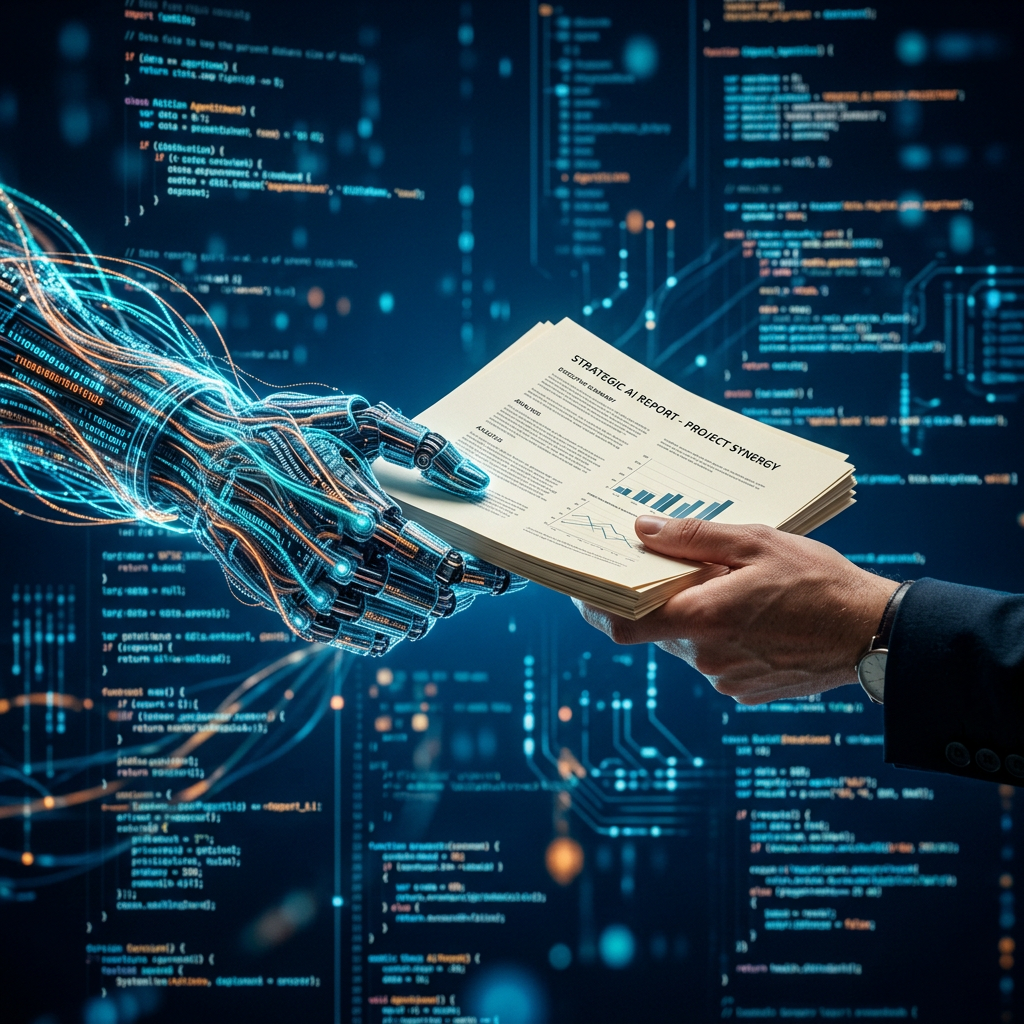
Best AI Tools 2026: The Top Apps Changing Daily Work Forever
In 2026, AI has evolved from chatbots to autonomous agents. Discover the tools defining this shift and how they are reshaping careers, productivity, and income.

In 2026, AI has evolved from chatbots to autonomous agents. Discover the tools defining this shift and how they are reshaping careers, productivity, and income.
Trending Now
Best AI Tools 2026: The Top Apps Changing Daily Work Forever
Key Takeaways
- 75% of global employees now use generative AI at work, signaling a fundamental shift in how professional output is measured.
- The best AI tools 2026 span five distinct categories: orchestration, research, development, productivity, and creative production.
- Frequent AI users earn a documented 28% income premium over non-users — a gap that is widening, not closing.
- Agentic AI — software that acts autonomously across multi-step tasks — is no longer experimental; it is the new operational standard.
- Focus efficiency has paradoxically dropped to a three-year low of 60%, raising important questions about how organizations integrate AI responsibly.
The question in 2026 is no longer whether to use AI at work. It is which tools to use, in what order, and at what depth. Artificial intelligence has moved well beyond the novelty of chatbot conversations and image generation experiments. The best AI tools 2026 represent a mature, interconnected ecosystem of software agents, research accelerators, autonomous coding environments, and intelligent meeting companions — each fundamentally altering the pace and quality of daily work across every professional category. According to the Microsoft Work Trend Index, three in four employees worldwide are now actively using generative AI in their professional roles. That is not a trend. That is a transformation.
This guide cuts through the noise. Whether you are a high school student researching a thesis, a freelance developer shipping MVPs, a founder automating operations, or a seasoned professional reclaiming hours lost to administrative overhead, this article maps the tools reshaping your domain — with the data to back every recommendation.
1. The Shift: Why 2026 Is the Year of 'Agentic' AI
Every major technology cycle has a defining characteristic. In 2023, the defining word was generative. In 2024, it was multimodal. In 2026, it is agentic.
Agentic AI refers to systems capable of executing multi-step, goal-oriented tasks with minimal human intervention. Rather than answering a single prompt, an agentic system can browse the web, write and execute code, send emails, update a database, and summarize results — all within a single autonomous workflow. According to Deloitte's State of AI in the Enterprise 2026, enterprise adoption of agentic AI frameworks has accelerated significantly, with organizations deploying purpose-built agent "teams" to handle everything from customer onboarding to financial reconciliation.
"88% of companies now report using AI in at least one business function, up from 78% in 2025." — Zapier / McKinsey
This 10-percentage-point jump in a single year is not incremental — it reflects a structural change in how organizations are built. The implication for individuals is equally significant: fluency with agentic tools is rapidly becoming a baseline professional competency, not a specialized skill.
2. The New Tech Stack: Orchestration & Workflow — Zapier vs. n8n 2026
At the infrastructure layer of the modern AI-augmented workplace sits workflow orchestration — the connective tissue that links discrete tools into coherent, automated processes. Two platforms dominate this conversation in 2026: Zapier and n8n.
Zapier: Enterprise Polish, AI-Native Automation
Zapier has evolved considerably from its "if this, then that" origins. Its AI Actions and Zap Agents now allow users to construct natural-language-driven workflows that adapt dynamically to data inputs. For non-technical professionals and small business operators, Zapier remains the gold standard for accessible AI automation — with pre-built templates covering CRM updates, email triage, content publishing, and lead nurturing.
n8n: Developer-First, Self-Hosted Power
n8n appeals to developers, technical founders, and DevOps professionals who require greater control over their automation architecture. As a self-hostable, open-source platform, n8n eliminates data privacy concerns associated with cloud-first tools and offers considerably more flexibility in building complex, conditional logic trees. Its native AI node integrations — covering OpenAI, Anthropic, Mistral, and local LLMs — make it the preferred choice for teams building internal AI products.
| Feature | Zapier | n8n |
|---|---|---|
| Target User | Non-technical professionals | Developers & technical teams |
| Hosting | Cloud-only | Cloud + Self-hosted |
| Pricing Model | Subscription (per task) | Free open-source + cloud plans |
| AI Integration | Native AI Actions & Agents | Flexible AI nodes (any LLM) |
| Privacy Control | Moderate | High (self-hosted) |
| Learning Curve | Low | Medium–High |
| Best For | Quick automation at scale | Custom enterprise pipelines |
For most entrepreneurs and freelancers, Zapier is the faster path to operational leverage. For startups building proprietary workflows or handling sensitive client data, n8n offers superior architectural control. Both represent the essential backbone of AI automation tools in the modern work stack.
3. For Students & Researchers: Search 2.0 — Perplexity and NotebookLM
The research process has been fundamentally restructured. Traditional keyword-based search — scroll, click, skim, repeat — has been replaced by conversational, citation-aware AI tools that synthesize information rather than merely retrieve it.
Perplexity for Research: The Citation-First Search Engine
Perplexity AI has matured into the definitive research tool for students and professionals alike in 2026. What distinguishes it from general-purpose chatbots is its commitment to source transparency — every response is anchored with cited, clickable references, reducing hallucination risk and enabling rapid source verification. Its Deep Research mode conducts multi-step web investigations comparable to a junior analyst's hour of work, compressed into minutes.
For AI for students 2026, Perplexity addresses a critical pain point: the credibility problem. Students can no longer submit AI-generated content without citing sources, and Perplexity's architecture is built precisely around citation discipline.
NotebookLM: The Private Research Assistant
Google's NotebookLM occupies a distinct and highly valuable niche: it operates exclusively on documents you upload. Whether those are PDF research papers, course syllabi, legal contracts, or interview transcripts, NotebookLM synthesizes, questions, and maps relationships across your private corpus — with no external hallucination risk because it never reaches beyond your source material.
| Tool | Primary Use | Citation Support | Privacy | Best For |
|---|---|---|---|---|
| Perplexity | Web research & synthesis | ✅ Built-in citations | Cloud-based | Students, journalists, analysts |
| NotebookLM | Document analysis & study | ✅ Source-grounded only | Private (your files) | Researchers, law students, consultants |
| ChatGPT (GPT-4o) | Broad reasoning & writing | ⚠️ Optional | Cloud-based | General-purpose ideation |
| Claude 3.5 | Long-form analysis | ⚠️ Moderate | Cloud-based | Professionals, content teams |
For college students managing literature reviews, or working professionals conducting competitive research, combining Perplexity for research with NotebookLM creates a two-layer system: broad web synthesis layered on top of deep private document analysis.
4. For Developers & Founders: The 'Vibe-Coding' Suite — Cursor and Lovable
The term "vibe-coding" — coined to describe the practice of directing AI to write, refactor, and debug code through natural language intent rather than explicit instruction — is no longer a developer meme. It is a legitimate and increasingly dominant engineering methodology.
Cursor: The AI-Native IDE
Cursor has displaced traditional IDEs for a significant portion of the developer community by embedding a deeply context-aware AI layer directly into the coding environment. Unlike GitHub Copilot's autocomplete model, Cursor understands entire codebases, enabling developers to issue high-level instructions ("refactor this authentication module for multi-tenant support") and receive coherent, project-aware implementations.
For AI coding assistants in 2026, Cursor represents the benchmark. Its Composer feature allows developers to make simultaneous changes across multiple files, and its integration with leading models — including Claude 3.5 Sonnet and GPT-4o — ensures access to the most capable reasoning available.
Lovable: From Idea to Full-Stack Application
Lovable targets a different but overlapping audience: founders, product managers, and entrepreneurs who understand what they want to build but lack deep engineering expertise. By describing desired functionality in plain language, users can generate full-stack web applications — complete with database schema, authentication, and UI — in hours rather than weeks.
For early-stage startup founders seeking to validate a product hypothesis before committing to engineering hires, Lovable compresses the prototype-to-MVP timeline dramatically. According to The Guardian's coverage of AI and daily work, this category of AI automation tools is actively disrupting the traditional freelance development market by empowering non-engineers to ship production-quality software independently.
5. For Professionals: The End of Note-Taking — Granola and Fireflies.ai
Meeting documentation has long been one of the most universally despised administrative tasks in professional life. In 2026, it is effectively automated.
Granola: The Ambient Meeting Intelligence Layer
Granola is a macOS-native AI meeting assistant that runs silently in the background during any call — regardless of platform (Zoom, Google Meet, Teams, or phone). It captures audio locally, generates structured summaries, extracts action items, and formats notes according to customizable templates. Critically, it does not require a bot to join the meeting, which eliminates the social friction that earlier tools like Otter.ai introduced.
Fireflies.ai: Collaboration at Scale
Fireflies.ai serves teams and organizations requiring a centralized meeting intelligence infrastructure. Beyond transcription, Fireflies indexes meeting content, enables keyword search across conversation history, tracks speaker sentiment, and integrates natively with CRM platforms like Salesforce and HubSpot. For sales teams, customer success organizations, and consulting firms, Fireflies functions as an institutional memory layer.
"Productive work sessions grew 13% in 2026 — yet 'focus efficiency' dropped to a three-year low of 60%, largely due to increased AI collaboration overhead." — ActivTrak State of the Workplace 2026
This statistic deserves particular attention. The rise of AI meeting assistants and always-on collaboration tools has paradoxically increased cognitive load in certain organizational contexts. The tools are solving transcription — but organizations must address meeting culture to realize the full productivity dividend.
6. For Creators: Hyper-Realism in Video & Art — Veo 3 and Midjourney v7
The creative industries have entered an era of generative realism — AI outputs that are functionally indistinguishable from professional human production at the visual layer.
Veo 3: Cinematic AI Video Generation
Google's Veo 3 represents the current apex of AI video generation. Capable of producing high-resolution, cinematically coherent video sequences from text or image prompts, Veo 3 enables solo content creators, marketing teams, and indie filmmakers to produce broadcast-quality visuals without studio infrastructure. Its audio-synchronized generation and temporal consistency across frames have addressed the "uncanny motion" artifacts that defined earlier models.
For freelancers in video production, social media management, and brand content, Veo 3 compresses production timelines from days to hours — and in some cases, from hours to minutes.
Midjourney v7: Precision Aesthetics at Professional Grade
Midjourney v7 continues to lead in still image generation for commercial and artistic applications. Its expanded style control, improved prompt adherence, and Character Reference system — which maintains visual consistency of specific subjects across multiple generations — make it indispensable for brand designers, book cover artists, advertising creatives, and game concept artists.
As part of the Generative AI trends 2026, the creative AI stack has matured to the point where the competitive advantage no longer lies in access to the tools — it lies in creative direction and prompt craft mastery, which remain distinctly human competencies.
7. The Productivity Paradox: Managing Focus in an AI-Augmented World
There is an uncomfortable truth embedded in the 2026 data. Despite measurable gains in task output, the integration of AI tools has introduced new forms of cognitive overhead that organizations are only beginning to manage.
"While productive sessions grew 13%, focus efficiency dropped to a three-year low of 60% due to increased AI collaboration overhead." — ActivTrak State of the Workplace 2026
The mechanism is identifiable. As AI tools multiply across the workplace, professionals face a new class of decision fatigue: which tool to use, how to prompt it, how to verify its output, and how to integrate its results into existing workflows. What was once a single task — "write the proposal" — has become a multi-tool orchestration challenge. The AI automation tools designed to eliminate friction have, in certain configurations, introduced new friction at the coordination layer.
The organizations performing best in 2026 are those that have established standardized AI toolkits for specific roles, reducing the cognitive load of tool selection while maximizing the efficiency gains of automation. Individual professionals who build deliberate, bounded AI workflows — rather than adopting every new tool reactively — consistently report higher sustained output and lower decision fatigue.
8. The AI Wage Gap: How Tool Mastery Impacts Income
The economic consequences of AI adoption — or non-adoption — are no longer theoretical.
"Frequent AI users earn 28% more annually — $67,525 versus $52,681 — compared to non-users." — Northern Kentucky University / HRD
This $14,844 annual income gap is not explained solely by sector or seniority. When controlling for role and industry, AI tool fluency independently accounts for a measurable portion of the compensation differential. HRD's analysis further notes that this divide is accelerating: as organizations embed AI into core workflows, professionals who cannot navigate these tools are increasingly being routed toward lower-leverage, lower-compensation functions.
The parallel story at the enterprise level is equally compelling. The global AI in HR market — encompassing tools for recruitment, performance management, workforce planning, and employee analytics — is valued at $11.3 billion in 2026, with projections pointing to $56.2 billion by 2035, according to TimeForge's industry analysis. Organizations are not merely experimenting with AI in human capital functions; they are systematically rebuilding talent infrastructure around it.
For students, this data carries a particular urgency. The employers they will encounter upon graduation are not evaluating AI literacy as a bonus qualification — they are screening for it as a baseline competency. The best AI tools 2026 are not optional enrichment; they are professional prerequisites.
9. Future Outlook: Preparing for the Hybrid Workforce of 2027
As covered in Lindy's analysis of the best AI agents, the trajectory is toward increasingly autonomous AI "teammates" — purpose-built agents deployed alongside human professionals to handle defined functional domains. By 2027, it is reasonable to anticipate that most knowledge work roles will involve explicit collaboration with at least one persistent AI agent operating on behalf of the individual or team.
The best AI tools 2026 are, in this context, the rehearsal. The organizations and individuals investing in deep tool fluency now will enter the 2027 landscape with a structural advantage that compounds: better data, more refined workflows, stronger prompt discipline, and institutional knowledge about what AI does well versus where human judgment remains non-negotiable.
The Generative AI trends 2026 collectively point toward a convergence of automation, personalization, and ambient intelligence — AI that operates proactively, learns from behavioral patterns, and surfaces recommendations before the human user has formulated the question. This is not a distant projection. Tools like Granola, Perplexity, and Cursor already exhibit early versions of this behavior.
The imperative for every professional category addressed in this guide is consistent: engage deliberately, develop fluency systematically, and treat AI tool mastery as a career investment with measurable returns.
The evidence — income data, adoption curves, enterprise valuations, and productivity research — all point in the same direction. The best AI tools 2026 are not changing daily work incrementally. They are changing it permanently.
Sources
- Zapier – Best AI Productivity Tools 2026
- Zapier / McKinsey – AI Statistics
- Deloitte – State of AI in the Enterprise 2026
- Microsoft Work Trend Index – Generative AI at Work
- The Guardian – How AI Is Changing Day-to-Day Work
- HRD / Northern Kentucky University – AI Career Paths & Wage Gap
- ActivTrak – 2026 State of the Workplace Report
- TimeForge – AI Transforms HR: 2026 Workforce Trends
- Lindy – 12 Best AI Agents in 2026
Advertisement
Frequently Asked Questions
What are the most essential AI tools for students to stay ahead in 2026?
In 2026, students rely on NotebookLM for grounded research with zero hallucinations and Notion AI to automate note-taking and project scheduling. Tools like Gamma and Autoppt allow for the creation of professional-grade presentations in seconds, helping students reduce research and design time by an average of 50%.
How can freelancers use AI to justify higher rates and increase productivity in 2026?
Data from early 2026 shows that AI-enabled freelancers earn over 40% more per hour than traditional peers. By integrating tools like Copy.ai for marketing automation and Midjourney for high-fidelity design, freelancers report a 30% to 60% increase in project capacity without adding extra working hours.
Which AI tools are mandatory for startup founders looking to scale quickly in 2026?
Startup founders utilize 'Growth Stacks' including GrowthGrid for instant market analysis and Durable to launch business websites in under 30 seconds. In 2026, over 90% of small businesses using predictive analytics tools like HubSpot AI report significant efficiency gains in lead scoring and customer retention.
What is 'Agentic AI' and how is it changing daily routines for working professionals?
Unlike standard chatbots, AI Agents (such as Zapier Agents or Microsoft Copilot 3.0) autonomously perform actions like booking travel, filing expenses, and managing complex cross-app workflows. Professionals using agentic tools in 2026 save approximately 12 hours per week, shifting their focus from administration to high-level strategy.
Is it safe for businesses to use AI tools for sensitive data in 2026?
Security is a top priority in 2026, with 64% of organizations now performing mandatory AI compliance audits. Modern enterprises use 'Private LLMs' and AI-powered defenses that identify security breaches 108 days faster than manual methods, ensuring sensitive data remains within encrypted, corporate-governed silos.
Sponsored
Curious about technology, mathematics, education, and growth, I write as a learner exploring ideas in innovation, problem-solving, culture, and the questions shaping our world.
You Might Also Like


Advertisement
Comments (0)
Sign in to join the conversation
No comments yet. Be the first to share your thoughts!